
Published: August 2, 2023 |
Updated: February 17, 2026 |
Reading Time: 9mins |
By: Sean Sullivan
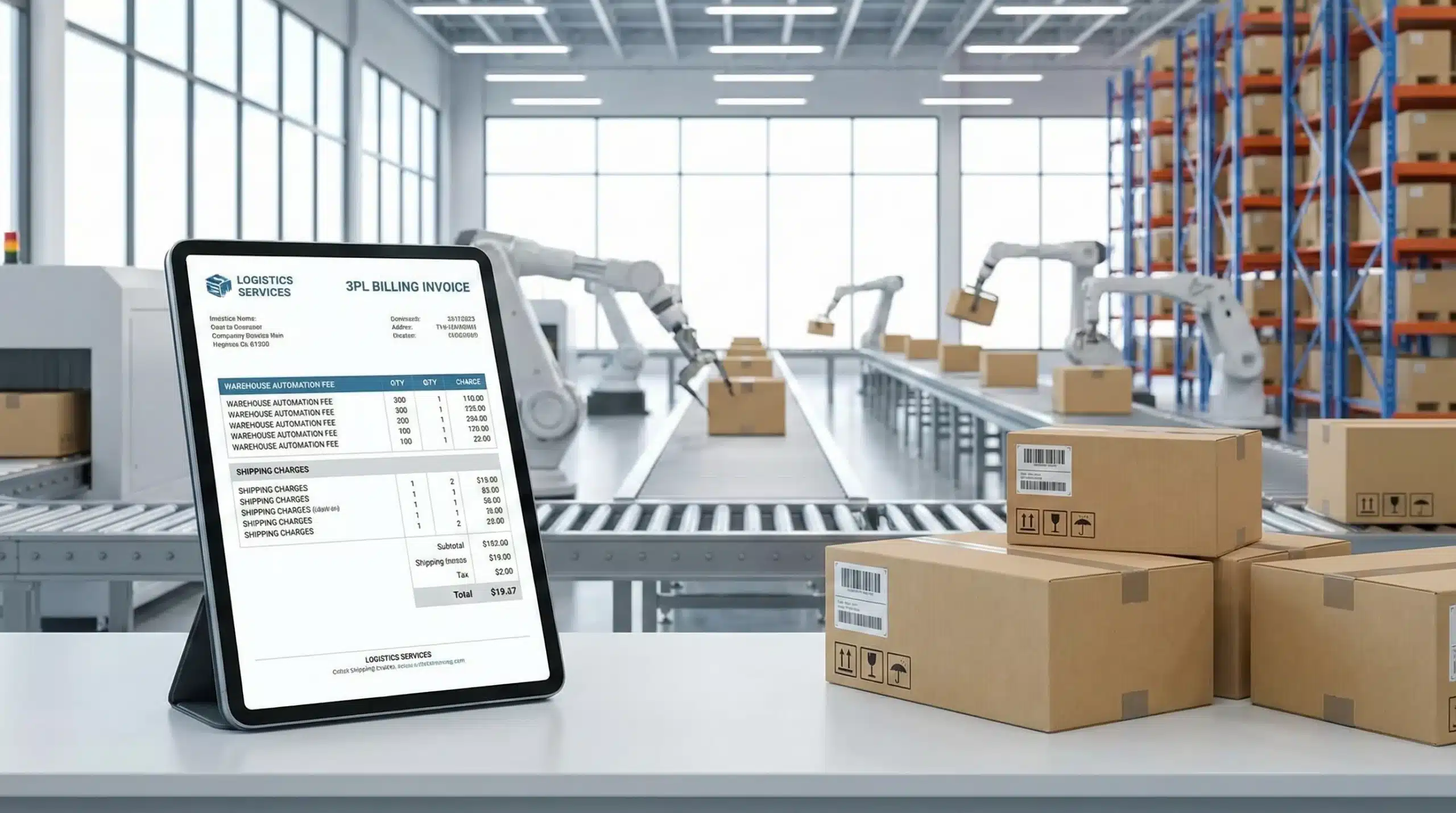
Introduction to 3PL Billing
In the dynamic world of third-party logistics (3PL), billing is a critical function that directly impacts a company’s bottom line. It’s a complex process that involves tracking and charging for a multitude of services, from storage and handling to transportation and value-added services. Effective 3PL billing is not just about ensuring accurate charges; it’s also about enhancing customer satisfaction and building long-term relationships.
Multi-client billing, customer portals, and warehouse workflows tailored for 3PL operations. Streamline your supply chain with Argos.
Request a Demo

Understanding the 3PL Billing Process
The 3PL billing process is a multi-step operation that begins with the receipt of goods and ends with the issuance of an invoice. It involves tracking various services provided, calculating charges based on agreed-upon rates, and generating detailed invoices that provide transparency to customers. However, given the complexity and variability of 3PL services, the billing process can be fraught with challenges.
The Challenges in 3PL Billing
3PLs often grapple with several challenges in billing. Manual processes can be time-consuming and prone to errors, leading to inaccurate billing and potential revenue loss. Slow billing cycles can delay revenue recognition and negatively impact cash flow. Moreover, any errors in billing can lead to disputes, damaging the 3PL’s relationship with its customers and tarnishing its reputation.
The Need for Automation in 3PL Billing
Given these challenges, automation emerges as a compelling solution for 3PL billing. Automated billing systems can streamline the billing process, reduce errors, and accelerate billing cycles. They can capture charges in real-time, ensure accurate billing, and generate detailed invoices promptly. Moreover, they can provide valuable insights into billing trends and performance, enabling 3PLs to make informed business decisions.
A Step-by-Step Guide to Automating 3PL Billing
Automating 3PL billing involves several key steps:
First, it’s essential to adapt the current billing process to the requirements of the automated system. This may involve standardizing rate structures, defining billing rules, and setting up charge capture mechanisms.
Next, the automated billing system needs to be configured and tested to ensure it functions as expected.
Finally, the automated system should be run in parallel with the existing billing method for a period, to ensure a smooth transition.
The Role of Real-Time Charge Capture in 3PL Billing
Real-time charge capture plays a crucial role in automated 3PL billing. It involves capturing charges for services as soon as they are performed, using technologies like barcode scanning or RFID. Real-time charge capture can enhance billing accuracy, reduce disputes, and provide a clear audit trail. Moreover, it can provide real-time visibility into revenue, enabling 3PLs to monitor their financial performance closely.

The Importance of Integrating a WMS with Accounting Systems
For a seamless 3PL billing process, it’s essential to integrate your Warehouse Management System (WMS) with the accounting system. This integration can automate the flow of billing information from the WMS to the accounting system, eliminating manual data entry and reducing errors. Moreover, it can ensure that all charges are captured and billed, improving revenue recognition.
Common 3PL Rate Structures and Billing Models
Third-party logistics providers utilize diverse billing models that reflect the complexity of modern warehouse operations. Understanding these rate structures is essential for optimizing your 3pl billing process and ensuring accurate revenue capture across all service offerings.
The most common storage billing model is per-pallet pricing, where clients pay monthly fees based on the number of pallets stored. This straightforward approach works well for standardized inventory but becomes complex when dealing with varying pallet sizes or seasonal fluctuations. Per-case handling fees apply to inbound and outbound processing, typically charged for receiving, putaway, picking, and shipping activities. Many 3PLs also implement per-transaction billing for order processing, where each shipment or pick generates a separate charge.
Monthly minimums protect 3PLs from revenue volatility by establishing baseline charges regardless of actual volume. Tiered pricing structures offer volume discounts as clients exceed predetermined thresholds, encouraging larger commitments while maintaining profitability. These complex arrangements often require sophisticated tracking to ensure accurate billing calculations.
Value-added services represent significant revenue opportunities but complicate the 3pl billing process considerably. Kitting operations may be billed per kit assembled or by labor hours consumed. Labeling services typically charge per label applied, while returns processing involves inspection fees, restocking charges, and disposition handling costs. Each service requires precise documentation to support billing accuracy.
The distinction between contract rates and spot pricing adds another layer of complexity to 3pl billing management. Contract rates offer predictable pricing for committed volumes but require careful tracking of actual usage against contracted minimums. Spot rates provide flexibility for overflow capacity but demand real-time pricing updates and approval workflows.
Rate structure complexity directly correlates with billing errors and disputes. Multiple pricing tiers, service combinations, and promotional rates create numerous opportunities for miscalculation. Without standardized rate cards and automated validation rules, even minor discrepancies can compound into significant revenue leakage. Successful 3PLs establish clear rate hierarchies and implement systematic approaches to rate management that minimize confusion for both operations teams and customers.
Best Practices for 3PL Billing Management
Effective 3pl billing management requires structured processes that balance operational efficiency with customer satisfaction. Establishing consistent practices across all aspects of billing operations ensures accuracy, transparency, and timely revenue collection.
Billing schedules form the foundation of reliable cash flow management. Weekly invoicing suits high-volume clients requiring frequent settlement, while monthly billing works better for smaller accounts with predictable patterns. The key is maintaining consistency and communicating schedules clearly to set proper customer expectations. Advanced 3PLs often offer flexible billing cycles tailored to individual client preferences.
Transparent rate cards shared with customers eliminate confusion and reduce disputes before they occur. These documents should detail all possible charges, including base rates, surcharges, and value-added service fees. Regular rate card updates keep pricing current while providing advance notice of changes. Digital rate cards integrated within customer portals enable real-time pricing visibility.
Automated exception handling transforms how billing discrepancies are managed within the 3pl billing process. Rather than manual review of every variance, intelligent systems flag unusual patterns, missing charges, or rate mismatches for human investigation. This approach dramatically reduces the time required for billing validation while improving accuracy rates.
Regular billing audits and reconciliation processes ensure ongoing accuracy and identify systematic issues before they impact multiple billing cycles. Monthly reconciliation compares billed amounts against actual services delivered, while quarterly audits examine rate application accuracy and contract compliance. These reviews often reveal opportunities for process improvements and automation enhancements.
A comprehensive 3pl accounting system provides the detailed tracking capabilities essential for modern logistics operations. Revenue tracking by client enables profitability analysis and pricing optimization. Service type reporting identifies the most profitable offerings, while warehouse-level revenue tracking supports multi-facility operations management.
Key performance indicators guide continuous improvement in 3pl billing management. Days sales outstanding measures collection efficiency, while billing accuracy rates track operational excellence. Dispute resolution time indicates customer service effectiveness, and revenue per transaction reveals pricing optimization opportunities. Leading 3PLs establish benchmarks for each metric and implement regular reporting to drive accountability.
Proper billing management directly impacts customer retention by building trust through accuracy and transparency. Clients value predictable costs and prompt dispute resolution more than rock-bottom pricing. Investing in robust 3pl billing software and standardized processes creates competitive advantages that translate into long-term customer relationships and sustainable profitability.
Argos: A Powerful 3PL Billing Software
Argos is a comprehensive 3PL billing software and so much more. Our software is designed to streamline the billing process and enhance revenue recognition. It offers real-time charge capture, automated billing, and seamless integration with accounting systems. Moreover, it provides robust reporting and analytics capabilities, providing valuable insights into billing performance.
With Argos Software, 3PLs can transform their billing process, enhance customer satisfaction, and drive revenue growth.
Conclusion
3PL billing is a complex but crucial aspect of logistics operations. By understanding the billing process, addressing the challenges, and leveraging automation, 3PLs can enhance their billing efficiency and accuracy. With powerful 3PL billing software like Argos, they can take their billing operations to the next level.
Are you ready to transform your 3PL billing process? Argos Software is here to help. Our system is designed to streamline your billing operations, providing you with the tools you need to enhance efficiency, reduce errors, and improve revenue recognition.
Contact us today to learn more about how Argos can revolutionize your 3PL billing process.
Frequently Asked Questions
What are the most common billing errors in 3PL operations?
Common 3PL billing errors include duplicate charges, incorrect rate applications, missed service charges, wrong quantity calculations, and timing discrepancies. These errors typically stem from manual data entry, miscommunication between departments, or outdated rate sheets. For example, a warehouse worker might record the wrong number of units handled, leading to inaccurate storage fees on the customer’s invoice.
How long does it typically take to implement automated billing systems?
Implementation of automated 3PL billing systems typically takes 2-6 months depending on system complexity and company size. The timeline includes process assessment, system configuration, data migration, testing phases, and staff training. Smaller operations with standardized processes may complete implementation in 6-8 weeks, while larger 3PLs with complex rate structures might require 4-6 months for full deployment.
Why do billing disputes happen so frequently in 3PL relationships?
Billing disputes occur frequently due to unclear service definitions, complex rate structures, and poor documentation of services performed. Manual billing processes often lack detailed audit trails, making it difficult to verify charges. Additionally, miscommunication about billable events and inconsistent charge capture timing create discrepancies between what customers expect to pay and what they’re invoiced for.
When should 3PL companies consider switching from manual to automated billing?
3PL companies should consider automation when processing over 100 invoices monthly, experiencing frequent billing errors, or facing cash flow delays from slow billing cycles. Other indicators include spending more than 20% of administrative time on billing tasks, receiving regular customer complaints about invoice accuracy, or struggling to scale operations due to billing bottlenecks.
What ROI can 3PLs expect from implementing automated billing software?
3PLs typically see 15-30% ROI within the first year of implementing automated billing software. Benefits include 50-70% reduction in billing processing time, 80-90% decrease in billing errors, and 25-40% faster invoice generation. Additional returns come from improved cash flow, reduced dispute resolution costs, and freed-up staff time for revenue-generating activities rather than manual billing tasks.
3PL Logistics Explained: Services, Models, and Benefits
Discover how 3PL logistics can transform your supply chain with our comprehensive guide.

How a 3PL Warehouse Management System Transforms Operations
Explore the benefits and strategies of 3PL warehouse management systems for optimal logistics efficiency.
3PL Software: Features, Benefits, and How to Choose
Discover the benefits of 3PL software for efficient warehouse management and inventory control.