
Published: February 4, 2026 |
Updated: February 17, 2026 |
Reading Time: 18mins |
By: Sean Sullivan

Plant nursery management software is revolutionizing how growers track inventory, manage operations, and plan for seasonal demands. Nursery management software, greenhouse inventory management software, nursery inventory management has become essential for modern businesses. You’ve just spent an entire morning trying to track down a missing shipment of bare root roses. The clipboard inventory says you have 200 plants, but only 147 are actually in the greenhouse. Meanwhile, a customer is on the phone asking why their order hasn’t shipped, and your team can’t find the paperwork. Sound familiar? You’re not alone.
We’ve all been there – drowning in spreadsheets, sticky notes, and that sinking feeling that something important slipped through the cracks. The truth is, managing a modern plant nursery or greenhouse operation has become incredibly complex. Between tracking thousands of SKUs across multiple growing stages, managing seasonal demand swings, and keeping customers happy, the old ways of doing things just don’t cut it anymore. That’s exactly why nursery management software has become essential for operations that want to stay competitive. And for greenhouse inventory management software and nursery inventory management, the right solution can transform chaos into clarity.
This guide will walk you through everything you need to know about choosing and implementing software that actually works for your unique operation – no fluff, just practical insights you can use today.
How Plant management tools have Changed the Game
Remember when “inventory management” meant walking the rows with a pencil and a legal pad? Most of us started there. The process was time-consuming, error-prone, and by the time you finished counting, half the information was already outdated. Plants don’t sit still – they grow, they sell, they sometimes don’t make it. Traditional methods simply couldn’t keep pace.
The shift toward digital nursery management software didn’t happen overnight. Early systems were clunky, expensive, and often required dedicated IT staff to maintain. Many nursery owners tried them, got frustrated, and went back to their spreadsheets. But the technology has matured dramatically in recent years.
From Spreadsheets to Smart Systems
Today’s inventory solutions bears little resemblance to those early attempts. Modern systems are designed specifically for the unique challenges of plant operations – tracking living inventory that changes daily, managing complex growing schedules, and handling the seasonal fluctuations that make this industry so demanding.
What’s changed most significantly is accessibility. Cloud-based platforms mean you can check inventory from the field, the office, or your kitchen table at 6 AM when you suddenly remember something you forgot. Mobile apps let your team update stock levels in real-time as they work. The barrier to entry has dropped, while the capabilities have expanded.
Why Software Has Become Non-Negotiable
Here’s the reality: your competitors are adopting these tools. The operations that resist digital transformation aren’t just staying in place – they’re falling behind. When a competitor can fulfill orders faster, reduce shrinkage, and provide better customer service because they have accurate data at their fingertips, you feel it in your bottom line.
But this isn’t about keeping up with the Joneses. It’s about running a sustainable business. Margins in the nursery industry are tight. Waste is expensive. Unhappy customers don’t come back. Effective inventory management and tracking addresses all of these pain points simultaneously.
From plant production to inventory tracking, manage your nursery or greenhouse operations with one integrated platform.
Request a Demo

key nursery capabilities Management Software
Not all software is created equal, and not every feature matters equally for every operation. Before you start comparing options, it helps to understand what capabilities actually move the needle for greenhouse and nursery businesses.
Inventory Tracking That Actually Works for Plants
Generic inventory software treats a product as a static unit – it sits on a shelf until it sells. Plants don’t work that way. They grow from liners to gallons to finished products. They move between greenhouse zones. They’re seasonal, perishable, and constantly changing.
proper stock management systems understand this complexity. Look for features that allow you to:
- Track plants by growth stage, location, and container size
- Set automated alerts for plants reaching sellable size
- Monitor mortality rates and adjust forecasts accordingly
- Manage lot tracking for traceability and quality control
- Handle multiple units of measure (flats, trays, individual plants)
The goal is a system that reflects reality – what you actually have, where it actually is, and what condition it’s actually in. Anything less creates more problems than it solves.
Sales and Customer Relationship Tools
Your customers aren’t just buying plants – they’re buying reliability. They need to know what’s available, when it will ship, and that you’ll remember their preferences next season. Strong customer management capabilities help you deliver on those expectations.
Integration between inventory and sales functions is critical. When a sales rep promises availability, that promise needs to be based on actual stock levels, not yesterday’s numbers. When a customer calls with a question about their order, you need that information at your fingertips without digging through filing cabinets.
reliable order management and fulfillment capabilities ensure that every order flows smoothly from entry to shipment, reducing errors and keeping customers informed throughout the process.
Integration With Your Existing Systems
Unless you’re starting from scratch, you probably already have systems in place – accounting software, e-commerce platforms, shipping carriers, maybe even specialized growing or irrigation systems. Your nursery management software needs to play nice with all of them.
Consider what integrations matter most for your operation:
- Accounting software (QuickBooks, Sage, etc.) for smooth financial tracking
- E-commerce platforms for online sales channels
- Shipping carriers for automated label generation and tracking
- Point-of-sale systems for retail operations
- Environmental monitoring systems for greenhouse conditions
Modern API and data integration capabilities make these connections possible without custom development in many cases. The key is understanding what you need before you start shopping.
The Real Benefits of stock management systems
Features are nice on paper, but what actually happens when you implement the right system? Let’s talk about tangible outcomes – the changes you’ll actually see in your daily operations and financial results.
Getting Hours Back in Your Week
Think about how much time your team spends on tasks that software could handle automatically. Manual inventory counts. Searching for order information. Reconciling spreadsheets that don’t match. Double-entering data into multiple systems.
inventory tracking tools eliminates much of this busy work. Barcode scanning replaces clipboard counts. Centralized databases replace scattered files. Automated reports replace hours of manual data compilation. Your team gets to focus on growing plants and serving customers instead of pushing paper.
The time savings compound as your operation grows. What takes a person hours might take a system seconds. And unlike people, software doesn’t get tired, distracted, or make transposition errors when entering numbers.
Reducing Costs You Didn’t Know You Had
Inventory shrinkage is a silent profit killer in nursery operations. Plants die, get miscounted, walk off, or simply get lost in the shuffle. Without accurate tracking, you don’t even know how much you’re losing – you just know margins aren’t what they should be.
Proper nursery inventory management shines a light on these hidden losses. When you know exactly what you have and where it is, discrepancies become obvious and addressable. Many operations discover significant savings simply by plugging leaks they didn’t know existed.
Beyond shrinkage, better data leads to better decisions. You stop over-ordering inputs you don’t need. You reduce labor costs by eliminating redundant processes. You avoid expedited shipping charges because you actually know what’s in stock before you promise delivery.

Growing Without Growing Pains
Here’s something we don’t talk about enough: the systems that work for a small operation often break down catastrophically when volume increases. The spreadsheet that tracked 500 SKUs reasonably well becomes unusable at 5,000 SKUs. The informal communication that kept five employees on the same page creates chaos with twenty-five.
Scalable software solutions grow with you. They’re designed to handle increasing complexity without requiring you to rebuild your processes from scratch every time you expand. That’s not just convenient – it’s essential for sustainable growth.
Consider a mid-sized nursery operation that started selling online during the pandemic. Their order volume tripled in two years. Without software that could scale, they would have needed to triple their administrative staff too. Instead, they handled the growth with the same team because their systems could keep pace.
How efficient inventory tracking Transforms Daily Operations
Let’s get specific about what changes when you implement effective inventory management. These aren’t theoretical benefits – they’re the day-to-day improvements that make work better for everyone involved.
Simplifying Complex Processes
A typical order fulfillment process involves multiple steps: verifying availability, allocating inventory, generating pick lists, pulling products, staging shipments, creating documentation, and updating records. Each handoff is an opportunity for errors, delays, and miscommunication.
With integrated nursery management software, these steps flow together automatically. An order enters the system and triggers the entire chain – inventory is allocated, pick lists are generated for warehouse staff, and shipping documents are prepared. The order ships, and records update themselves. No one has to chase anyone down for information because everyone can see the same data.
This kind of operational efficiency doesn’t just save time – it reduces stress. Your team isn’t constantly fighting fires because fewer fires start in the first place.
Minimizing Waste Across the Board
Waste takes many forms in a nursery operation. There’s physical waste – plants that die or become unsellable. There’s time waste – hours spent on tasks that don’t add value. There’s opportunity waste – sales lost because you didn’t know you had the product or couldn’t fulfill orders quickly enough.
Comprehensive nursery and growers solutions address all of these. Better visibility into plant health and lifecycle helps you address problems before they become losses. Efficient processes mean labor hours go toward productive work. Accurate availability information helps you capture every possible sale.
The data itself becomes a tool for continuous improvement. When you can see patterns in your waste – which varieties struggle, which processes cause bottlenecks, which suppliers deliver inconsistent quality – you can take corrective action. According to industry resources like Hort Daily, data-driven operations consistently outperform those relying on intuition alone.
Delivering the Customer Experience That Builds Loyalty
What do your customers actually want? They want accurate information about what’s available. They want their orders to arrive on time and in good condition. They want someone to pick up the phone when they call and have answers to their questions. None of this is extraordinary – but all of it requires having your house in order.
When your inventory is accurate, you stop making promises you can’t keep. When your processes are efficient, orders ship on schedule. When information is centralized, anyone on your team can help any customer. These basics build the kind of trust that turns one-time buyers into long-term accounts.
Resources like Gardening Know How regularly feature insights on customer expectations in the horticulture industry. The common thread? Reliability beats flashiness every time.
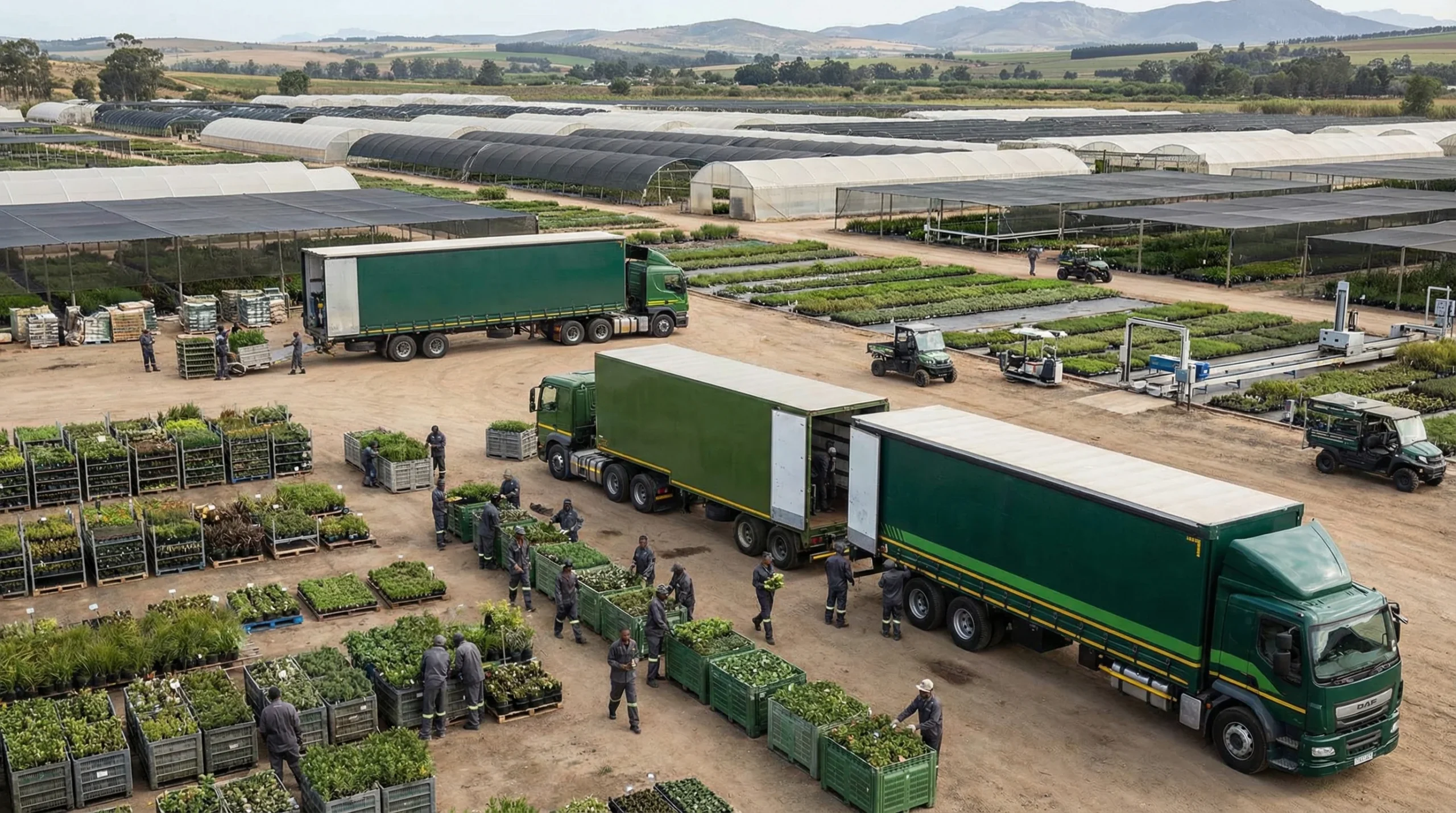
Real-World Transformations: What Success Looks Like
Theory is one thing – results are another. Let’s look at some realistic scenarios that illustrate what’s possible when nurseries commit to better inventory management.
Scenario: Taming Inventory Chaos
Imagine a wholesale nursery operation growing several hundred varieties across multiple greenhouses. Before implementing management software, they conducted full physical inventories quarterly – a process that took an entire week and shut down normal operations. Even then, their counts were often off because inventory kept moving during the count.
After implementing a real-time tracking system with barcode scanning at every movement point, this type of operation typically sees dramatic improvements. Cycle counting replaces marathon inventory sessions. Discrepancies are caught and corrected daily instead of compounding for months. Fulfillment accuracy improves because staff can trust the system.
Perhaps most importantly, leadership gains visibility they never had before. Detailed reporting and analytics show exactly what’s moving, what’s sitting, and what’s at risk. Decisions that used to be educated guesses become informed choices.
Scenario: Scaling Sales Without Scaling Problems
Consider a retail nursery that decides to expand into wholesale. Suddenly they’re dealing with larger orders, different packaging requirements, and customers who expect different things. The systems that worked for retail transactions can’t handle wholesale complexity.
With the right software foundation, this transition becomes manageable. The system handles both sales channels, automatically applying different pricing, terms, and fulfillment processes based on customer type. Inventory is shared but managed intelligently – wholesale orders don’t accidentally deplete retail stock without warning.
The result is growth without chaos. Revenue increases, but operational complexity stays under control. Staff learn one system that handles everything instead of juggling multiple tools.
Selecting the Right Software: A Practical Comparison
With dozens of options on the market, how do you choose? Start by understanding what capabilities matter most for your specific situation, then evaluate options systematically.
Critical Features to Compare
When evaluating nursery management software options, consider these key areas:
- Plant-specific inventory tracking: Can it handle growth stages, multiple locations, and living inventory challenges?
- Order management: Does it support your sales channels – wholesale, retail, online, direct-to-consumer?
- Customer management: Can you track relationships, preferences, and history effectively?
- Reporting capabilities: Will you get the insights you need to make better decisions?
- Mobile accessibility: Can your team use it in the greenhouse, not just at a desk?
- Integration options: Will it connect with your existing accounting, e-commerce, and shipping systems?
- Implementation support: What help is available during setup and training?
- Ongoing support: How responsive is the vendor when you have questions or problems?
Create a simple matrix comparing your top options across these dimensions. Weight each factor based on your priorities – what’s essential versus nice-to-have for your operation.
Making Connections: Integration Considerations
No software exists in isolation. The best nursery management system is worthless if it can’t communicate with your other tools. Before committing, verify integration capabilities for:
- Accounting platforms: Financial data should flow automatically to avoid double-entry and reconciliation headaches
- E-commerce systems: If you sell online, inventory levels should sync in real-time to prevent overselling
- Shipping carriers: Direct shipping integration saves time on label creation and provides tracking information automatically
- Point-of-sale: For retail operations, sales should update inventory instantly
Ask vendors for specifics. Generic claims about “integration capabilities” don’t mean much – you need to know whether they connect with your particular systems and what’s required to make those connections work.
Implementation: Setting Yourself Up for Success
The best software in the world won’t help if implementation goes poorly. Many failed software projects aren’t technology problems – they’re people and process problems. Here’s how to avoid the common pitfalls.
Building Your Implementation Foundation
Start with honest assessment. What does your current data look like? If your spreadsheets are a mess, cleaning them up before migration will prevent garbage-in-garbage-out. Who on your team will champion the project? Without internal advocates, resistance can derail even the best solutions.
Plan for a realistic timeline. Quick implementations sound appealing, but rushing creates problems. Budget time for data cleanup, configuration, testing, and training. Going live before your team is ready leads to frustration, errors, and sometimes abandonment of the new system entirely.
Training and Adoption Strategies
Your team needs to actually use the system for it to work. This sounds obvious, but adoption failure is one of the most common reasons software projects disappoint. People stick with familiar processes unless given compelling reasons to change.
Invest in thorough training – not just one session, but ongoing support as people encounter new situations. Identify power users who can help their colleagues. Celebrate early wins to build momentum. Address resistance directly by listening to concerns and demonstrating how the new system makes work easier, not harder.
Consider a phased approach. Start with core functions that deliver immediate value, then expand capabilities over time. Trying to implement everything at once overwhelms both the team and the system.
Moving Forward With Confidence
Implementing nursery management software is a significant decision – but so is choosing not to. Every day without proper systems is a day of inefficiency, missed opportunities, and preventable problems. The operations that thrive in coming years will be those with the tools and data to make smart decisions quickly.
You’ve spent this time learning about inventory solutions and nursery inventory management because you know there’s a better way. The question isn’t whether to modernize – it’s how and when. The right software partner understands your industry, offers solutions that fit your specific needs, and supports you through implementation and beyond.
Ready to see what’s possible for your operation? Schedule a demo with Argos to explore solutions designed specifically for nursery and greenhouse businesses. You can also learn more about warehouse management software and how it applies to your unique challenges. Your competitors are already moving forward – make sure you don’t get left behind.
Frequently Asked Questions
How does nursery management software improve efficiency?
Nursery management software enhances efficiency by automating inventory tracking and streamlining operations. It reduces manual errors and saves time spent on traditional methods like spreadsheets. With real-time data access, nurseries can better manage their stock and respond quickly to customer inquiries. This software also allows for better planning of seasonal demands and growing schedules.
Why is stock management systems essential?
inventory tracking tools is essential for tracking living inventory accurately. It helps manage complex growing schedules and seasonal fluctuations, ensuring that stock levels are always up-to-date. This software reduces the risk of errors and lost paperwork, providing clarity and efficiency. By using cloud-based systems, managers can access inventory data anytime, improving decision-making and customer satisfaction.
What features should nursery inventory management software have?
Nursery inventory management software should include features like real-time inventory tracking and mobile app integration. It should also support complex scheduling and seasonal demand management. Cloud-based accessibility is crucial for checking data from anywhere. These features help simplify operations, reduce errors, and improve overall efficiency for nursery businesses.
How has nursery management software evolved over time?
nursery software helps evolved from clunky, expensive systems to accessible, cloud-based solutions. Early software required dedicated IT support, but modern platforms are user-friendly and mobile-compatible. This evolution has made it easier for nurseries to manage inventory, track plant growth, and handle customer orders efficiently. The improved accessibility and functionality have significantly lowered the barrier to entry.
Can nursery management software handle seasonal demand changes?
Yes, nursery management software can effectively handle seasonal demand changes. It allows for flexible planning and inventory adjustments based on real-time data. By automating stock management and scheduling, nurseries can better prepare for peak seasons. This capability helps maintain customer satisfaction and ensures that operations run smoothly during high-demand periods.
Essential Cannabis Warehouse Management Strategies
Discover effective cannabis warehouse management with key inventory strategies and software solutions. Optimize your operations today!
Third-Party Logistics Services: Your Complete Guide
Discover how 3PL services can transform your logistics strategy. Learn about warehouse and logistics services, top companies, and future trends.

3PL Logistics Explained: Services, Models, and Benefits
Discover how 3PL logistics can transform your supply chain with our comprehensive guide.