
Published: March 26, 2026 |
Updated: February 19, 2026 |
Reading Time: 20mins |
By: Sean Sullivan
3pl warehouse services, 3pl logistics services, best 3pl companies has become essential for modern businesses. If you’ve ever struggled to keep up with rising customer expectations while managing warehouse space, transportation costs, and inventory accuracy, you’re not alone. Supply chain complexity has reached a point where handling everything in-house often creates more problems than it solves. This is precisely why 3PL warehouse services and 3PL logistics services have become essential tools for businesses seeking operational efficiency without the capital burden of building their own infrastructure. Finding the best 3PL companies to partner with can transform your supply chain from a cost center into a competitive advantage.
This guide breaks down everything you need to know about third-party logistics – from understanding core service offerings to evaluating potential partners and preparing for industry changes ahead. Whether you’re considering outsourcing for the first time or looking to switch providers, the insights here will help you make decisions that directly impact your bottom line.
Understanding 3PL Services and Why They Matter Now More Than Ever
Third-party logistics providers handle critical supply chain functions that would otherwise require significant investment in real estate, equipment, technology, and specialized staff. At their core, 3PL services involve outsourcing warehousing, distribution, transportation, and related logistics activities to companies that specialize in these operations.
The arrangement benefits both parties. Businesses gain access to established infrastructure and expertise without the long-term commitments of ownership. 3PL providers achieve economies of scale by serving multiple clients, which allows them to offer competitive pricing and invest in advanced systems that individual companies might not be able to justify on their own.
The Shift Toward Outsourced Logistics
Several factors have accelerated the adoption of 3PL services across industries. E-commerce growth has created demand for faster fulfillment and broader geographic coverage. Customers now expect two-day or even same-day delivery as standard, putting pressure on businesses that lack distributed warehouse networks.
Seasonal fluctuations present another challenge. Companies that experience peak periods – whether holiday rushes, agricultural seasons, or promotional cycles – face a difficult choice: maintain excess capacity year-round or scramble during busy times. 3PL providers offer flexibility that matches capacity to actual demand.
Labor challenges have also pushed businesses toward outsourcing. Finding, training, and retaining warehouse workers has become increasingly difficult. Established 3PL operations typically have more stable workforces and proven processes for managing temporary staff during volume spikes.
What 3PL Partnerships Actually Include
The scope of 3PL services varies widely based on provider capabilities and client needs. Most partnerships include some combination of the following:
- Receiving and putaway – Accepting inbound shipments, verifying quantities, and organizing inventory in optimal storage locations
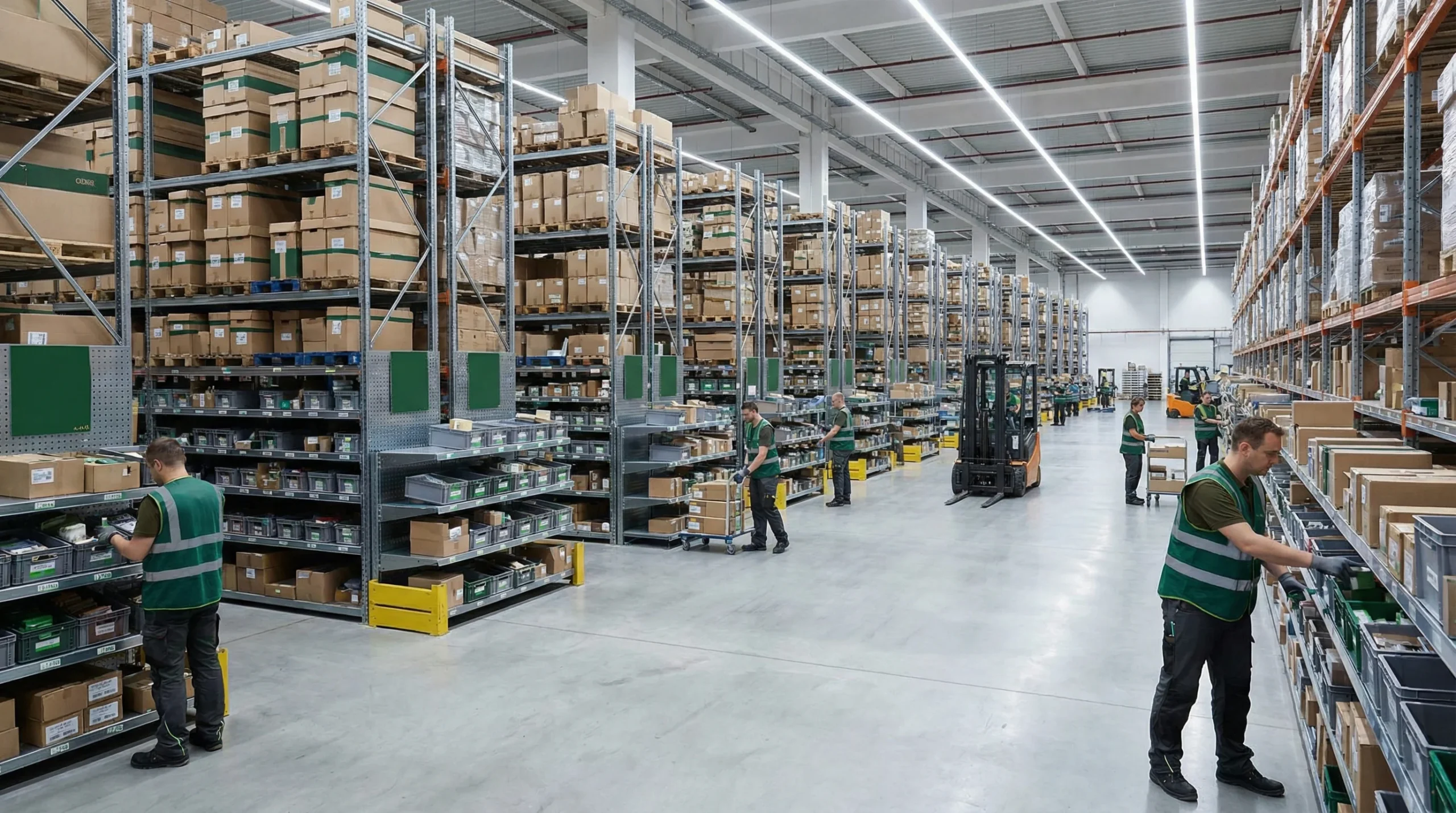
- Storage and inventory management – Maintaining accurate stock counts, managing lot numbers or expiration dates, and optimizing space utilization
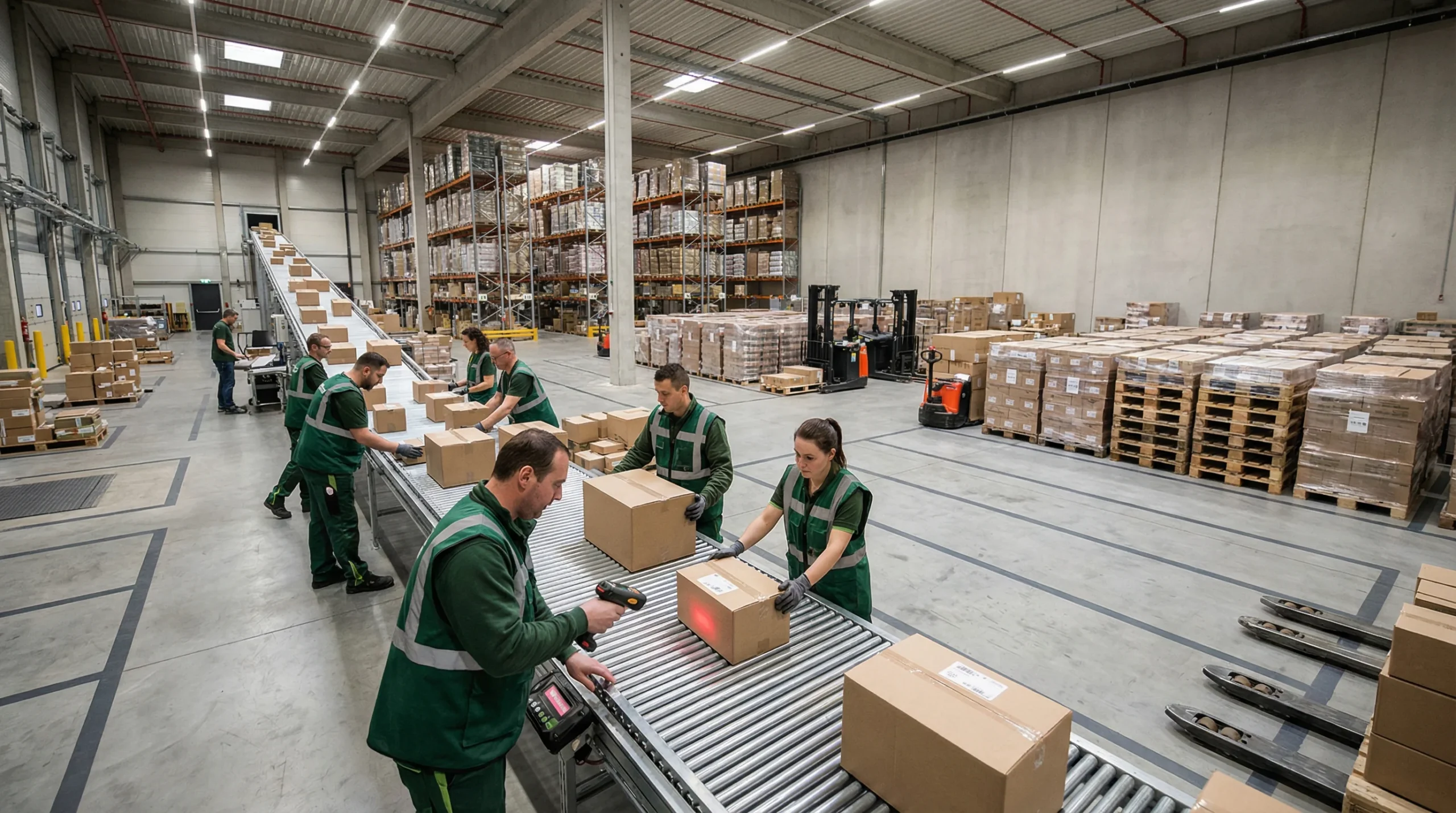
- Order fulfillment – Picking, packing, and shipping orders according to client specifications and customer expectations
- Transportation management – Coordinating carriers, negotiating rates, and tracking shipments from origin to destination
- Returns processing – Handling reverse logistics, inspecting returned items, and restocking or disposing of products appropriately
- Value-added services – Kitting, assembly, labeling, quality inspection, and other specialized tasks that go beyond basic storage and shipping
The most effective 3PL relationships are built on clear communication about which services are included, how performance will be measured, and how the partnership will evolve as business needs change.
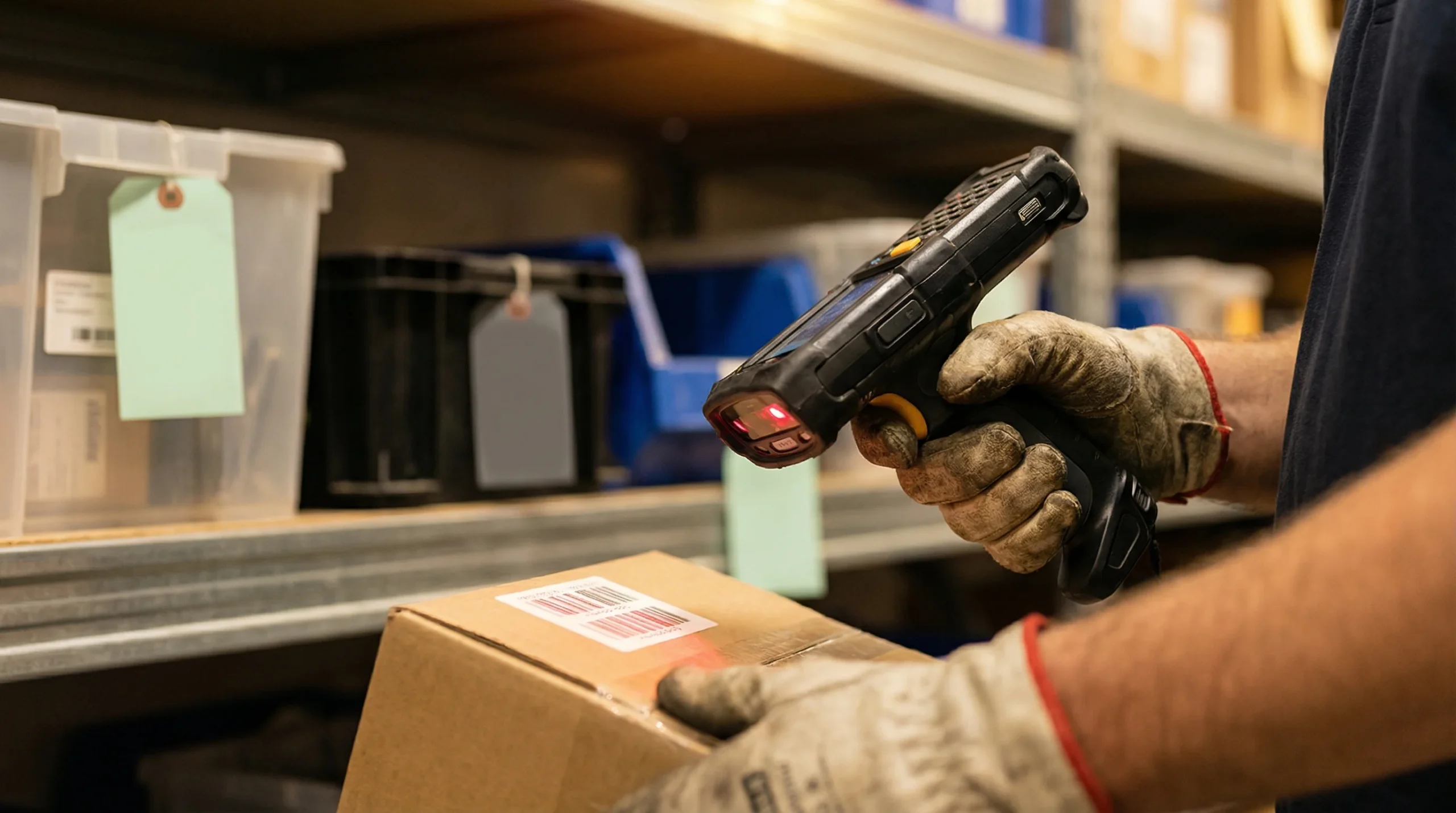
3PL Warehouse Services: Core Features That Drive Results
When businesses evaluate 3PL warehouse services, they often focus first on location and price. While these factors matter, the features that truly differentiate providers relate to how well they handle the daily challenges of warehouse operations.
Advanced Inventory Visibility and Control
Modern inventory management capabilities form the foundation of effective 3PL warehousing. You need real-time visibility into stock levels, not just periodic reports. The ability to track inventory by lot number, serial number, or expiration date becomes critical for industries with compliance requirements or product traceability needs.
Quality 3PL warehouse services offer multiple inventory management approaches based on product characteristics and client requirements. FIFO (first in, first out) ensures older stock ships before newer arrivals – essential for perishable goods or products with limited shelf life. FEFO (first expired, first out) takes this further by prioritizing items based on actual expiration dates rather than receipt dates.
Cycle counting programs maintain accuracy without the disruption of annual physical inventories. The best providers establish counting schedules based on item velocity and value, focusing attention where discrepancies would have the greatest impact.
Scalable Space and Workforce
Flexibility distinguishes 3PL warehouse services from owned facilities. Shared warehouse environments allow businesses to occupy only the space they need, expanding or contracting as volumes change. This model eliminates the problem of paying for empty space during slow periods while avoiding capacity constraints during peaks.
Labor scalability works similarly. Rather than maintaining a workforce sized for maximum volume (expensive) or average volume (inadequate during peaks), 3PL providers balance staffing across multiple clients. They also develop relationships with temporary staffing agencies and train workers to move between client accounts as needed.
Some 3PL warehouse services offer dedicated space arrangements for clients who need guaranteed capacity or enhanced security. These hybrid models provide more control than shared environments while still offloading facility management responsibilities to the provider.
Technology Integration and Data Exchange
Effective 3PL relationships require smooth information flow between systems. Order data needs to reach the warehouse quickly and accurately. Inventory updates, shipment confirmations, and tracking information need to flow back to client systems in real time.
Most established 3PL providers support EDI integration for electronic data exchange with major retail partners and common business document standards. API connections enable more flexible, real-time integrations with e-commerce platforms, ERP systems, and order management software.
The quality of these integrations directly affects operational efficiency. Poor data exchange creates manual work, delays, and errors. Strong integrations enable automated workflows that reduce handling time and improve accuracy.
Benefits That Impact Your Bottom Line
Businesses that partner with capable 3PL warehouse services providers typically experience several measurable improvements:
- Reduced capital requirements – No need to purchase or lease warehouse space, racking systems, material handling equipment, or warehouse management software
- Lower labor costs – Shared labor models, better utilization, and elimination of training and management overhead
- Improved order accuracy – Established processes, proper technology, and experienced staff reduce picking errors and shipping mistakes
- Faster order processing – Optimized workflows and appropriate staffing levels enable same-day shipping for orders received by reasonable cutoff times
- Better inventory accuracy – Professional inventory management practices maintain counts that support confident sales commitments and reduce stockouts
- Geographic reach – Access to strategically located facilities that would be impractical to establish independently
The specific benefits realized depend heavily on the quality of the provider selected and how well the partnership is structured and managed.
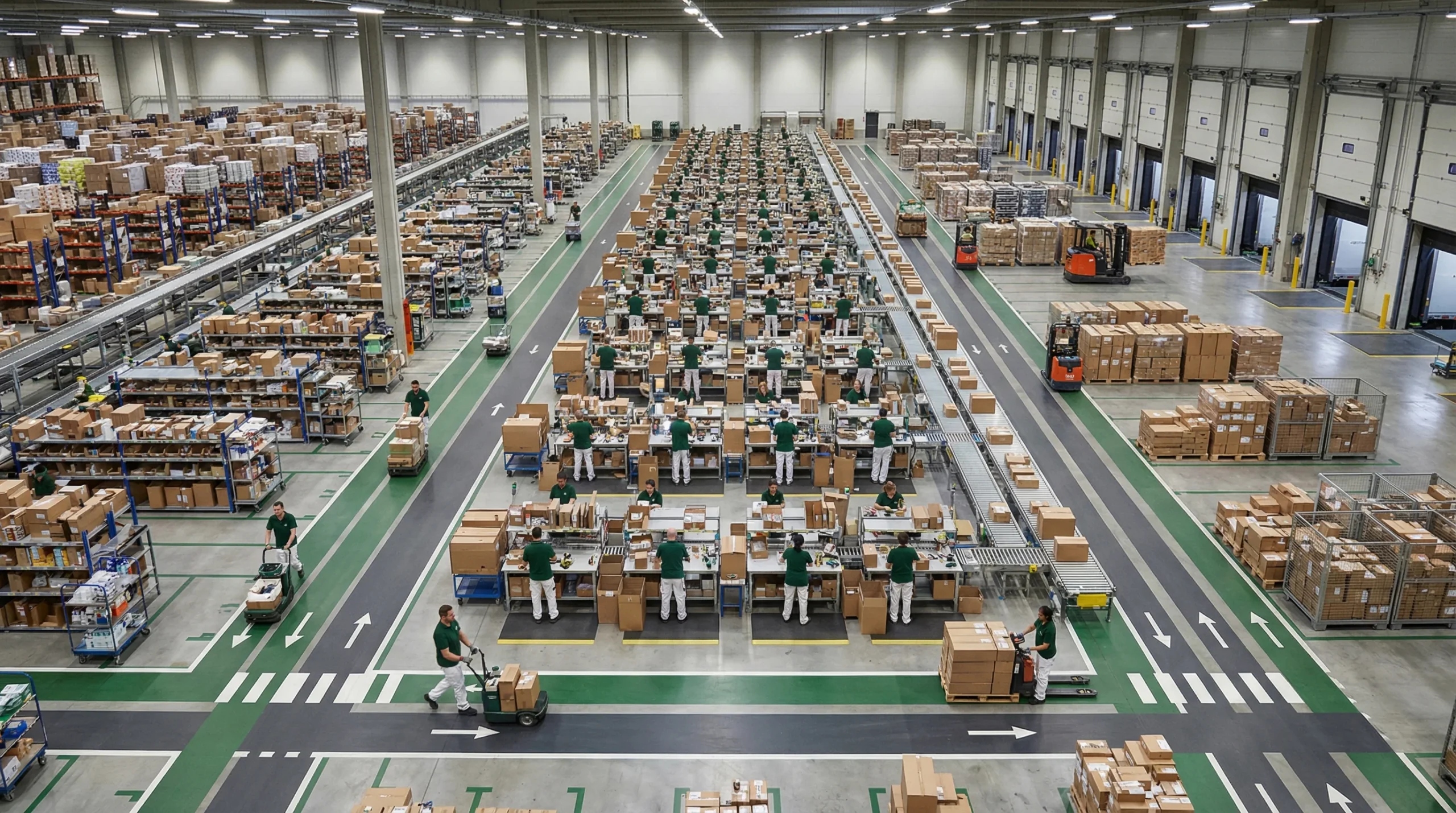
Exploring 3PL Logistics Services Beyond the Warehouse
While warehousing often serves as the entry point, comprehensive 3PL logistics services extend well beyond storage and fulfillment. Transportation management, freight coordination, and supply chain optimization capabilities can generate significant value for businesses willing to expand their outsourcing relationships.
Transportation Management and Carrier Relationships
Managing transportation in-house requires ongoing attention to carrier relationships, rate negotiations, service monitoring, and claims processing. For many businesses, this effort doesn’t justify the investment, especially when shipping volumes don’t provide leverage for competitive pricing.
3PL logistics services providers aggregate shipping volumes across their client base, giving them negotiating power that individual shippers can’t match. They maintain relationships with multiple carriers across modes – parcel, LTL, truckload, intermodal, air, and ocean – and can select the right option for each shipment based on cost, speed, and reliability requirements.
Beyond carrier selection, effective freight management services handle the operational details that consume internal resources: scheduling pickups, tracking shipments, managing accessorial charges, processing claims for damaged or lost freight, and providing visibility throughout the transportation lifecycle.
Domestic and International Logistics Coordination
Cross-border shipping introduces complexity that favors experienced partners. Customs documentation, duties and tariffs, import/export compliance, and international carrier coordination require specialized knowledge that most businesses don’t maintain internally.
3PL logistics services providers with international capabilities navigate these requirements routinely. They understand documentation requirements for different countries, manage customs broker relationships, and can advise on classification decisions that affect duty rates. For businesses importing goods, they coordinate the handoff from international to domestic transportation and manage the receiving process at destination warehouses.
Domestic distribution networks present different challenges. Reaching customers across wide geographic areas while meeting delivery expectations requires either multiple warehouses or smart use of regional carriers and zone-skipping strategies. Experienced 3PL providers design distribution strategies that balance cost against service level requirements.
Supply Chain Visibility and Control
Information might be the most valuable component of 3PL logistics services. Knowing where inventory is, when shipments will arrive, and how orders are progressing enables better decision-making throughout the organization.
Modern 3PL providers offer portals and dashboards that consolidate information from warehouse management systems, transportation management systems, and carrier tracking. Reporting and analytics capabilities transform raw data into actionable insights – identifying trends, flagging exceptions, and measuring performance against agreed standards.
This visibility extends to customers when needed. Many 3PL logistics services support branded tracking experiences that keep end customers informed without exposing the outsourcing relationship or requiring direct provider contact.
Advantages That Compound Over Time
The benefits of comprehensive 3PL logistics services accumulate as relationships mature. Initial gains from cost reduction and improved service levels are joined by longer-term advantages:
- Continuous optimization – Experienced providers identify improvement opportunities through ongoing analysis of shipping patterns, carrier performance, and operational data
- Market intelligence – 3PL providers see trends across their client base and can share insights about carrier reliability, market rates, and emerging challenges
- Risk mitigation – Diversified carrier relationships and contingency plans protect against disruptions that could cripple businesses dependent on single carriers or routes
- Technology access – 3PL providers invest in transportation management systems and other tools that would be difficult for individual shippers to justify
- Focus preservation – Logistics management consumes attention. Outsourcing frees leadership to concentrate on activities that directly generate revenue and competitive advantage
The decision to expand beyond basic warehousing into broader 3PL logistics services should be based on realistic assessment of internal capabilities and honest accounting of the resources currently devoted to logistics management.
How to Choose the Best 3PL Companies for Your Business
Finding the right logistics partner matters more than finding the cheapest one. The best 3PL companies for your business will have specific capabilities that match your needs, culture that fits your expectations, and stability that supports long-term partnership.
Defining Your Requirements Before You Start Looking
Effective 3PL selection begins with clear understanding of what you need. Before requesting proposals, document your requirements in detail:
Volume and patterns: How many orders do you ship daily, weekly, monthly? How do volumes fluctuate seasonally? What are your peak periods and how significant are they compared to baseline?
Product characteristics: What are you storing and shipping? Consider size, weight, value, fragility, temperature requirements, regulatory constraints, and any special handling needs. These factors significantly affect which providers can serve you and how they’ll price their services.
Service expectations: What order cutoff times do you need? What shipping speed do your customers expect? How important is Saturday shipping or next-day delivery? Define the service levels that represent real competitive requirements versus nice-to-haves.
Geographic needs: Where are your customers? Where does your inventory originate? Do you need single or multiple warehouse locations? Understanding your distribution requirements helps identify providers with appropriate facility networks.
Technology requirements: What systems need to integrate? What visibility and reporting do you require? Are there specific EDI or API requirements from your trading partners? The best 3PL companies invest in technology, but capabilities vary significantly.
Growth projections: Where will your business be in three years? Five years? Providers that fit today might not fit tomorrow. Select partners with capacity and capabilities to grow with you.
Evaluation Criteria That Matter
With requirements defined, evaluate potential providers against criteria that predict partnership success:
Industry experience: Has the provider worked with businesses similar to yours? Experience with your product types, sales channels, and compliance requirements reduces implementation risk and accelerates time to full performance.
Operational capabilities: Can they actually do what you need? Verify that their facilities, equipment, processes, and systems support your requirements. Site visits provide valuable insight that proposals cannot convey.
Technology infrastructure: Evaluate their warehouse management systems, integration capabilities, and client-facing tools. Modern, well-maintained technology enables efficiency and visibility. Outdated systems create limitations and frustrations.
Financial stability: Your supply chain depends on your 3PL partner remaining in business and maintaining service quality. Request financial information and evaluate their stability, especially for smaller or newer providers.
References and reputation: Speak with current clients, particularly those with similar profiles to yours. Ask about implementation experience, ongoing service quality, problem resolution, and whether they would choose the same provider again.
Cultural fit: How do they communicate? How do they handle problems? What’s their approach to partnership versus transaction? These soft factors significantly affect day-to-day experience and long-term satisfaction.
Pricing structure: Understand not just the rates but how pricing works. Are there minimums? How are storage charges calculated? What triggers accessorial fees? The best 3PL companies offer transparent pricing that aligns their incentives with yours.
Comparing Potential Partners Systematically
Create a structured evaluation process that allows fair comparison. Request proposals using a consistent format that ensures all providers address the same requirements. Score responses against your weighted criteria rather than selecting based on price alone.
Include operational testing in your evaluation where possible. Small-scale pilots or detailed process walkthroughs reveal capabilities that proposals may overstate. Pay attention to how providers respond to questions and requests during the evaluation – their behavior during courtship often predicts their behavior as partners.
Consider total cost rather than unit rates. A provider with higher per-order charges but better accuracy and fewer returns might deliver better overall economics. Similarly, geographic advantages that reduce shipping costs can offset higher warehousing rates.
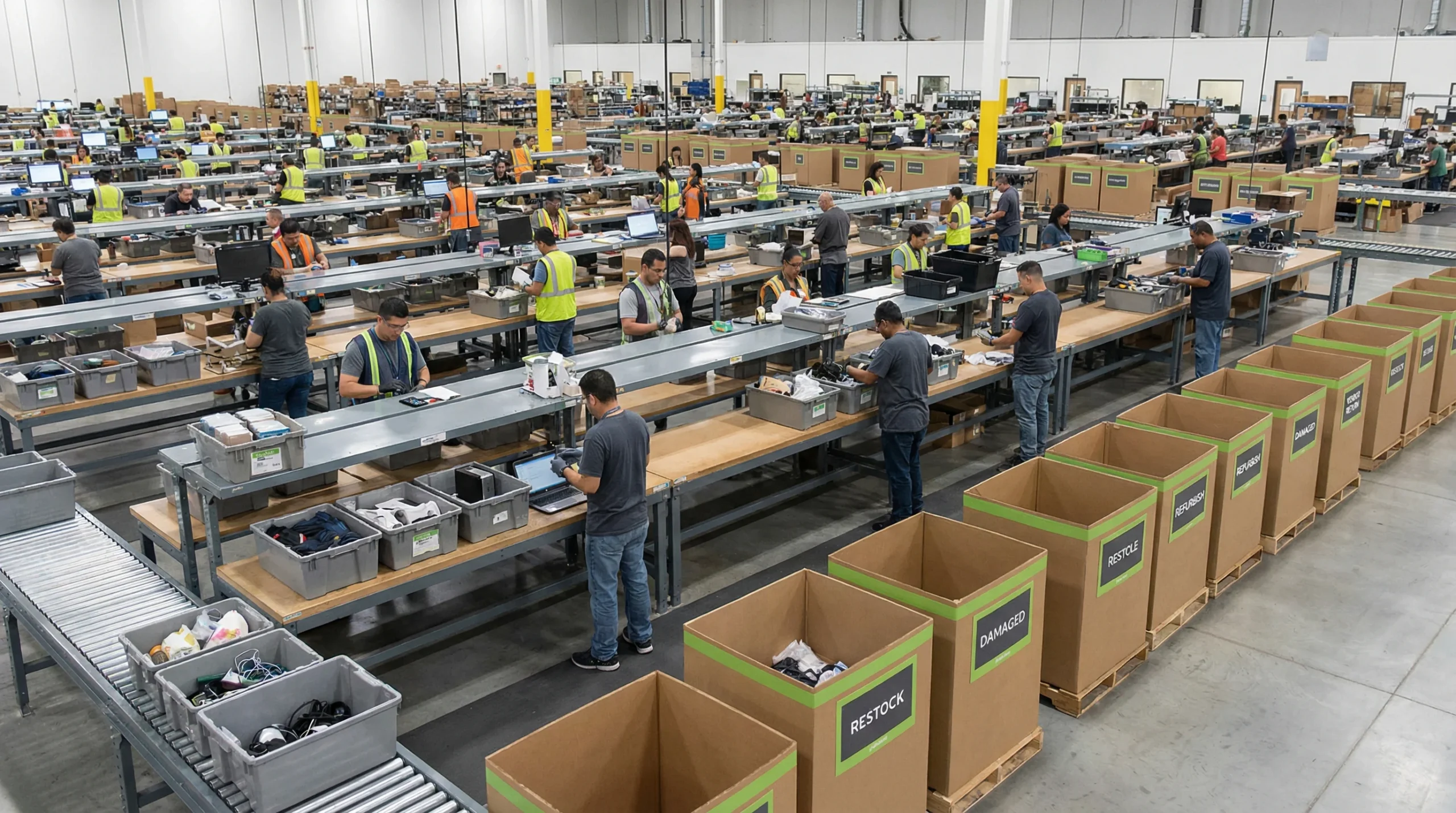
Technology and Future Trends Shaping 3PL Services
The logistics industry continues to evolve rapidly, driven by technological advancement and changing market expectations. Understanding these trends helps businesses select providers positioned for the future and prepare for changes that will affect their supply chains.
Current Technology Transforming 3PL Operations
Several technologies have moved from experimental to essential in 3PL warehouse services and logistics operations:
Warehouse automation: Goods-to-person systems, automated storage and retrieval, robotic picking, and conveyor integration reduce labor requirements while improving speed and accuracy. The best 3PL companies are investing in automation appropriate to their volume profiles and client mix.
Advanced warehouse management systems: Modern warehouse management software does far more than track inventory locations. It optimizes putaway decisions, directs picking paths, manages labor, and integrates with automation systems. WMS capabilities increasingly determine operational performance.
IoT and sensor networks: Connected devices monitor conditions throughout facilities and supply chains. Temperature sensors ensure cold chain integrity. Location beacons track equipment and inventory. Predictive maintenance systems identify equipment issues before failures occur.
Machine learning and predictive analytics: Algorithms analyze historical data to forecast demand, optimize inventory placement, predict shipping times, and identify patterns that human analysis would miss. These capabilities improve over time as systems learn from operational data.
Enhanced visibility platforms: Modern tracking goes beyond carrier scans to incorporate multiple data sources, predict delays, and proactively alert stakeholders to exceptions. Real-time visibility has shifted from competitive advantage to baseline expectation.
Emerging Developments on the Horizon
Several trends will significantly affect 3PL logistics services over the coming years:
Autonomous vehicles and drones: Self-driving trucks for linehaul transportation and drones for last-mile delivery are progressing from trials toward commercial deployment. Regulatory frameworks continue to develop, and adoption timelines remain uncertain, but the direction is clear.
Blockchain for supply chain: Distributed ledger technology promises improved traceability, simplified documentation, and enhanced trust between parties. Adoption has been slower than predicted, but use cases in food safety, pharmaceutical tracking, and trade finance are gaining traction.
Sustainability requirements: Environmental considerations increasingly influence supply chain decisions. Shippers face pressure to reduce carbon footprints, and 3PL providers that offer sustainable options – efficient facilities, optimized routing, alternative fuel vehicles – will have advantages with environmentally conscious clients.
Micro-fulfillment and urban logistics: Same-day and instant delivery expectations push inventory closer to consumers. Small-format facilities in urban areas enable rapid fulfillment but require different operating models than traditional distribution centers.
Advanced robotics: Robot capabilities continue expanding beyond structured picking tasks. Mobile robots navigate dynamic environments. Soft robotics handle delicate items. Human-robot collaboration models evolve to combine machine efficiency with human adaptability.
Preparing Your Business for Change
These trends create both opportunities and requirements for businesses using 3PL services. When evaluating providers, consider their technology roadmaps and investment patterns. Partners that embrace innovation will help you stay competitive. Those that lag will eventually constrain your capabilities.
Flexibility becomes increasingly valuable as the pace of change accelerates. Contracts that accommodate evolution, providers willing to pilot new approaches, and relationships built on partnership rather than pure transaction enable adaptation to whatever comes next.
Data ownership and portability matter more as analytics capabilities grow. Ensure you retain rights to operational data and can access it for your own analysis or transition to new providers if needed.
Real-World Success Patterns in 3PL Partnerships
While every business situation differs, common patterns emerge among successful 3PL relationships. Understanding these patterns can guide your approach to partnership development and management.
Scenario: Growing E-Commerce Operation
Consider a mid-sized consumer products company experiencing rapid e-commerce growth. Their existing warehouse, designed for wholesale distribution, struggles with the picking efficiency and shipping complexity that direct-to-consumer orders require. Order volumes fluctuate dramatically around promotions and holidays, making staffing challenging.
Partnering with a 3PL provider specializing in e-commerce fulfillment addresses these challenges. The provider’s systems integrate with the company’s online platform, automating order flow. Their pick-pack processes are optimized for single-item and small-quantity orders. Flexible labor models accommodate volume swings without the company managing temporary workers directly.
Results typically include faster order processing, reduced shipping costs through better carrier rates, and improved accuracy that decreases customer service issues. The company redirects resources previously devoted to warehouse management toward marketing and product development.
Scenario: Expanding Geographic Reach
Imagine a regional distributor seeking to serve customers nationwide. Shipping from their single facility creates transit time and cost disadvantages when serving distant markets. Opening additional warehouses independently would require major capital investment and create management complexity.
Working with a 3PL provider that operates multiple facilities solves this problem efficiently. Inventory can be positioned in warehouses near major customer concentrations. Orders ship from the nearest location with available stock, reducing transit times and shipping costs. The company gains national distribution capability without building infrastructure.
Implementation requires careful inventory planning to balance stock across locations and technology integration to route orders appropriately. Once operational, the distributed network improves customer experience while reducing overall logistics costs.
Scenario: Seasonal Business Challenges
Think about a business with extreme seasonality – perhaps outdoor products that sell primarily in spring and summer. Their shipping volumes might increase tenfold during peak season, then drop to minimal levels during off-peak months. Maintaining in-house capacity for peak periods means paying for largely empty facilities most of the year.
Shared 3PL warehouse services offer an elegant solution. During slow periods, the business pays only for the space and services actually used. As season approaches, capacity scales up. The 3PL provider manages the complexity of ramping staff and allocating space, drawing on their experience with multiple seasonal clients whose peaks may not align.
This model significantly reduces fixed costs while ensuring capacity availability when needed. It also provides access to experienced fulfillment staff without the challenge of recruiting and training seasonal workers directly.
Common Success Factors
Across different scenarios, successful 3PL partnerships share certain characteristics:
- Clear expectations – Both parties understand service requirements, performance standards, and how issues will be handled
- Open communication – Regular contact, transparent reporting, and willingness to discuss problems before they escalate
- Mutual investment – The client commits sufficient volume and timeline to justify provider investment; the provider commits resources to understand and serve the client’s specific needs
- Continuous improvement focus – Regular reviews identify optimization opportunities; both parties embrace changes that benefit the relationship
- Appropriate technology – Systems enable efficient operations and provide visibility both parties need
- Right-sized scope – Services match actual requirements without unnecessary complexity or missing capabilities
Building these characteristics into your 3PL relationships increases the probability of achieving the cost savings, service improvements, and operational flexibility that make outsourcing worthwhile.
Taking the Next Step Toward Better Logistics
Whether you’re exploring 3PL warehouse services for the first time, considering expansion of existing 3PL logistics services, or searching for the best 3PL companies to replace an underperforming provider, the path forward starts with honest assessment of your current situation and clear definition of what you need.
The logistics landscape will continue evolving. Customer expectations will rise. Technology will advance. Markets will shift. Businesses that build strong partnerships with capable 3PL providers position themselves to adapt and thrive. Those that try to manage everything internally – or settle for inadequate partners – face increasing disadvantage.
Effective warehouse management software serves as the backbone of successful 3PL operations, enabling the visibility, control, and efficiency that drive results for both providers and their clients. The right technology platform makes the difference between partnerships that struggle and those that deliver sustained value.
Ready to improve your supply chain performance? Contact our team to discuss how the right warehouse management solution can support your logistics strategy. You can also explore our warehouse management software to understand how modern WMS capabilities enable the operational excellence that distinguishes the best 3PL operations.
Your supply chain is too important to leave to chance. Make informed decisions, choose capable partners, and invest in the technology foundation that makes success possible.
Frequently Asked Questions
What are 3PL warehouse services and why are they essential?
3PL warehouse services involve outsourcing storage and distribution to specialized providers. They are essential because they allow businesses to access advanced infrastructure and expertise without large capital investments. This outsourcing helps companies manage inventory more efficiently and respond to customer demands quickly. For example, during peak seasons, 3PL services can scale operations to meet increased demand, ensuring timely deliveries.
How do 3PL logistics services benefit e-commerce businesses?
3PL logistics services benefit e-commerce businesses by providing efficient shipping and fulfillment solutions. They offer faster delivery options, such as two-day or same-day shipping, which meet customer expectations. By leveraging a network of distributed warehouses, 3PL providers ensure broader geographic coverage and reduced transportation costs. This flexibility allows e-commerce companies to focus on growth without worrying about logistical challenges.
Why is finding the best 3PL companies important for supply chains?
Finding the best 3PL companies is crucial for optimizing supply chains and reducing costs. These companies offer specialized expertise and economies of scale that improve operational efficiency. By partnering with a top-tier 3PL provider, businesses can transform their supply chain into a competitive advantage. This partnership allows access to cutting-edge technology and processes that individual companies might find hard to implement alone.
What factors drive the shift toward 3PL logistics services?
The shift toward 3PL logistics services is driven by e-commerce growth, seasonal demand fluctuations, and labor challenges. Businesses seek faster fulfillment and broader coverage, which 3PL providers can efficiently deliver. They offer scalable solutions that match capacity to demand, avoiding the need for year-round excess. Additionally, 3PL providers have stable workforces and proven processes, making them attractive options for outsourcing logistics.
How do 3PL warehouse services help manage seasonal fluctuations?
3PL warehouse services help manage seasonal fluctuations by providing scalable storage and distribution solutions. They allow businesses to adjust capacity according to demand without maintaining excess resources year-round. This flexibility ensures efficient handling of peak periods, such as holiday rushes, without the burden of permanent infrastructure. By using 3PL services, companies can focus on core operations while ensuring timely fulfillment during busy seasons.
3PL Logistics Explained: Services, Models, and Benefits
Discover how 3PL logistics can transform your supply chain with our comprehensive guide.
How a 3PL Warehouse Management System Transforms Operations
Explore the benefits and strategies of 3PL warehouse management systems for optimal logistics efficiency.
3PL Software: Features, Benefits, and How to Choose
Discover the benefits of 3PL software for efficient warehouse management and inventory control.