
Published: July 16, 2026 |
Updated: July 16, 2026 |
Reading Time: 11mins |
By: Sean Sullivan
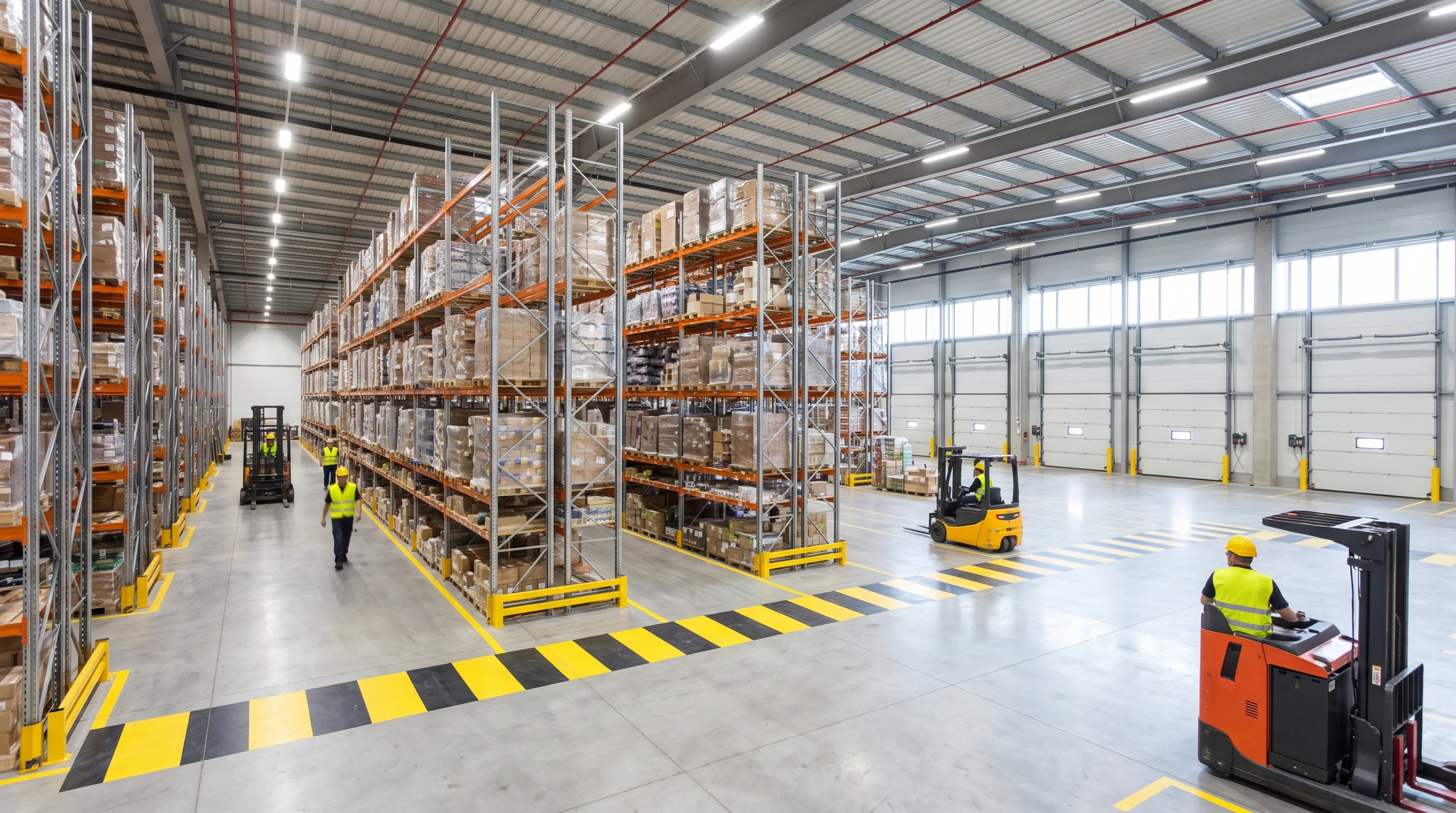
3PL Warehouse Safety & Security: Threats, Protocols, and Best Practices
Every warehouse has safety and security obligations. But third-party logistics providers carry a layer of risk that in-house operations don’t face: when something goes wrong in a 3PL facility — a theft, a safety incident, a damaged shipment — the consequences don’t stop at your own company. They extend to every client whose inventory you’re responsible for.
That’s what makes 3PL safety and security distinct. You’re not just protecting your own assets. You’re protecting your clients’ inventory, your employees’ wellbeing, and the trust that keeps your contracts in place.
This guide covers the physical security controls, day-to-day safety protocols, and emergency preparedness practices that 3PL operators need to have in place — and how software plays a role in keeping those programs running consistently.
Physical Security for 3PL Facilities
A 3PL facility handles goods from multiple clients under one roof. That creates specific security challenges: different clients have different sensitivity levels, different compliance requirements, and different expectations about how their inventory will be protected. A single-layer approach to physical security rarely covers all of it.
Access Control
Controlling who enters the facility — and when — is the starting point for 3PL security. This means badged access systems that log entry and exit by individual employee, with restrictions tied to role and shift schedule. Visitors, vendors, and temporary workers should never have unescorted access to the warehouse floor. Access logs need to be reviewable, not just theoretical.
For multi-client operations, zone-based access control is worth considering. Clients with high-value or regulated inventory may require that only designated employees can access their storage areas. Building that into your access control system is far easier than trying to enforce it manually.
Dock and Perimeter Security
The loading dock is the highest-risk point in most 3PL facilities. Inbound and outbound shipments are where inventory discrepancies, cargo theft, and unauthorized access are most likely to happen. Dock security best practices include:
- Scheduling dock appointments and closing unscheduled access windows
- Verifying driver credentials and bill of lading against PO data before a trailer is opened
- Using dock seals and trailer locks when a bay is occupied but not actively being worked
- Installing cameras that cover every dock door, with clear sightlines and recorded footage retention
The perimeter matters too. Fencing, gate controls, lighting in blind spots, and camera coverage of the yard help close off the routes that cargo theft typically exploits.
Inventory Segregation
Physical security also means protecting client inventory from one another. In a multi-client warehouse, inventory segregation — clear physical separation of each client’s goods, with labeled locations and system-enforced pick rules — reduces both accidental mixing and intentional theft. When inventory is commingled or poorly organized, losses are harder to attribute and disputes are harder to resolve.
Inventory Shrinkage: The 3PL’s Hidden Liability
Shrinkage — inventory loss from theft, damage, miscounting, or administrative error — is a fact of warehousing. But in a 3PL environment, the liability structure is different. When inventory is missing from a client account, you’re the one who has to answer for it. Even if the cause is unclear, the relationship impact is immediate.
Common Sources of 3PL Shrinkage
- Employee theft — internal theft is the leading cause of warehouse inventory loss. Access controls, cycle counting, and camera coverage in pick areas are the primary deterrents.
- Receiving errors — inventory that’s never counted correctly at inbound will be wrong forever downstream. Systematic blind receiving (where pickers count without seeing the PO quantity) catches more discrepancies at the door.
- Damage — product damaged in storage or handling is a shrinkage event if it’s not documented. Without a formal damage reporting process, you’re eating that loss without a clear record.
- Administrative error — misputs, wrong-location receipts, and system entry errors all show up as inventory variances. Most of these are recoverable if caught quickly, which is why regular cycle counting matters.
Shrinkage and Client Relationships
Managing shrinkage at a 3PL isn’t just an operational concern — it’s a contract concern. Your client agreements likely specify liability for inventory loss. Understanding what you’re on the hook for, maintaining accurate records of what was received versus what’s on-hand, and resolving discrepancies quickly keeps small problems from becoming billing disputes and bigger ones from becoming legal ones.
The operational tools that support good shrinkage control — cycle counting, lot tracking, damage documentation, receiving accuracy — are the same ones that support accurate 3PL billing. It’s not coincidental. Good inventory discipline pays off in multiple places at once.
Day-to-Day Safety Protocols
3PL warehouse safety issues and solutions tend to cluster around the same set of risks: powered industrial trucks, aisle hazards, manual handling injuries, and — in specialized operations — hazmat or temperature-sensitive materials. None of these are new problems, but they require consistent reinforcement to stay under control.
Forklift and Powered Industrial Truck Safety
Forklifts are involved in a disproportionate share of serious warehouse injuries. The basics are non-negotiable: operator certification, pre-shift inspections, enforced speed limits, pedestrian segregation in travel aisles, and no passengers. Beyond the basics, the common failure points are familiarity and complacency — experienced operators who skip steps because they’ve done it a thousand times without incident. Refresher training and spot audits help keep compliance from drifting.
Aisle and Floor Management
Cluttered aisles, inadequate signage, unmarked hazards, and inconsistent housekeeping standards are the background conditions for most minor incidents — and some serious ones. A 3PL with a busy operation and a rotating temp workforce needs to enforce aisle standards actively, not just post a policy. That means assigned responsibility for zone housekeeping, daily walkthroughs, and a clear process for reporting and correcting hazards.
Hazardous Materials
3PLs that handle hazmat or regulated materials face additional compliance obligations under OSHA, DOT, and potentially EPA depending on the product class. Proper storage, labeling, segregation from incompatible materials, spill containment, and employee training are all required. This is one area where “we haven’t had a problem” isn’t a compliance posture — it’s luck. Documentation of training and storage protocols is what regulators and insurers look for when something does go wrong.
Temporary and Seasonal Workers
3PLs often scale their workforce rapidly during peak seasons, which means integrating large numbers of new workers who don’t know the facility, the equipment, or your specific protocols. Safety incidents spike during onboarding periods. A standardized orientation process — not just a handout, but a walkthrough with checkpoints — measurably reduces that risk. Host employers (which includes 3PLs using staffing agency workers) share liability for safety with the staffing agency, so documented training is in your interest regardless of how workers are classified.
Emergency Preparedness for 3PL Facilities
3PL safety security and emergency preparedness often get treated as separate programs. They’re more useful when they’re treated as one: the protocols that keep your facility secure day-to-day are the same infrastructure that supports emergency response when something larger happens.
Fire Safety and Evacuation
Warehouse fire risk is elevated by the density of stored goods, the presence of powered equipment and charging stations, and the physical scale of the facility. Annual sprinkler inspections, clear egress paths, fire extinguisher placement and training, and documented evacuation procedures with regular drills are baseline requirements. The evacuation plan should account for your full workforce at peak — not just permanent staff, but temps and contractors who may not know the building.
Active Threat Preparedness
Workplace violence and active threat incidents in warehouse environments — including 3PL facilities — have drawn increased attention in recent years. The core of any active threat preparedness program is the same as fire preparedness: defined response options, practiced procedures, and clear communication channels. “Run-Hide-Fight” guidance from OSHA and DHS provides a starting framework, but it needs to be adapted to your specific facility layout and workforce to be actionable.
Business Continuity
When a serious incident disrupts operations — whether it’s a fire, a power outage, extreme weather, or something else — the question your clients will ask is: what happens to my inventory? Having a documented business continuity plan that covers communication protocols, alternative processing arrangements, and recovery timelines is part of what it means to be a reliable 3PL partner. It’s also increasingly something clients ask to review before signing long-term agreements.
Incident Reporting and Post-Incident Review
Every incident — safety or security — should be documented and reviewed. Not just for compliance, but because the pattern across incidents often reveals systemic issues that individual reports don’t surface alone. A near-miss reporting culture (where employees report close calls without fear of reprisal) gives you data to fix problems before they become injuries or losses.
Using Software to Manage Safety and Security Data
Safety and security programs generate a lot of data: cycle counts, equipment inspection logs, incident reports, training records, access logs, shrinkage events. The challenge for most 3PLs isn’t generating the data — it’s connecting it to operations and keeping it current.
A few specific ways software supports 3PL safety and security programs:
- Cycle counting and inventory audit trails — regular cycle counts, recorded in your warehouse management system, create a paper trail for inventory variances. When shrinkage is questioned, an audit trail either confirms your position or identifies where the breakdown happened.
- Equipment maintenance tracking — scheduled maintenance on lift equipment, dock levelers, and safety systems shouldn’t live in a spreadsheet or a paper log. When it’s tracked in your operations platform, you can see overdue items, generate service records, and demonstrate compliance.
- PO and receiving accuracy — accurate receiving at inbound, tied to your PO management system, reduces the downstream inventory discrepancies that often get misattributed to shrinkage. Knowing exactly what arrived — and when — closes the loop on inbound security.
- Reporting across clients — 3PLs managing multiple clients need to report inventory position and activity to each client separately. A platform that supports client-specific reporting removes the manual aggregation step and reduces the error rate in those reports.
For 3PL operators who manage both warehouse activity and business functions in a single platform — billing, PO management, equipment tracking — the safety data becomes part of the operational record rather than a separate program that runs parallel to everything else.
For a broader look at how 3PL operations are structured, including the software considerations that come with managing multiple clients, see our guide to what is a third-party warehouse.
Safety and Security as Operational Discipline
3PL warehouse safety and security aren’t one-time projects. They’re disciplines — ongoing programs that require the same attention to process and documentation as your inventory management or billing operations. The 3PLs that manage it well tend to treat it that way: not as a compliance checklist, but as part of how the facility runs.
If you’re looking at how software can support your 3PL safety programs, inventory controls, or business management more broadly, Argos Software works with 3PLs and transportation companies managing complex operations. Contact us to talk through what your operation needs.
Frequently Asked Questions
What are the biggest security risks for 3PL warehouses?
The highest-risk areas for 3PL security are dock access (where cargo theft most often occurs), internal theft (the leading cause of inventory shrinkage), and administrative or receiving errors that create inventory variances. Multi-client operations add complexity because inventory from different clients must be segregated and tracked separately.
How do 3PLs handle inventory shrinkage?
Most 3PLs address shrinkage through a combination of physical controls (access restrictions, camera coverage, inventory segregation), procedural controls (cycle counting, receiving accuracy, damage documentation), and system controls (audit trails, lot tracking, discrepancy reporting). Client contracts typically specify liability for inventory loss, so accurate documentation matters both operationally and legally.
What safety training is required for 3PL warehouse employees?
Required safety training for 3PL employees includes forklift and powered industrial truck certification, hazardous materials handling (if applicable), emergency evacuation procedures, and general OSHA safety orientation. For temporary workers placed through staffing agencies, host employers share responsibility for worksite safety training — this applies to 3PLs even when workers aren’t on their direct payroll.
What should a 3PL emergency preparedness plan include?
A 3PL emergency preparedness plan should cover fire evacuation procedures, active threat response protocols, weather and natural disaster procedures, communication plans for employees and clients, business continuity arrangements (how operations resume after a disruption), and incident reporting and review processes. The plan should be documented, practiced regularly, and updated when the facility or workforce changes significantly.
How does software help manage 3PL safety and security?
Software supports 3PL safety programs primarily through operational visibility: cycle counting and audit trails that surface inventory discrepancies, equipment maintenance scheduling that keeps safety systems current, PO and receiving records that document inbound accuracy, and reporting tools that give clients and managers visibility into inventory position. Platforms that integrate operations and business management give 3PLs a single record for safety-relevant data rather than requiring separate tracking systems.

Essential Guide to Nursery Inventory Management Software
Discover the benefits of nursery inventory management software to streamline operations and boost productivity.
Essential Cannabis Warehouse Management Strategies
Discover effective cannabis warehouse management with key inventory strategies and software solutions. Optimize your operations today!

Third-Party Logistics Services: Your Complete Guide
Discover how 3PL services can transform your logistics strategy. Learn about warehouse and logistics services, top companies, and future trends.