
Published: March 31, 2026 |
Updated: February 19, 2026 |
Reading Time: 14mins |
By: Sean Sullivan
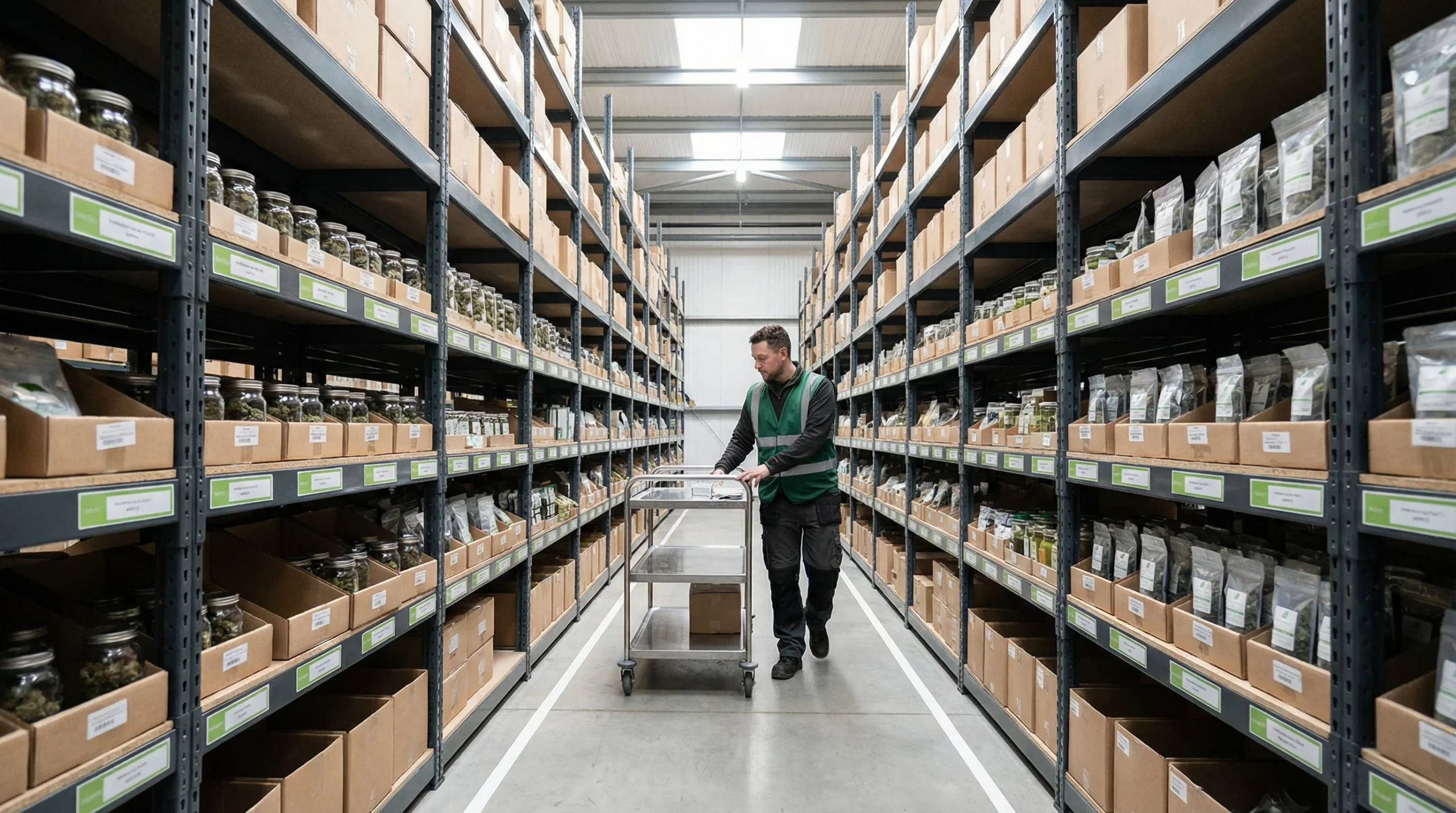
Cannabis inventory management, cannabis inventory management software, cannabis warehousing has become essential for modern businesses. You’ve spent another late night staring at spreadsheets, trying to reconcile inventory numbers that simply don’t add up. The state compliance deadline is tomorrow, and somewhere between your cultivation facility and warehouse, 47 units of product have vanished into thin air. Sound familiar? You’re not alone. Cannabis inventory management remains one of the most challenging aspects of running a compliant, profitable cannabis operation.
We’ve all been there – watching margins shrink because of inventory shrinkage, scrambling to prepare for audits, or losing sales because products weren’t where they were supposed to be. The good news? With the right cannabis inventory management software and sound cannabis warehousing practices, these problems become manageable. This guide walks you through practical strategies that real operators use to transform chaotic warehouse operations into smooth, compliant systems.
Understanding Cannabis Inventory Management: The Foundation of Success
Let’s be honest about what makes cannabis inventory management different from managing any other warehouse inventory. You’re not just tracking products – you’re maintaining a chain of custody that regulators can audit at any moment. Every gram matters, every transfer needs documentation, and mistakes don’t just cost money; they can cost your license.
Effective cannabis inventory management goes beyond knowing what’s on your shelves. It encompasses tracking products from seed to sale, managing batch-specific information, monitoring expiration dates, and maintaining the detailed records that compliance auditors expect to see. When inventory systems fail, the consequences ripple through every aspect of your business.
Why Accurate Inventory Tracking Matters More Than You Think
Accurate inventory isn’t just a regulatory checkbox – it’s the difference between profitable operations and constant firefighting. When your numbers are right, you can confidently accept orders knowing you’ll fulfill them. You avoid the embarrassment of telling customers their product isn’t available after all. You stop over-ordering to compensate for uncertainty.
Consider what happens when inventory accuracy drops below 95%. Picking errors increase because workers can’t trust location data. Customer service suffers as orders ship late or incomplete. Cash flow tightens because money sits tied up in excess safety stock. Compliance teams spend hours reconciling discrepancies instead of improving processes.
The cannabis industry faces unique accuracy challenges that other industries don’t encounter:
- Product weight can change due to moisture loss, requiring regular reconciliation
- State-mandated tracking systems must sync perfectly with internal records
- Batch and lot tracking requirements demand granular detail most industries don’t need
- Product variations (different strains, potencies, package sizes) multiply SKU counts quickly
- Strict segregation requirements between recreational and medical inventory in some states

Common Challenges That Keep Operators Up at Night
If you’ve managed cannabis inventory for any length of time, these challenges probably feel all too familiar. The regulatory environment shifts constantly, with different rules in each state and requirements that change with little notice. Just when you’ve mastered one compliance framework, new regulations appear.
Then there’s the integration headache. Your state seed-to-sale system needs data. Your accounting software needs data. Your e-commerce platform needs data. Getting these systems to talk to each other without manual data entry feels like an impossible puzzle. Many operators end up with staff spending hours each day copying information between systems – a recipe for errors and frustration.
Physical security adds another layer of complexity. Cannabis products require secure storage, often with specific environmental controls. Tracking who accessed what, when, and why creates documentation demands that traditional warehouse operations never face. The combination of high product value and strict regulations means inventory control mistakes carry consequences that extend far beyond a simple write-off.
Selecting Cannabis Inventory Management Software That Actually Works
Here’s where we’ve seen many operations stumble. They invest in software that looks impressive in demos but fails in daily use. The cannabis industry has attracted dozens of software vendors, but not all solutions handle the unique demands of cannabis warehousing equally well.
Before evaluating specific platforms, take time to document your actual workflows. How do products move through your facility? What information do you need to capture at each step? Which state systems must your software integrate with? What reports do your compliance team and management need? These questions shape your software requirements more than any feature checklist.
Essential Features Your Software Must Have
Cannabis inventory management software needs capabilities that general warehouse systems often lack. State compliance integration tops the list – your software must communicate with systems like Metrc, BioTrack, or whatever platform your state requires. Manual re-entry of data between systems creates errors and wastes time your team doesn’t have.
Strong inventory tracking and visibility capabilities should include lot and batch tracking that follows products through their entire lifecycle. You need to know not just what you have, but when it was produced, which cultivation batch it came from, testing results, and expiration dates. This granularity supports both compliance and quality control.
Look for these specific capabilities when evaluating options:
- Real-time inventory updates that reflect immediately across all connected systems
- Mobile scanning capabilities for efficient receiving, picking, and cycle counting
- Role-based access controls that limit sensitive functions to authorized personnel
- Comprehensive audit trails showing every inventory transaction and who performed it
- Automated alerts for low stock, expiring products, and compliance deadlines
- Flexible reporting that meets both operational and regulatory requirements
The Real Benefits of Proper Software Integration
When cannabis inventory management software integrates properly with your operations, the transformation goes beyond efficiency gains. Your team stops dreading audits because the data is already organized and accessible. Customer service improves because accurate inventory means accurate promises. Management decisions improve because reporting and analytics capabilities provide real visibility into operations.
Integration with order management functions deserves special attention. When inventory and orders share a single system, you eliminate the delays and errors that come from disconnected processes. Orders automatically check inventory availability. Picks generate from real-time stock data. Shipments update inventory immediately.
Financial benefits compound over time. Reduced labor for manual data entry and reconciliation frees staff for higher-value work. Lower shrinkage rates improve margins directly. Better demand forecasting from accurate historical data reduces both stockouts and overstock situations. Faster audit responses reduce the professional fees associated with compliance reviews.

Cannabis Warehousing Best Practices: Building Efficient Operations
Software alone won’t fix a poorly designed warehouse. Physical layout, standard operating procedures, and team training all contribute to successful cannabis warehousing operations. The best technology in the world can’t compensate for products stored in illogical locations or staff who don’t follow consistent processes.
We’ve seen operations transform their efficiency by stepping back and examining their physical workflows before making technology investments. Sometimes simple changes – repositioning workstations, reorganizing storage zones, or adjusting shift schedules – deliver immediate improvements that technology can then amplify.
Designing Warehouse Layouts That Support Compliance and Efficiency
Cannabis warehousing layout must balance efficiency with regulatory requirements. Security considerations often dictate certain aspects of layout – limited access points, camera coverage zones, and segregated storage areas for different product categories or license types. Within these constraints, you still have significant flexibility to optimize workflows.
Start by mapping your product flow from receiving through shipping. Where do products enter? What processing or inspection happens? How do they move to storage? What’s the picking path for outbound orders? Look for backtracking, congestion points, and wasted movement. Each unnecessary step costs time and creates opportunities for errors.
Effective cannabis warehouse layouts typically incorporate these elements:
- Dedicated receiving areas with space for inspection and compliance documentation
- Climate-controlled zones for products requiring specific temperature or humidity ranges
- High-velocity pick locations for fast-moving SKUs positioned near packing stations
- Secure vault or cage storage for high-value products with additional access controls
- Quarantine areas for products awaiting testing results or compliance clearance
- Returns processing zones separated from primary inventory to prevent contamination
The principle of putting frequently accessed items in the most accessible locations applies to cannabis as much as any other warehouse operation. Analyze your order history to identify which products move most often, then position them to minimize travel time during picking.
Maintaining Regulatory Compliance Without Slowing Operations
Compliance and efficiency often feel like competing priorities, but they don’t have to be. The key lies in building compliance into your standard workflows rather than treating it as a separate activity. When compliance checks happen automatically as part of normal operations, they don’t create the bottlenecks that arise from periodic audits or catch-up documentation sessions.
Consider how you handle incoming shipments. A compliant receiving process verifies quantities, checks manifests against delivery, inspects products for quality issues, and documents everything in both your internal system and state tracking platforms. That’s a lot of steps. Designed poorly, receiving becomes a bottleneck. Designed well, with clear procedures and appropriate technology support, receiving flows smoothly while capturing all required information.
Training plays a critical role in compliance sustainability. When team members understand why procedures exist – not just what to do, but the regulatory requirement driving each step – they’re more likely to follow processes consistently. They also become better at spotting potential issues before they become compliance problems. As industry experts note, investment in staff training pays dividends in both compliance and operational performance.
Integrating New Software with Your Existing Systems
Even the best cannabis inventory management software delivers limited value if it operates in isolation. Your accounting system needs cost and revenue data. Your sales platform needs availability information. State compliance systems require regular data feeds. Successful integration connects these pieces into a coherent whole.
Many cannabis operations underestimate integration complexity. They assume that because two systems both track inventory, connecting them should be simple. In practice, data formats differ, update frequencies vary, and edge cases create synchronization challenges. Planning for integration from the start helps avoid surprises during implementation.
Creating an Integration Plan That Actually Works
Start your integration planning by documenting every system that touches inventory data. Include not just major platforms but also spreadsheets, manual logs, and ad-hoc tracking tools that have crept into your operations. Understanding the current state completely prevents overlooking critical data flows during transition.
Next, map the data that needs to flow between systems. What information originates in each system? Where does it need to go? How frequently must updates occur? Which system serves as the source of truth for each data element? These questions reveal integration requirements and highlight potential conflict points.
A practical integration approach typically follows these phases:
- Audit existing systems, data formats, and current integration points
- Define integration requirements and identify the source of truth for each data type
- Evaluate API integration capabilities of your chosen software
- Build and test integrations in a staging environment before production deployment
- Migrate historical data with careful validation at each step
- Run parallel operations briefly to verify integration accuracy
- Train staff on new workflows and troubleshooting procedures

Working Through Integration Obstacles
Even well-planned integrations encounter obstacles. Legacy systems may lack modern integration capabilities. State compliance platforms sometimes have limited API functionality or unusual data requirements. Staff may resist changing familiar workflows, even when new processes are objectively better.
When facing technical integration challenges, look for middleware solutions that can bridge gaps between systems. Sometimes a relatively simple connector application solves problems that would otherwise require expensive custom development. Your software vendors may have existing integrations with common platforms that reduce the work needed.
Change management deserves as much attention as technical implementation. Involve key staff members early in the process, gathering their input on current pain points and proposed solutions. When people feel heard during planning, they’re more likely to embrace changes during rollout. Celebrate early wins to build momentum and address concerns promptly before they become entrenched resistance.
Real-World Applications: How Operations Transform with Better Systems
Abstract principles become more meaningful when you see how they apply in actual operations. While every cannabis business faces unique circumstances, certain patterns emerge repeatedly in successful warehouse management transformations.
Achieving Significant Efficiency Gains
Imagine a mid-sized cannabis distributor struggling with order fulfillment. Their picking process involves paper lists, manual inventory checks, and frequent stockouts discovered only when pickers reach the shelf. Orders that should take minutes stretch into extended searches. Customers grow frustrated with inconsistent service.
By implementing structured warehouse zones, mobile scanning during picks, and real-time inventory visibility, similar operations have achieved dramatic improvements. Picking times drop significantly when workers trust that inventory is where the system says. Error rates fall when barcode scanning confirms correct products. Customer satisfaction improves when orders ship complete and on time.
The efficiency gains extend beyond the warehouse floor. Management spends less time investigating inventory discrepancies. Customer service fields fewer complaints. Finance closes books faster with more reliable inventory valuations. The ripple effects touch nearly every business function.
Building Sustainable Compliance Systems
Consider a cultivation and processing operation facing their first major compliance audit. Their records exist across multiple systems, spreadsheets, and paper files. Assembling the required documentation takes weeks of staff time and still leaves gaps that require explanation. The experience is stressful and expensive.
Operations that implement unified cannabis-specific software solutions often find subsequent audits dramatically easier. When all data lives in connected systems with proper audit trails, generating compliance reports becomes routine rather than heroic. Discrepancies surface immediately for investigation rather than accumulating unnoticed. Auditors spend less time on site because the documentation they need is organized and accessible.
Beyond audit preparation, consistent compliance systems reduce daily stress. Staff know exactly what documentation each process requires. Alerts flag potential issues before they become violations. Management can verify compliance status at any time rather than discovering problems only during formal reviews.
Taking the Next Step Toward Better Cannabis Warehouse Management
Managing cannabis inventory and warehouse operations effectively requires bringing together the right strategies, processes, and technology. The challenges are real – regulatory complexity, integration demands, and the need for absolute accuracy create pressures that most industries never face. But operators who address these challenges systematically build operations that are both compliant and profitable.
The strategies outlined here provide a framework for improvement, whether you’re just entering the cannabis industry or looking to optimize existing operations. Start by honestly assessing your current state. Identify your biggest pain points. Then address them systematically, building on each improvement to create lasting operational excellence.
Ready to explore how modern warehouse management software can transform your cannabis operations? Discover how comprehensive warehouse management solutions address the unique challenges of cannabis inventory management. For personalized guidance on optimizing your specific operation, contact our team for a consultation. Your path to more efficient, more compliant cannabis warehouse management starts with a conversation about your goals and challenges.
Frequently Asked Questions
What is cannabis inventory management and why is it important?
Cannabis inventory management involves tracking products from seed to sale. It ensures compliance with regulations and prevents costly errors. Accurate management helps maintain a chain of custody and supports business profitability. Without it, companies risk losing licenses and facing financial losses.
How does cannabis inventory management software benefit businesses?
Cannabis inventory management software streamlines tracking and compliance processes. It automates documentation, reducing manual errors and improving efficiency. This software ensures accurate inventory levels, supports regulatory audits, and enhances operational profitability. By using it, businesses can focus more on strategic growth rather than firefighting inventory issues.
Why is cannabis warehousing crucial for inventory management?
Cannabis warehousing is crucial for maintaining inventory accuracy and compliance. Proper warehousing practices ensure products are stored correctly, reducing shrinkage and errors. It supports efficient order fulfillment and regulatory adherence. Effective warehousing is essential for managing batch-specific data and expiration dates, ensuring smooth operations.
What challenges does cannabis inventory management face?
Cannabis inventory management faces challenges like moisture loss affecting product weight. It requires precise tracking and documentation to meet regulatory standards. Errors can lead to license loss and financial penalties. The industry demands accurate batch tracking and real-time inventory updates to avoid compliance issues.
How can cannabis inventory management software improve compliance?
Cannabis inventory management software enhances compliance by automating record-keeping and tracking. It ensures all regulatory requirements are met with real-time data accuracy. The software minimizes human error and facilitates smooth audits, reducing the risk of penalties. By integrating with other systems, it supports end-to-end compliance management.

Essential Guide to Nursery Inventory Management Software
Discover the benefits of nursery inventory management software to streamline operations and boost productivity.
Essential Cannabis Warehouse Management Strategies
Discover effective cannabis warehouse management with key inventory strategies and software solutions. Optimize your operations today!

Third-Party Logistics Services: Your Complete Guide
Discover how 3PL services can transform your logistics strategy. Learn about warehouse and logistics services, top companies, and future trends.