
Published: January 20, 2022 |
Updated: February 17, 2026 |
Reading Time: 7mins |
By: Sean Sullivan
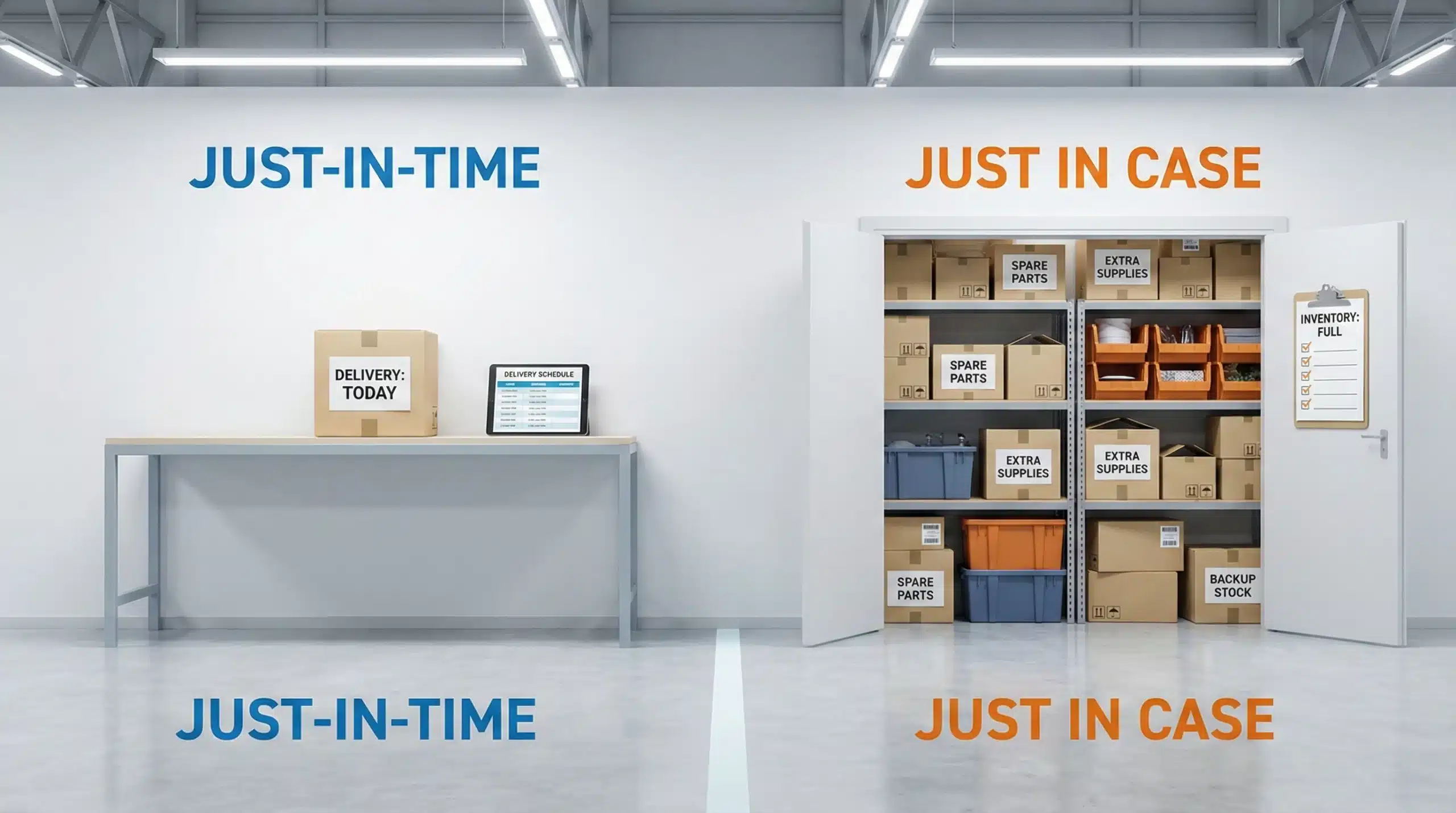
You’ve heard of Just-In-Time (JIT) inventory control. Unfortunately, that control method no longer functions as well as it used to due to supply chain uncertainty. This has resulted in the crippling of manufacturing and warehouse distribution worldwide.
Were your customers prepared? If not, it’s time to talk to them about considering a Just-in-Case (JIC) approach to storing more at your 3PL warehouse.
Just-In-Time was Then
Just-in-Time was all well and good until 2020. Then COVID-19 took the globe by storm, halting the economy, and shutting down businesses everywhere. Beyond the travel and hospitality industries, schools, and hospitals, the virus affected manufacturers, logistics, and distributors. The resulting shutdowns left customers with weak order fill rates and no relief in sight, which continues to this day.
JIT has been around since the 1970s. First incorporated by Japanese manufacturing companies, it is a management strategy that aligns raw-material orders from suppliers directly with production schedules. JIT was adopted in the U.S. to improve operations and inventory control. Later, the technique was implemented in warehouses and distribution centers to improve efficiency and inventory costs.
But supply chain delays have meant that raw materials and inventory have not arrived as scheduled, idling production lines and stopping the flow of goods to and from warehouses. With warehouse shelves and 3PL racks empty, companies are scrambling to meet order-fill rates. It’s time to urge your third-party logistics warehouse customers to consider adopting Just-In-Case (JIC).
From procurement to delivery, connect every step of your supply chain in one unified system.
Request a Demo

What is Just-in-Case?
JIC is a whole new take on forecasting and inventory ordering. According to a December 2021 article by Inbound Logistics, “Businesses are transitioning from Just-in-Time to what has become known as a ‘Just-in-Case’ strategy. Just-in-Case refers to the practice of holding larger amounts of ‘safety’ stock, enabling a company to avoid stockouts.”
JIC involves storing more inventory than would be needed under just-in-time conditions, in case of disruptions in the supply chain.
The benefits of JIC include:
- Reduced risk of production disruptions
- Increased flexibility to deal with supply chain disruptions
- Improved customer satisfaction due to reduced out-of-stocks
While some of your 3PL warehouse customers may not be a fan of taking risks, JIC is a way to manage them. Here are three easy ways to work with your customers to be better prepared:
- Help your customers by sharing reports that show order history so they can easily see which products are, and will remain, in high demand.
- Go back to 2018 (or earlier) to identify any seasonal trends too.
- Encourage your customers to adjust their reorder levels in light of any history of delays and out-of-stocks, so you don’t have empty racks without anything to store or ship.
It’s pretty simple – encourage them to keep you supplied so they can meet demand when supply chains are interrupted.
The idea of JIC is counter to “lean,” since it requires an up-front investment, more warehouse space, and potential inventory overload. At first look, JIC doesn’t scream efficiency. But does it hurt? If your customers have inventory on hand to meet order fill, it’s a win-win for everyone in the chain, giving a competitive advantage to your customers in the marketplace.
Convincing customers to maintain higher inventory levels is just one way your 3PL warehouse can help them weather the current storm, and be prepared for the next one. Are you ready to discuss JIC with your customers?
If you need help addressing supply chain issues with your WMS software or implementing Just-In-Case inventory control in your warehouse, find out how Argos Software can help!
Hybrid Inventory Management: Balancing JIT and JIC Strategies
The most successful companies today aren’t choosing strictly between Just-In-Time and Just-In-Case inventory management. Instead, they’re implementing hybrid approaches that leverage the strengths of both strategies while minimizing their respective weaknesses.
A hybrid inventory model allows businesses to maintain lean operations for predictable, fast-moving products while building strategic safety stock for critical or volatile items. This approach requires sophisticated classification of inventory based on multiple factors:
- Demand predictability: Items with consistent demand patterns can remain on JIT schedules
- Supply reliability: Products from unstable suppliers need JIC buffer stock
- Lead times: Long lead-time items require larger safety stock buffers
- Business impact: Mission-critical components warrant JIC treatment regardless of cost
Warehouse management systems can automate this classification process, continuously analyzing demand patterns, supplier performance, and market conditions to optimize inventory levels. For example, a automotive parts distributor might maintain JIT levels for common brake pads from reliable domestic suppliers, while holding three months of safety stock for specialized electronic components sourced from overseas.
The key to successful hybrid management lies in dynamic adjustment. As supply chain conditions change, the balance between JIT and JIC should shift accordingly. During periods of stability, businesses can reduce safety stock levels and operate more leanly. When disruptions emerge, they can quickly pivot to higher inventory levels for affected product categories.
Technology Solutions for Just-In-Case Implementation
Successfully transitioning to or implementing Just-In-Case inventory management requires robust technological infrastructure that goes far beyond basic warehouse management systems. Modern supply chain visibility platforms provide the real-time data and predictive analytics necessary to optimize safety stock levels without excessive carrying costs.
Advanced Demand Forecasting
Machine learning algorithms can analyze historical demand patterns, seasonal trends, and external market factors to predict optimal safety stock levels. These systems consider variables traditional forecasting methods miss, such as weather patterns, economic indicators, and even social media trends that might impact demand.
Supplier Performance Monitoring
Real-time supplier scorecards track delivery performance, quality metrics, and lead time variability. When supplier reliability scores decline, automated systems can trigger increased safety stock orders before disruptions occur. Integration with supplier systems provides visibility into their inventory levels and production capacity, enabling proactive adjustments.
Multi-Echelon Inventory Optimization
Enterprise-level inventory optimization tools analyze entire supply networks to determine where safety stock should be positioned for maximum effectiveness. Rather than holding excess inventory at every location, these systems identify strategic points where buffer stock provides the greatest protection against disruptions while minimizing total carrying costs.
Cloud-based platforms enable real-time collaboration between suppliers, manufacturers, and distributors, creating shared visibility that reduces the need for excessive safety stock at individual nodes. When all parties can see actual demand and inventory positions across the network, they can coordinate responses more effectively during disruptions.
Frequently Asked Questions
How much extra inventory should companies hold for Just-In-Case strategy?
The amount varies by industry and historical demand patterns. Companies should analyze 2-3 years of order history to identify seasonal trends and calculate safety stock levels based on lead time variability and service level targets. A good starting point is increasing current inventory levels by 20-40% for critical items.
What are the main costs of switching from JIT to JIC?
Primary costs include increased warehouse space requirements, higher carrying costs for excess inventory, and additional capital investment in stock. Companies also face potential obsolescence risks and insurance costs. However, these expenses often offset against reduced stockout costs and lost sales during supply chain disruptions.
Can small businesses afford to implement Just-In-Case inventory management?
Yes, small businesses can implement JIC selectively by focusing on their top 20% of products that generate 80% of revenue. They can start with modest safety stock increases and partner with 3PL providers to share warehouse costs rather than investing in dedicated space.
How do you determine which products need Just-In-Case safety stock?
Prioritize products with high demand variability, long supplier lead times, and critical impact on operations. Analyze historical stockout frequency, supplier reliability scores, and customer complaints. Focus on items that are difficult to substitute and have high profit margins or strategic importance to your business.
What technology helps manage Just-In-Case inventory effectively?
Advanced WMS software with demand forecasting capabilities, inventory optimization tools, and real-time visibility across supply chains are essential. These systems help balance carrying costs with service levels, automate reorder point calculations, and provide analytics to continuously refine safety stock levels based on changing market conditions.

Complete Guide to Greenhouse Management Software Benefits
Discover the benefits of greenhouse management software and how Argos can optimize your operations.

Unlock Efficiency with Plant Nursery Management Software
Discover the benefits of plant nursery management software to boost your greenhouse operations.
Preventing Stock Discrepancies in Warehouses: Causes, Risks, and Proven Solutions
Avoid stock discrepancies by understanding their causes, implementing cycle counting, staff training, and using technology to ensure accurate warehouse inventory.