
Published: March 10, 2026 |
Updated: February 17, 2026 |
Reading Time: 10mins |
By: Sean Sullivan

You might be wondering which warehouse platform actually fits your operation, and how to evaluate it without getting lost in vendor jargon. This guide breaks down wms system examples, clarifies wms vs oms, and explains the Benefits of Implementing a WMS in Organizations in practical terms so supply chain, logistics, and IT teams can make confident decisions.
Instead of a generic overview, you will see how WMS organization works on the floor, what to look for in real deployments, and how integration choices affect scalability. If you are planning a new implementation or replacing a legacy system, the goal is simple: fewer errors, faster throughput, and better visibility.
What does WMS organization mean in day to day warehouse operations?
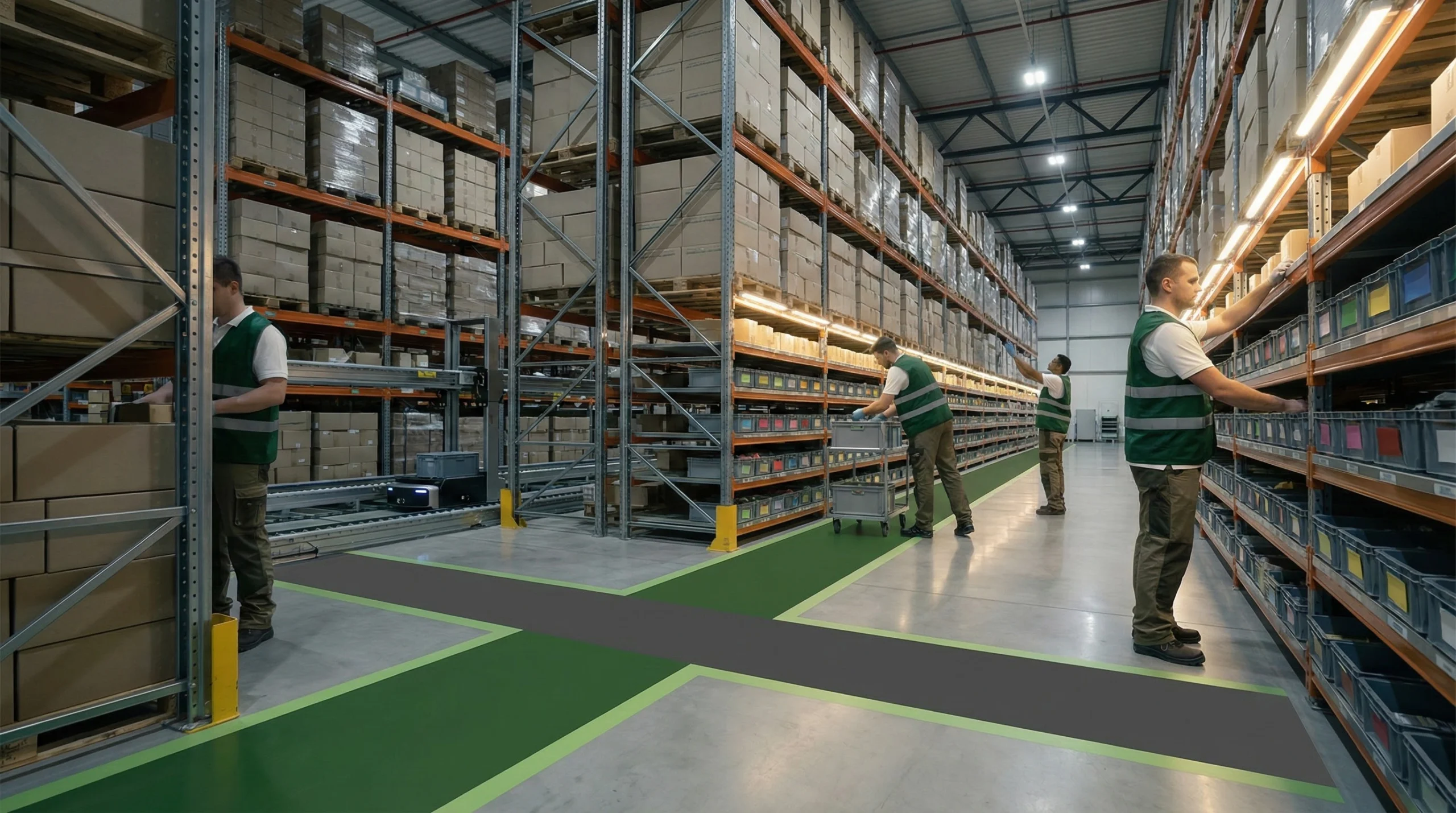
WMS organization is the way a Warehouse Management System structures work across people, inventory, locations, and equipment so execution stays consistent shift after shift. It is not just software screens. It is the operating logic behind receiving, putaway, replenishment, picking, packing, shipping, and returns.
At a practical level, WMS organization answers questions managers and supervisors face constantly: Where should this pallet go? Which orders should be waved first? What is the best pick path? What is the current labor workload by zone? A strong WMS turns those decisions into repeatable rules, then captures the results for continuous improvement.
Most operations rely on a few core building blocks:
- Location management (zones, bins, capacity, constraints, slotting rules)
- Inventory control (real time balances, status, lots, serials, expiration)
- Task management (directed work, interleaving, exception handling)
- Order fulfillment execution (waves, batch picking, cartonization support)
- Visibility and reporting (KPIs, audit trails, productivity, accuracy)
When these components are configured well, the warehouse becomes easier to run, easier to train, and easier to scale. In other words, WMS organization is how you turn process knowledge into system driven execution.

Which wms system examples best illustrate what a WMS can do?
If you are comparing options, looking at wms system examples helps you map features to real requirements. Different platforms tend to be strong in different environments, such as high volume ecommerce, complex manufacturing, or multi site distribution.
Here are commonly referenced wms system examples and what they typically demonstrate:
- SAP Extended Warehouse Management (EWM): deep integration with SAP ERP, advanced labor and automation support, strong for complex, process heavy operations.
- Oracle WMS: robust enterprise controls, configurability, and broad ecosystem integration, often used in large multi facility networks.
- Manhattan Associates WMS: strong fulfillment execution, wave planning, and omnichannel capabilities, frequently deployed in high throughput distribution.
- Argos Warehouse Management Software: configurable workflows designed to improve execution, accuracy, and visibility while supporting integration strategies that fit your IT landscape.
The most useful way to evaluate wms system examples is to translate them into your own use cases. For instance, if you run food and beverage, prioritize catch weight, lot control, and expiration logic. If you run wholesale distribution, focus on replenishment, directed putaway, and pick productivity.
Real world applications: what results should you expect from a WMS?
Teams often ask what a WMS changes first. In many warehouses, the earliest gains come from reducing manual decisions and enforcing scan based execution. A typical pattern is improved inventory accuracy, fewer picking errors, and faster dock to stock.
Consider a retail distribution environment where mispicks drive customer credits and rework. After implementing a WMS with directed picking and verification scans, it is common to see measurable improvements such as:
- Lower picking error rates through scan validation and exception workflows
- Shorter order cycle times through optimized waves and pick paths
- Better slotting decisions using velocity data and location constraints
For more benchmarks and operational perspectives, sources like Inbound Logistics warehouse operations coverage and SupplyChain247 supply chain technology insights can help you compare practices across industries.

WMS vs OMS: what is the difference and when do you need both?
The wms vs oms question comes up in nearly every modernization project, especially when ecommerce and B2B orders flow through the same building. The short answer is that they solve different problems, and most growing organizations benefit from both working together.
A WMS runs the warehouse. An OMS runs the order lifecycle across channels. In a well designed architecture, the OMS decides what should ship, from where, and under what promise date. The WMS decides how to execute the work inside the four walls to fulfill that promise.
Use this wms vs oms breakdown to align stakeholders:
- OMS responsibilities: order capture, orchestration, allocations, backorders, customer communications, returns authorization, and channel rules.
- WMS responsibilities: receiving, putaway, inventory status, replenishment, picking, packing, shipping confirmation, and warehouse labor execution.
Where teams get stuck is the handoff. If the OMS allocates inventory without accurate, real time warehouse status, you risk overselling or creating avoidable splits. If the WMS does not receive clean order priorities and shipping requirements, the floor ends up firefighting.
The clearest answer to wms vs oms is this: use an OMS to manage demand and promises, and use a WMS to control execution and accuracy. Integrate them so inventory, status updates, and shipment confirmations stay synchronized.

What are the Benefits of Implementing a WMS in Organizations?
The Benefits of Implementing a WMS in Organizations are easiest to understand when tied to specific operational pain points. If you are struggling with inventory discrepancies, slow fulfillment, or inconsistent processes across shifts, a WMS creates a system of record for warehouse execution.
Here are the most common Benefits of Implementing a WMS in Organizations that supply chain managers and IT teams can quantify:
- Higher inventory accuracy: scan based moves, cycle counting, and enforced location discipline reduce adjustments and stockouts.
- Faster order fulfillment: directed work, wave planning, and optimized pick paths cut travel time and improve throughput.
- Lower cost per order: fewer touches, less rework, and better labor utilization reduce operating expense.
- Better customer performance: improved OTIF metrics through fewer mispicks, fewer shorts, and cleaner shipping confirmation.
- Stronger compliance and traceability: lot and serial tracking, audit trails, and controlled processes support regulated industries.
Another often overlooked item in the Benefits of Implementing a WMS in Organizations list is decision quality. When supervisors can see real time workload, exception queues, and inventory status, they can prioritize work based on facts rather than gut feel.
To make these benefits real in your business case, define baseline KPIs before rollout. Common metrics include inventory accuracy, lines per hour, dock to stock time, order cycle time, and percent of orders shipped complete.
How will WMS technology evolve, and what should you plan for now?
WMS roadmaps are shifting toward more automation, more intelligence, and faster integration. The key is not adopting trends for their own sake, but ensuring your WMS foundation can support them without disruptive rework.
Here are forward looking capabilities many teams are planning around:
- AI assisted decisioning: smarter slotting recommendations, labor forecasting, and exception prediction based on historical patterns.
- IoT and real time telemetry: signals from conveyors, scales, dimensioners, and forklifts to improve accuracy and reduce bottlenecks.
- Warehouse automation integration: tighter orchestration with AMRs, ASRS, pick to light, and sortation systems.
- Composable integration patterns: API first connectivity to ERP, OMS, TMS, and ecommerce platforms for faster change management.
Integration strategy is where IT teams can protect future flexibility. If your wms vs oms architecture depends on brittle point to point mappings, upgrades become risky and slow. If the WMS can publish clean inventory and shipment events, and the OMS can consume them reliably, you gain resilience.
The practical answer is to choose a WMS that supports today’s execution needs and tomorrow’s integration requirements. Use wms system examples as reference points, but validate against your specific automation plans, data governance, and network growth.
Conclusion: how should you choose a WMS and what is the next step with Argos?
If you are evaluating systems, start by documenting your warehouse processes, constraints, and growth plans, then test vendors against real scenarios. Use wms system examples to compare capabilities, settle the wms vs oms responsibilities early, and build a business case around the Benefits of Implementing a WMS in Organizations that matter most to your operation.
If you want help translating requirements into an implementation plan, Argos can support you with practical workflows, integration guidance, and a WMS built for operational clarity.
- Schedule a demo or contact Argos for a WMS consultation
- Learn more about Argos Warehouse Management Software
- Subscribe for updates on warehouse management trends
Frequently Asked Questions
What does WMS organization mean in practice?
WMS organization refers to how a warehouse management system structures and controls every aspect of warehouse operations, from how inventory is received and stored to how orders are picked, packed, and shipped. A well-organized WMS defines location hierarchies, picking rules, putaway logic, and replenishment triggers so that every worker follows consistent, optimized processes.
What is the difference between a WMS and an OMS?
A WMS manages physical warehouse operations including inventory locations, picking workflows, and shipping. An OMS manages the order lifecycle from capture through fulfillment routing and customer communication. Most operations need both: the OMS decides where and how to fulfill each order, and the WMS executes the physical work in the warehouse. Integration between the two is critical for accurate inventory visibility.
What are the key benefits of implementing a WMS?
The primary benefits include improved inventory accuracy (typically 99%+), faster order cycle times through optimized picking, reduced labor costs via directed workflows, better space utilization through intelligent putaway, and real-time visibility into operations. Most businesses see ROI within 12-18 months through a combination of labor savings, error reduction, and improved customer satisfaction.
How do I choose the right WMS for my warehouse?
Evaluate your current pain points, order volume, SKU complexity, and growth plans. Look for a WMS with strong support for your specific workflows (e.g., lot tracking, serial numbers, wave picking), proven integration with your ERP and ecommerce platforms, and a vendor with experience in your industry. Request references from similar-sized operations and plan for a phased implementation.
What results should you expect from a WMS?
Operations that implement a WMS with proper configuration and training typically see picking accuracy above 99.5%, a 20-35% increase in picks per labor hour, 15-25% better space utilization, and a 30-50% reduction in order cycle time. These improvements compound over time as the system enables continuous optimization through better data and reporting.
Optimize Warehouse Picking with Argos Solutions
Discover how to enhance warehouse picking efficiency with traditional and automated systems. Learn more with Argos.
Wave Picking & Batch Picking: Advanced Guide for Smarter Fulfillment
Wave Picking for Smarter Fulfillment Your warehouse feels calm at 9:00 a.m., then turns into [...]

Agribusiness Software: Essential ERP Insights
Discover the benefits of agribusiness ERP software and top agriculture software companies for enhanced efficiency.