
Published: March 3, 2026 |
Updated: February 17, 2026 |
Reading Time: 14mins |
By: Sean Sullivan
Wave Picking for Smarter Fulfillment
Your warehouse feels calm at 9:00 a.m., then turns into a storm by 11:00. Customer service asks for rush orders, carriers have hard cutoffs, and pickers keep walking the same aisles. Better pick path planning solves this again and again. Wave picking is a simple way to bring order to that chaos. It does not just “make people pick faster.” It helps you decide what work should happen when, so packing and shipping can hit commitments with less overtime and fewer mistakes. In this guide, you will learn how wave picking works, how it connects to batch picking, and how to choose a setup that fits e-commerce, wholesale, or 3PL operations.
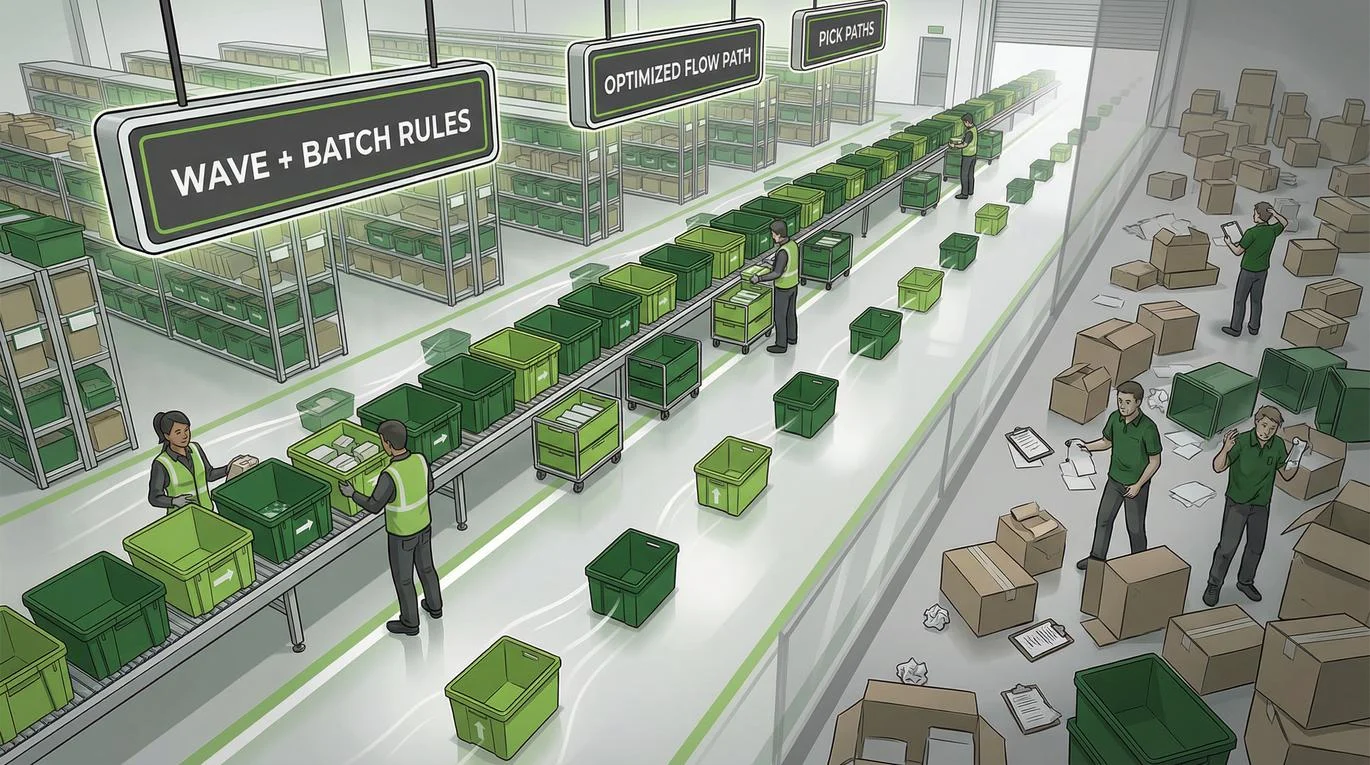
Stop Chaos With Planned Waves
Problem: When every order is treated like a new emergency, work becomes reactive. Pickers take long walk paths, supervisors keep reprinting lists, and the packing area swings from idle to overloaded. You may also see missed carrier cutoffs, late departures, and “where is this order?” questions all day long.
Solution: Wave picking groups orders into waves and releases them to the floor at planned times using clear rules. A wave can be built around carrier pickup times, shipping service (ground vs next-day), order type (single-line vs multi-line), client SLAs, or warehouse zones. The key idea is simple: instead of letting work arrive randomly, you release a coordinated package of work that matches your capacity and deadlines.
Wave picking also connects naturally to batch picking. Batch picking groups work by common SKUs so a picker can grab the same item for many orders in one trip. In many real warehouses, wave picking is the “time and control layer,” and batch picking is the “travel reduction layer” inside the wave. For example: you release a 10:30 a.m. parcel wave, and within that wave you create batches by zone so pickers spend less time walking.
If you want wave picking to pay off, you must keep one rule in mind: wave picking is about predictable flow. It helps align picking, staging, packing, and shipping so everyone is working on the right orders at the right time.
Glossary (Quick, Plain Definitions)
- SKU: A unique code for one specific product.
- Pick path: The route a picker walks or drives to collect items.
- Wave picking: Releasing groups of orders at planned times based on rules.
- Batch picking: Picking items for many orders in one trip, often grouped by common SKUs.
- Zone picking: Splitting the warehouse into areas, with pickers working only in their zone.
- Cluster picking: Picking multiple orders at once into separate totes on a cart.
- WMS: Warehouse Management System that tracks inventory, locations, and work.
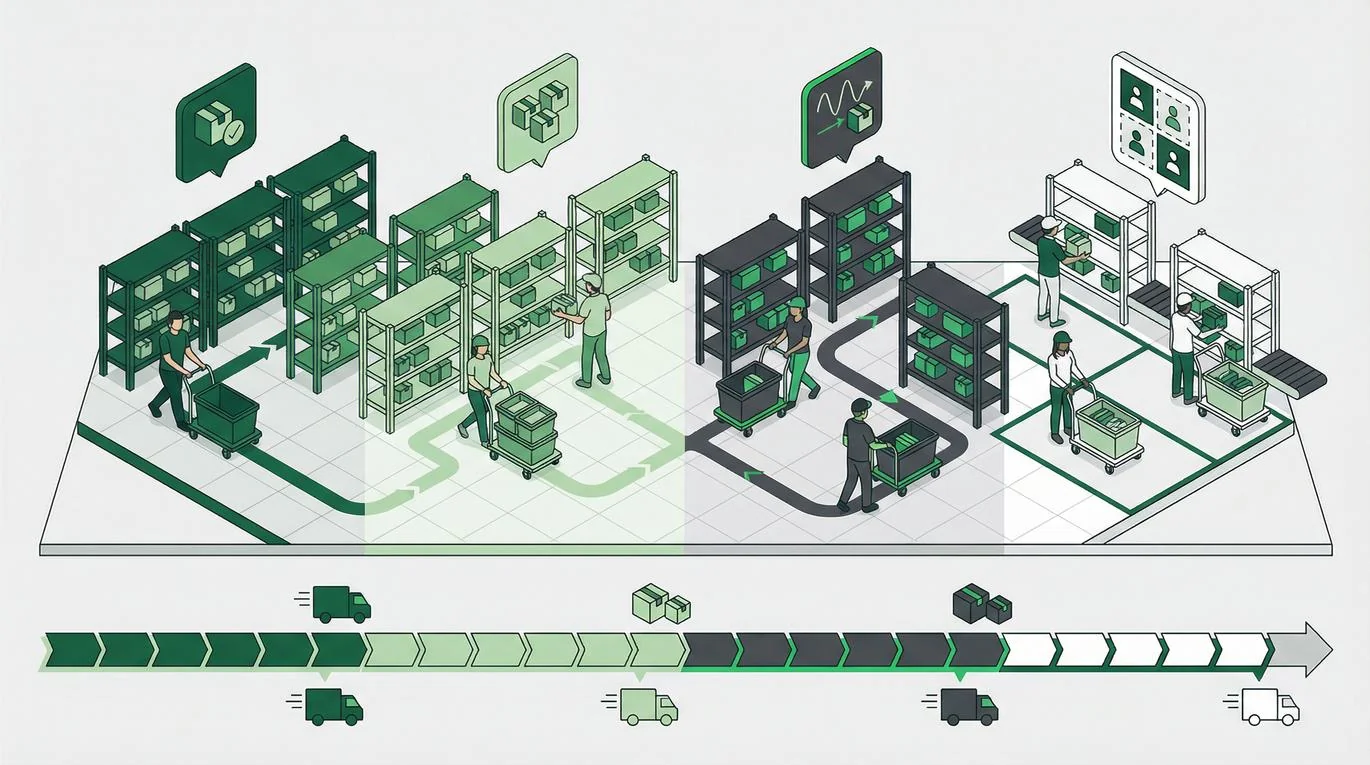
Visuals to add to your team discussion: (1) a simple diagram showing single-order, batch, wave, zone, and cluster methods side-by-side; (2) a timeline of a workday showing wave release times before each carrier cutoff, plus the packing window after each wave.
Choose The Right Picking Mix
Problem: Picking language can feel like a wall of terms: discrete, batch, wave, zone, cluster, hybrid. Teams get stuck debating labels instead of solving the real issue: what method matches our order profile and service promises?
Solution: Use wave picking as your main “organizer,” then decide what picking style happens inside that structure. Here is an easy way to think about the common methods and when they fit.
Single-order (discrete) picking is simple: one picker completes one order at a time. This is easiest to train and can work well when volume is low or orders are large and unique. The trade-off is travel time. If most of your orders have 1–3 lines, discrete picking often creates wasted walking and congestion.
Batch picking is strong when many orders share the same fast-moving SKUs. It reduces travel because a picker collects combined quantities in one pass. The trade-off is sorting and verification. You need a clean consolidation step (like a put-wall, sort bench, or disciplined packing scans) so items do not land in the wrong order.
Wave picking shines when time matters: carrier cutoffs, SLAs, and planned labor. It helps you see “what’s left” for a shipping window. The trade-off is planning discipline. Waves require rules, a release schedule, and a way to handle exceptions like shortages, rush upgrades, or backorders.
Zone picking reduces travel by keeping people in smaller areas. It often pairs well with a conveyor, carts, or a shared consolidation area. The trade-off is balancing the zones. If one zone has too many picks, it becomes a bottleneck and wave completion can slip.
Cluster picking is a practical middle ground: a picker works on several orders at once using multiple totes or slots on a cart. It can feel easier than “pure batch” because sorting happens during the pick. The trade-off is capacity limits: the cart only holds so many orders, and mistakes rise if the tote layout is confusing.
Hybrid strategies are usually the best answer:
- Wave + batch: release work by time, then batch within each zone to reduce walking.
- Zone + batch: each zone builds its own batches, then sends items to a central packing area.
- Wave + single-order exceptions: express or VIP orders bypass the wave, while standard orders stay planned.
Self-check signals:
- You likely need wave picking if cutoffs drive your day, packing is idle then flooded, or you cannot quickly tell what will ship on time.
- You likely need batch picking if pickers walk far for small orders, SKU overlap is high, and your top SKUs appear on many orders.
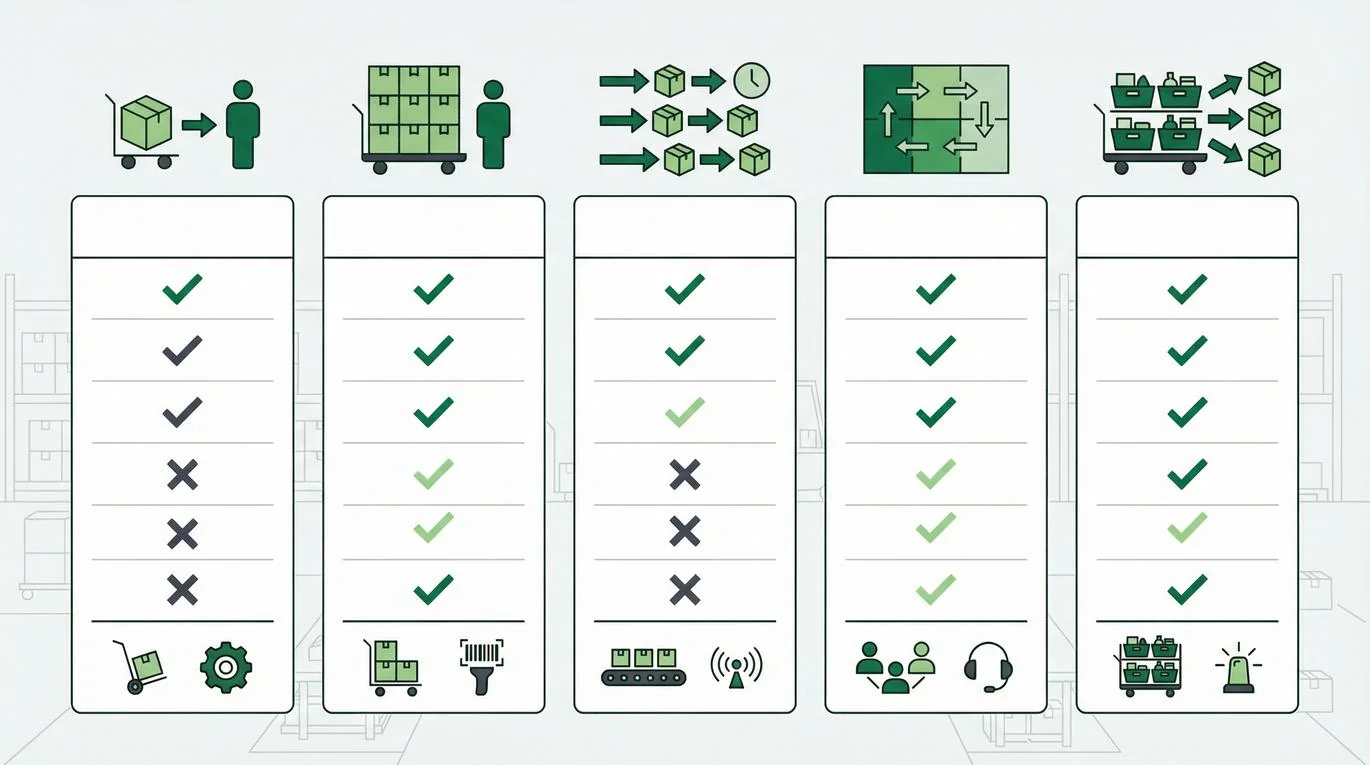
Visuals and tools to consider: a simple matrix that places methods on “complexity” vs “volume,” plus a downloadable “Picking Strategy Selector” worksheet. If your team needs a starting point, a soft next step is to explore Argos-style planning tools that help you model waves and batch rules using your own order history.
Run Wave And Batch Workflows
Problem: Many managers understand wave picking in theory, but cannot picture what happens from order capture to shipping. That gap makes it hard to train teams, set expectations, or judge if your WMS and devices can support the change.
Solution: Map the end-to-end flow in simple steps. First, wave picking as the “daily rhythm,” then batch picking as a “route saver.”
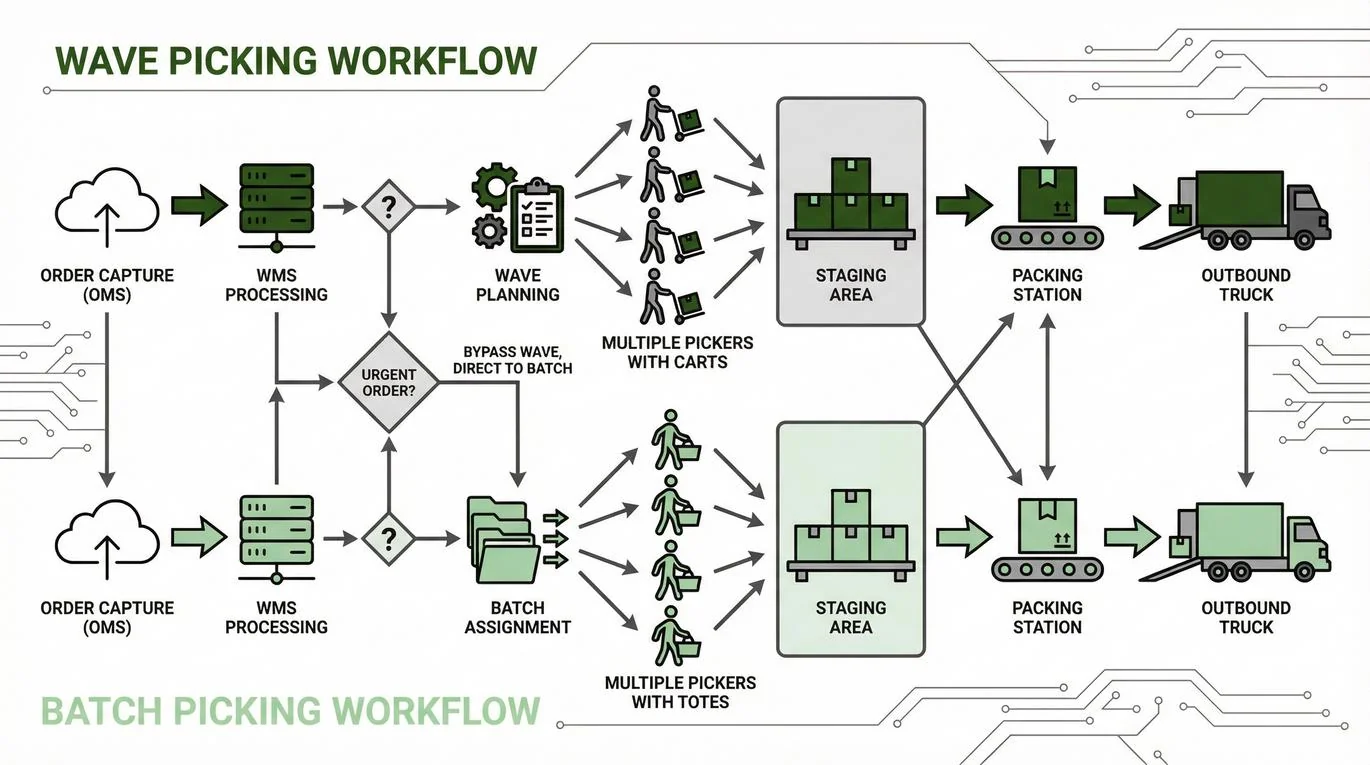
Wave picking workflow (step by step):
- Orders enter your order system from web, EDI, or marketplaces.
- Orders become eligible after checks like payment, address review, and stock availability.
- Your WMS groups orders into pools using rules: carrier, cutoff time, zone, order type, client, or priority.
- Supervisors set wave templates such as “Next-day parcel,” “Ground parcel,” “Client A same-day,” or “Wholesale route 3.”
- Waves are released at planned times. The WMS creates tasks by zone, picker, or equipment type.
- Pickers execute on RF scanners, voice, or tablets with a clear pick list and locations.
- Picked items move to staging, consolidation, or directly to packing, depending on your flow.
- Packing verifies items by scans and packs by service level; shipping prints labels and loads by wave.
Batch picking workflow (step by step):
- The WMS builds batches using rules like SKU overlap, max lines, max weight, cart capacity, and zone.
- Batches can live inside a wave (common) or run continuously as orders arrive (less controlled).
- The pick list shows totals per SKU in a path-optimized order.
- The picker makes one trip and places items into the right tote or slot.
- Items are sorted to orders at a put-wall, packing station, or sort bench.
- Verification scans catch errors before labels are printed.
Technology and layout choices make these methods easier:
- For wave picking: wave templates, release scheduling, wave monitoring, and exception handling for shortages and rush orders.
- For batch picking: batch-building rules, path optimization, tote/cart support, and strong consolidation controls.
- Helpful devices: RF scanners, wearable scanners, voice picking, and clear tote labels.
- Helpful physical design: fast movers near shipping, clean staging lanes by wave ID, and enough space for consolidation.
Visuals to suggest to your team: a flowchart with a decision diamond like “Is this order express?” leading to a bypass path, plus a simple zone map with arrows showing where batches start and where put-walls or packing stations sit. If you want to test ideas before moving shelves, a gentle option is to look for Argos-style “wave design sandbox” tools that simulate wave sizes, release times, and labor needs using historical orders.
Prove ROI With Simple KPIs
Problem: You can feel that picking is inefficient, but leaders often ask, “How much money will this really save?” Without a clear business case, wave and batch improvements get delayed, even when the floor is struggling.
Solution: Build a basic before-and-after model using a few cost buckets and a few KPIs. Keep it simple enough to explain in one meeting.
Main cost buckets:
- One-time costs: process design, WMS/OMS configuration, testing, carts/totes, staging racks, put-wall materials, and training time.
- Ongoing costs: software subscriptions, device replacement, and a small amount of extra planning time for wave management.
Main benefit levers:
- Labor savings: less walking, higher lines per hour, less overtime during peaks.
- Throughput: more orders shipped without adding headcount or shifts.
- On-time shipping: better alignment to carrier cutoffs and SLAs.
- Quality: fewer mis-picks, fewer reships, fewer credits and customer complaints.
- Flow: less congestion because work is released in controlled chunks.
A simple ROI example you can copy: Imagine 10 pickers average 90 lines per hour today. If wave + batch raises that to 130 lines per hour, your capacity rises sharply. Over a full year, that can mean handling the same volume with fewer labor hours, or shipping more without adding staff. Then add quality savings: if mis-picks fall because you improved scanning and consolidation, you also save on rework and reshipping. A practical next step is to create an internal “Wave/Batch ROI Calculator” spreadsheet where you plug in your own lines per hour, labor rates, error rate, and peak overtime.
KPIs to track (start with these):
- Lines picked per labor hour (productivity and travel time impact).
- On-time shipment rate vs cutoff (wave control impact).
- Pick accuracy (mis-picks per 1,000 lines).
- Wave completion on time (planning stability).
- % of orders in planned waves vs “hot” picks (how reactive you are).
Wave picking usually moves on-time shipping, wave completion, and workload stability. Batch picking usually moves lines per hour and travel time the most. Together, they can improve both speed and reliability. If you need help framing the story, a soft, non-pushy step is to build a one-page business case slide and pair it with an Argos-style KPI tracker template your supervisors can update weekly.
Build A Strong Business Case
- Measure today’s walking and rework, then show how waves and batches reduce both.
- Connect every change to a cutoff, an SLA, or a labor hour saved.
- Start with one area, prove results, then expand.
Pilot A Hybrid Without Disruption
Problem: Even when wave picking makes sense on paper, rollouts can fail. Pickers may resist new steps, the WMS may be configured “almost right,” and early congestion at staging can make the whole idea look bad.
Solution: Use a small, controlled pilot and scale only after you fix the real friction points. Treat wave and batch picking as a system you tune, not a one-time switch.
Step 1: Assess your current state using a quick diagnostic:
- Order profile: lines per order, units per line, SKU overlap, peak days and hours.
- Travel: where pickers walk most (a simple heat map or supervisor observation helps).
- Constraints: carrier cutoffs, packing capacity, staging space, and special handling.
- Systems: WMS settings, location accuracy, barcode quality, device coverage.
Step 2: Design a hybrid on paper with clear lanes:
- Wave + batch for small e-commerce orders in a fast-pick zone.
- Single-order picking for oversized items or low-velocity storage.
- Zone rules so each area knows what “done” looks like for a wave.
- Exception path for true urgent orders so they do not break the whole plan.
Step 3: Configure and simplify before you train:
- Set wave templates and release times tied to cutoffs.
- Set batch size limits tied to cart capacity and weight/volume.
- Define staging locations by wave ID and carrier/service.
- Make scans non-negotiable at the points where errors happen most.
Step 4: Pilot, then iterate (4–8 weeks): choose one zone, one order type, and a small team. Measure lines per hour, mis-picks, on-time shipping, and picker feedback. If waves finish late, shrink wave size, start earlier, or rebalance zones. If staging clogs, stagger releases or add clear staging lanes.
Step 5: Roll out with real change management:
- Use experienced pickers as champions and listen to their pain points.
- Train on the floor with short walk-throughs, not long classroom sessions.
- Post simple process maps near staging and packing.
- Set moderate targets first, then raise them after stability improves.
Pro Tips
- Start with one cutoff time and build one reliable wave around it.
- Keep early batches small until sorting and scanning are solid.
- Label staging by wave ID so anyone can see progress fast.
- Protect a clear express bypass so urgent orders do not break the plan.
Try this next: offer a downloadable “Wave & Batch Picking Implementation Checklist” and a simple ROI calculator your team can fill out weekly. If you want software support, explore Argos educational resources and planning tools that help you test wave schedules and batch rules using your own order history before changing the floor.
Make your warehouse predictable, not heroic.
Conclusion: Control First, Speed Second
Wave picking brings structure to fulfillment by releasing the right work at the right time. Batch picking reduces travel by letting pickers collect common SKUs for many orders in one trip. Used together in a thoughtful hybrid, they can boost throughput, protect carrier cutoffs, and reduce errors without jumping straight to heavy automation. Your best method depends on your order profile, layout, and service commitments, so start small, measure, and tune.
Frequently Asked Questions
What is the difference between wave picking and batch picking?
Wave picking releases groups of orders at planned intervals based on rules like carrier cutoffs or priority levels. Batch picking groups work by common SKUs so a picker handles one item for multiple orders in a single trip. They often work together in a hybrid approach where waves define when work releases and batching defines how it is grouped for maximum efficiency.
When should a warehouse use wave picking?
Use wave picking when you have carrier cutoff times, multiple order priorities, or enough daily volume that releasing all orders at once overwhelms the floor. Even two or three waves per day aligned to carrier pickups can significantly improve flow, reduce congestion in pick zones, and ensure high-priority orders are completed first.
Can wave and batch picking work without automation?
Yes. A solid WMS, barcode scanners, pick carts, and good staging discipline can deliver strong gains without conveyor systems or robotics. Automation helps at higher volumes but is not a prerequisite for benefiting from planned waves and batched picks. Many operations see 15-25% productivity improvements from process changes alone.
What WMS features support wave and batch picking?
Essential features include configurable wave rules by carrier, priority, and order type; batch grouping by SKU or zone; real-time wave progress monitoring; exception handling for shorts or stockouts; and integration with shipping systems for automatic label generation. The ability to adjust wave parameters on the fly is also important for handling demand spikes.
How do you measure wave picking performance?
Track picks per labor hour, on-time wave completion rate, lines per wave, carrier compliance percentage, and exception frequency. Compare these metrics before and after implementation to quantify gains, and review them weekly to catch efficiency drift before it becomes a larger problem.
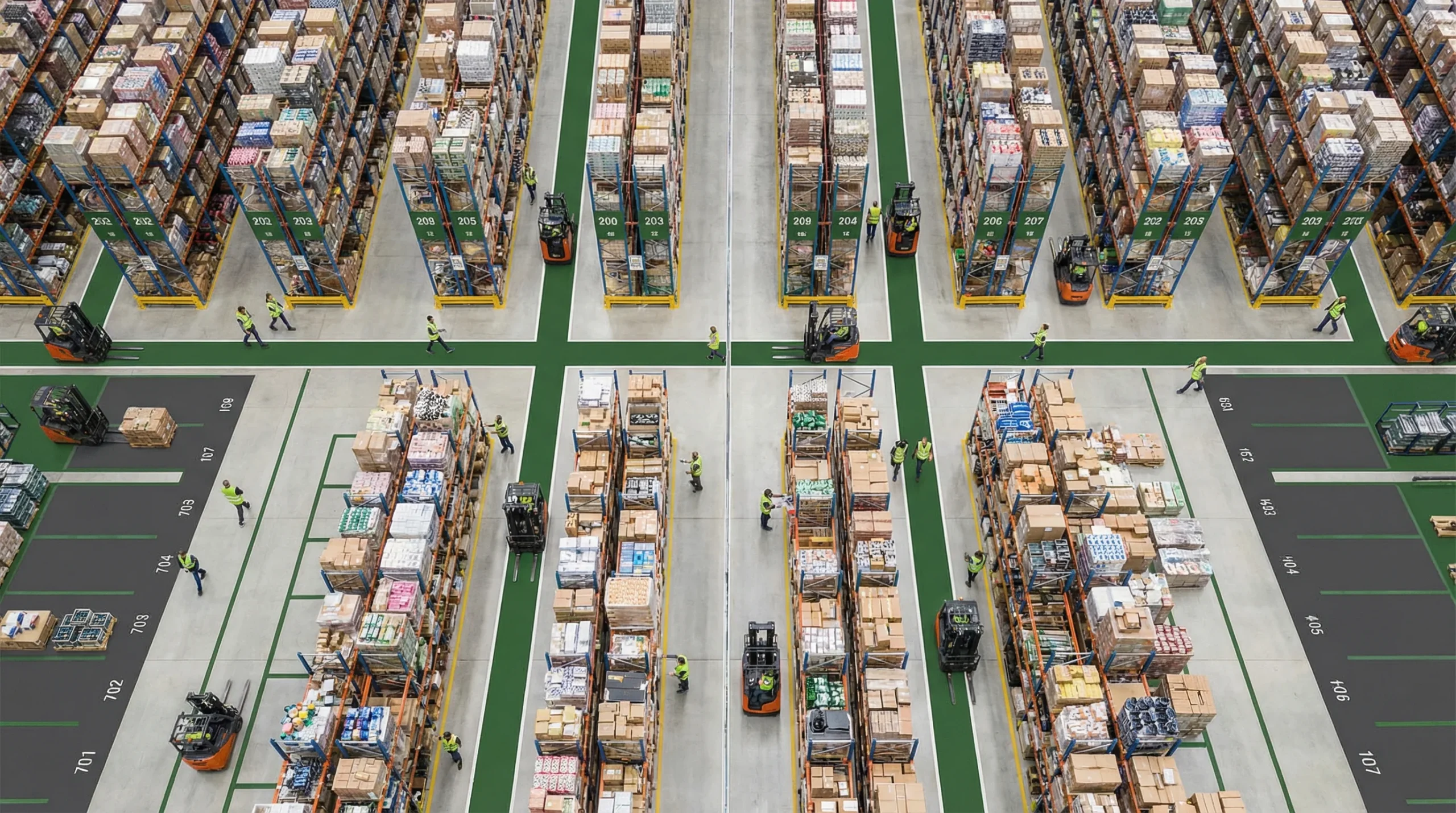
3PL Logistics Explained: Services, Models, and Benefits
Discover how 3PL logistics can transform your supply chain with our comprehensive guide.
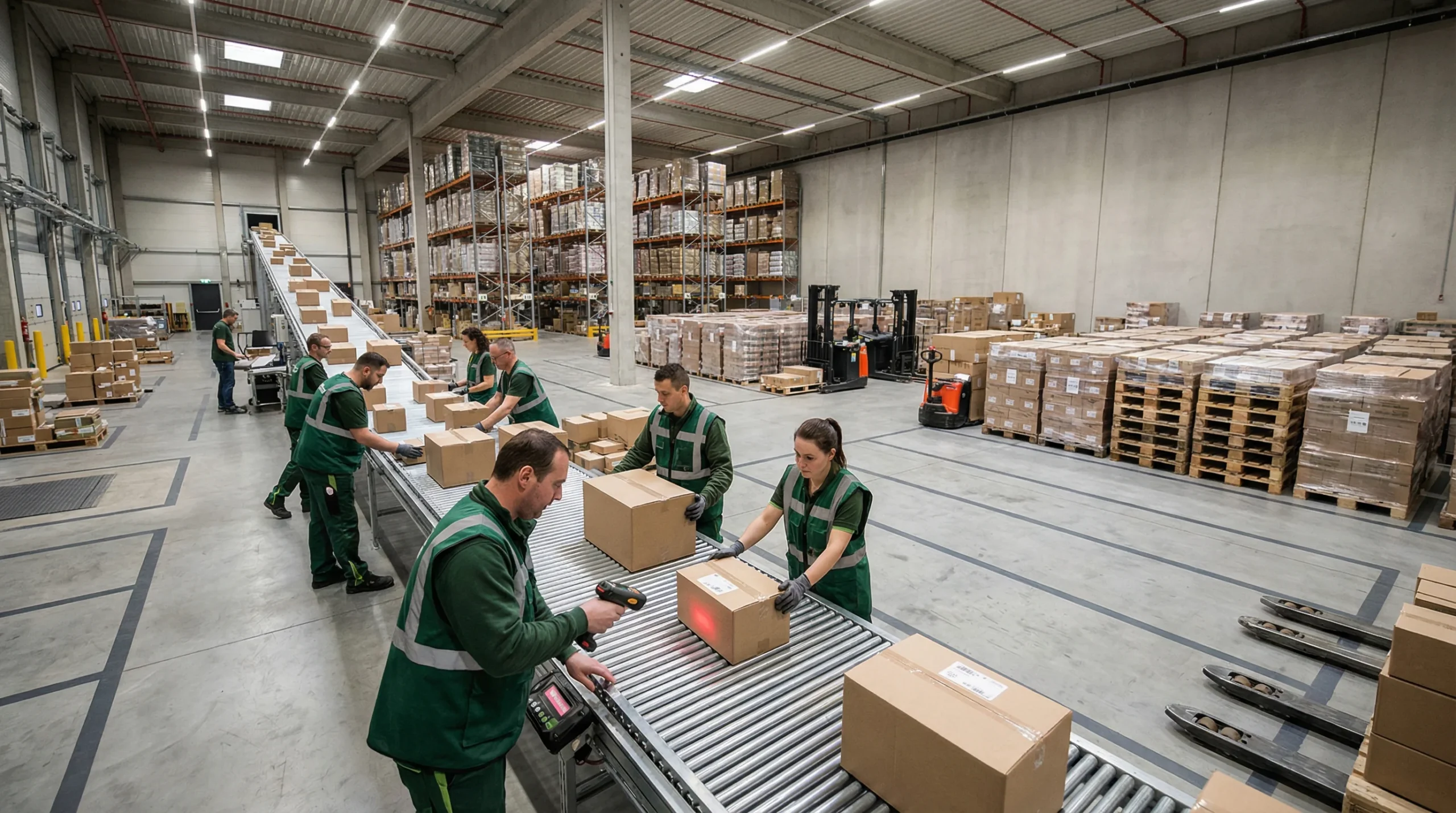
How a 3PL Warehouse Management System Transforms Operations
Explore the benefits and strategies of 3PL warehouse management systems for optimal logistics efficiency.
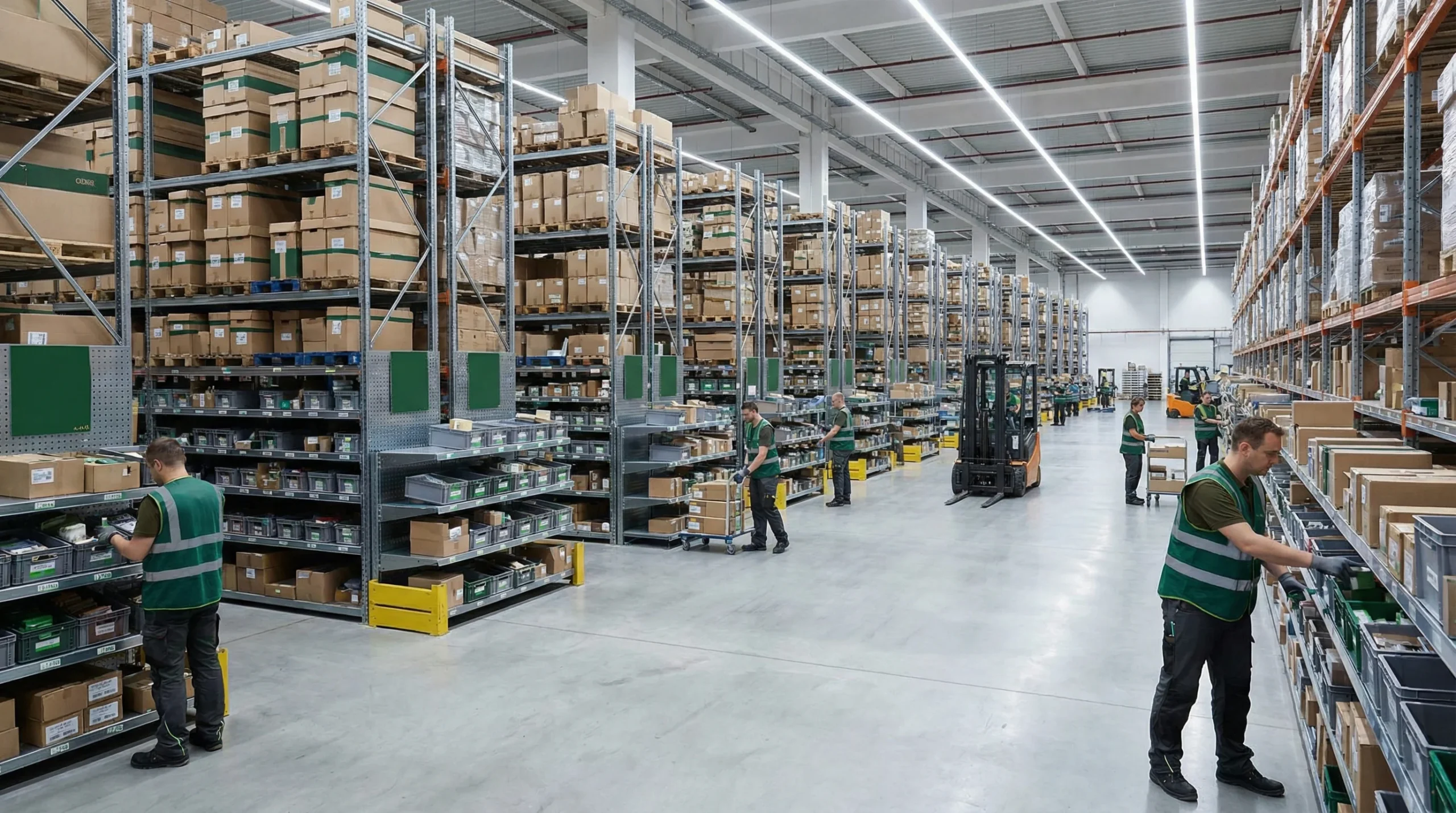
3PL Software: Features, Benefits, and How to Choose
Discover the benefits of 3PL software for efficient warehouse management and inventory control.