
Published: May 23, 2018 |
Updated: February 17, 2026 |
Reading Time: 7mins |
By: Sean Sullivan
Technologies Reshaping Supply Chains
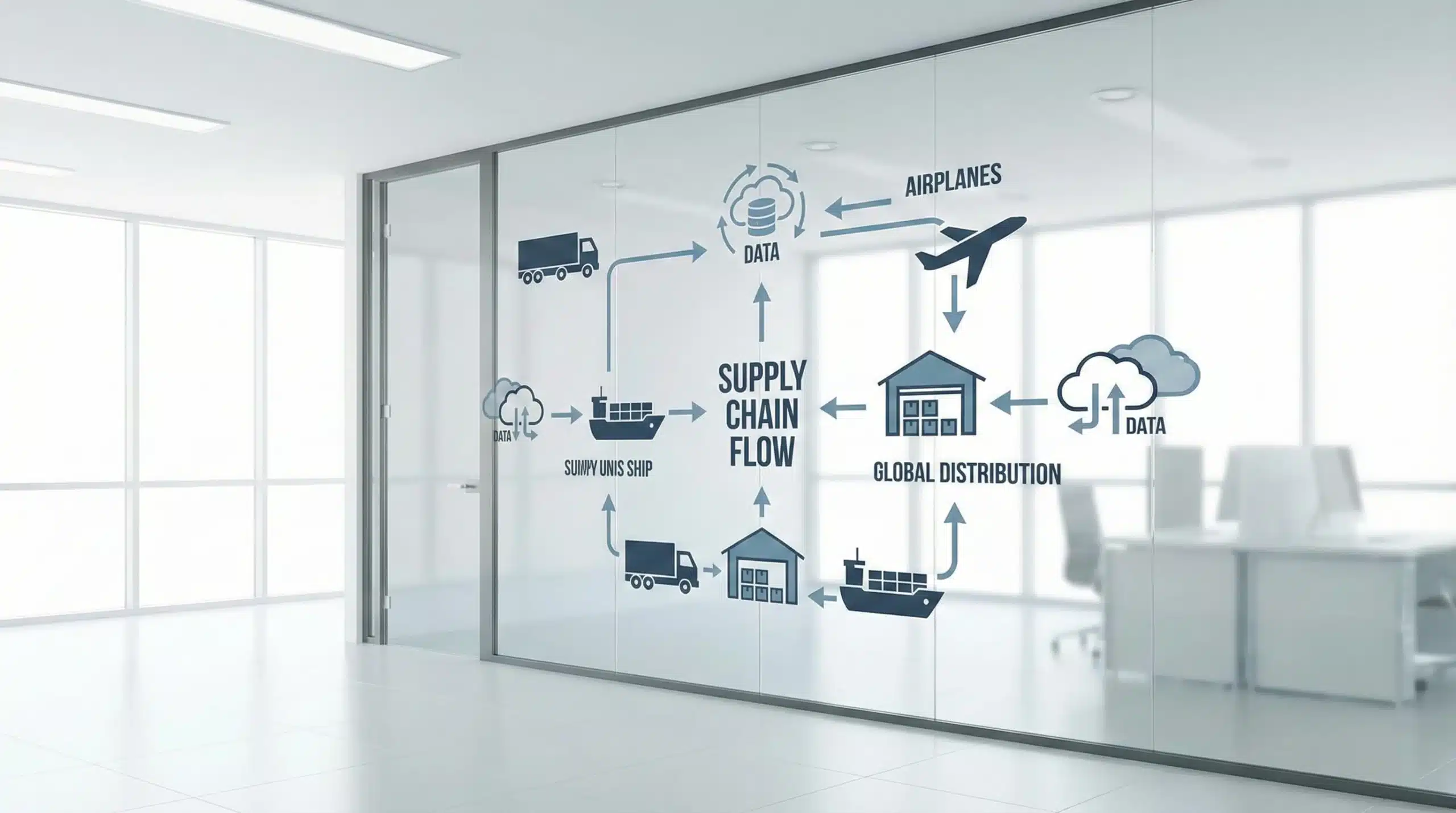
The supply chain industry is in the midst of a face-lift, as new modern technology is emerging and rapidly taking over.
From procurement to delivery, connect every step of your supply chain in one unified system.
Request a Demo

Key Findings
That is one of the findings in the just-released report by the Material Handling Institute (MHI) and Deloitte. Titled “Overcoming Barriers to NextGen Supply Chain Adoption,” the report examines the 11 emerging technologies, from robotics to artificial intelligence (AI) to wearable devices, that are expected to work together to establish a new information ecosystem that is always accessible by demand. The majority of the report’s survey respondents report that the NextGen supply chain will represent the predominant model within just 5 years.
Five innovations — robotics/automation, predictive analytics, the Internet of Things, AI, and driverless vehicles and drones — will have the greatest impact in how products will move through the supply chain in the future.
Driving the new supply chain are big dollars. Half of the survey respondents are from companies reporting annual sales topping $100 million, with 10% reporting annual sales of $10 billion or more. Half of all the respondents say that they are planning new technology investments in the supply chain totaling more than $1 million over the next two years. Twenty percent plan to spend more than $5 million; 10% plan to spend more than $10 million.
The potential slowdowns to the supply chain are related to people. Most companies say that hiring well-trained or qualified workers is a major challenge, as is addressing growing customer demands. As more customers become accustomed to improvements in transparency and increased delivery times such as same-day service, competition will be focused on new technologies that will strengthen speeds. Warehouse companies will transform into high-velocity operations that will be expected to push more product through a smaller pipeline, as well as become flexible enough to respond to increased customer expectations.
Another barrier to adoption is ROI. Some companies are finding it difficult to estimate the full cost benefits of these technologies, which is causing them to hesitate in their investment. The report estimates that the potential costs of inaction are loss of market share, problems with future compliance, increased risks, and loss of competitiveness.
Companies are recognizing the need for change. The report shows how adoption rates of new technologies are on the rise, and it forecasts that they will increase in coming years. For example, adoption of robotics and AI is currently at 34%, but it predicted to more than double to 73% in just five years. Part of what’s driving this is cost. As automation becomes more commonplace, due to its accuracy and speed, it will also become less expensive and easier to implement. Survey respondents say that the most common use for automation if picking, packing, and sorting orders.
With innovations come threats. Besides hackers and lack of awareness, poor cybersecurity practices among suppliers represent a third challenge to keeping the supply chain safe. This will become more prescient as customers will demand greater transparency for every level of the supply chain, which means that companies will need to share a greater capacity of information. This means that suppliers need to be better schooled in potential threats and adopt best practices avoid breakdowns or other cost-threatening disruptions.
Which NextGen technologies are you using in your supply chain? Have you had success with drones? Robotics? IoT? More? Let us know in the comments below!
Critical Success Factors for NextGen Supply Chain Implementation
Companies planning to adopt NextGen technologies within the next five years must address fundamental implementation requirements to ensure successful deployment and maximize return on investment.
Infrastructure Requirements and Integration Challenges
Legacy systems present the most significant barrier to NextGen adoption, with 68% of companies reporting integration difficulties when connecting new technologies to existing warehouse management systems. Organizations need robust data architecture capable of processing real-time information from multiple sources simultaneously.
Essential infrastructure components include:
- High-speed network connectivity: 5G and fiber optic connections to support IoT device communication and real-time data transfer
- Cloud-based data storage: Scalable systems that can handle exponential increases in data volume from connected devices
- Standardized APIs: Integration platforms that enable seamless communication between robotics, AI systems, and existing WMS solutions
- Edge computing capabilities: Local processing power to reduce latency for time-critical automation decisions
Change Management and Workforce Transformation
The human element remains crucial as organizations transition to technology-driven operations. Companies successfully implementing NextGen solutions allocate 30-40% of their technology budgets to workforce development and change management initiatives.
Key workforce considerations include:
- Retraining existing employees for technology oversight roles rather than manual tasks
- Establishing cross-functional teams that combine IT expertise with supply chain operations knowledge
- Creating data literacy programs to help workers interpret and act on insights from predictive analytics systems
- Developing new performance metrics that align with automated processes and real-time decision making
Industry-Specific NextGen Technology Applications
Different sectors within the supply chain ecosystem will experience varying degrees of transformation as NextGen technologies mature over the next five years.
Manufacturing and Production Facilities
Smart manufacturing operations are integrating predictive maintenance algorithms with robotics to achieve 99.5% uptime rates. AI-powered demand forecasting systems now adjust production schedules in real-time based on supply chain disruptions and market fluctuations.
Advanced applications include:
- Digital twins: Virtual replicas of production lines that simulate different scenarios before implementing changes
- Collaborative robots (cobots): Human-machine partnerships that increase productivity while maintaining safety standards
- Quality control automation: Computer vision systems that detect defects faster and more accurately than manual inspection
Last-Mile Delivery and Distribution
Urban logistics operations are experiencing the most dramatic transformation through autonomous delivery vehicles and drone networks. Companies report 35% reductions in last-mile costs when implementing hybrid delivery models that combine traditional vehicles with autonomous systems.
Distribution centers are adopting:
- Autonomous mobile robots (AMRs): Flexible picking and sorting systems that adapt to changing inventory layouts
- Smart routing algorithms: AI systems that optimize delivery routes based on real-time traffic, weather, and customer preferences
- Micro-fulfillment centers: Automated facilities positioned closer to urban consumers for same-day delivery capabilities
Cold Chain and Specialized Logistics
Temperature-sensitive supply chains leverage IoT sensors and blockchain technology to maintain product integrity throughout transportation. These systems provide continuous monitoring and automatic alerts when conditions deviate from specified ranges, reducing product loss by up to 25%.
Frequently Asked Questions
What specific skills should companies prioritize when hiring for NextGen supply chains?
Companies should focus on hiring workers with technical skills in robotics operation, data analytics, IoT device management, and cybersecurity. Additionally, soft skills like adaptability and problem-solving are crucial as workers need to collaborate with AI systems and respond to rapidly changing customer demands in high-velocity warehouse environments.
How can small companies with limited budgets compete with large corporations adopting these technologies?
Small companies can start with scalable, lower-cost solutions like basic automation for picking and packing, or cloud-based predictive analytics tools. They should focus on one technology at a time, partner with technology providers offering flexible payment plans, and leverage the decreasing costs of automation as it becomes more mainstream.
Why are companies struggling to calculate ROI for NextGen supply chain technologies?
ROI calculations are complex because these technologies often provide indirect benefits like improved customer satisfaction, reduced risk, and enhanced flexibility that are difficult to quantify. Additionally, the interconnected nature of NextGen technologies means benefits may only become apparent when multiple systems work together, making individual technology ROI harder to measure.
When is the best time to start implementing NextGen supply chain technologies?
The optimal timing depends on your company’s current pain points and financial readiness. However, given that adoption rates are expected to reach 73% within five years, companies should begin planning now to avoid losing competitive advantage. Start with technologies that address your most pressing challenges, such as labor shortages or customer delivery expectations.
What cybersecurity measures are most critical for protecting NextGen supply chain operations?
Essential measures include implementing end-to-end encryption for IoT devices, establishing secure supplier onboarding protocols, and conducting regular cybersecurity training for all staff. Companies must also create incident response plans, perform regular security audits of connected devices, and ensure all suppliers meet minimum cybersecurity standards before integration.
Wave Picking & Batch Picking: Advanced Guide for Smarter Fulfillment
Wave Picking for Smarter Fulfillment Your warehouse feels calm at 9:00 a.m., then turns into [...]
Agribusiness Software: Essential ERP Insights
Discover the benefits of agribusiness ERP software and top agriculture software companies for enhanced efficiency.

The Benefits of Grower Management Software
Discover how grower management software optimizes operations and integrates with accounting systems for increased ROI.