
Published: February 11, 2026 |
Updated: February 17, 2026 |
Reading Time: 16mins |
By: Sean Sullivan
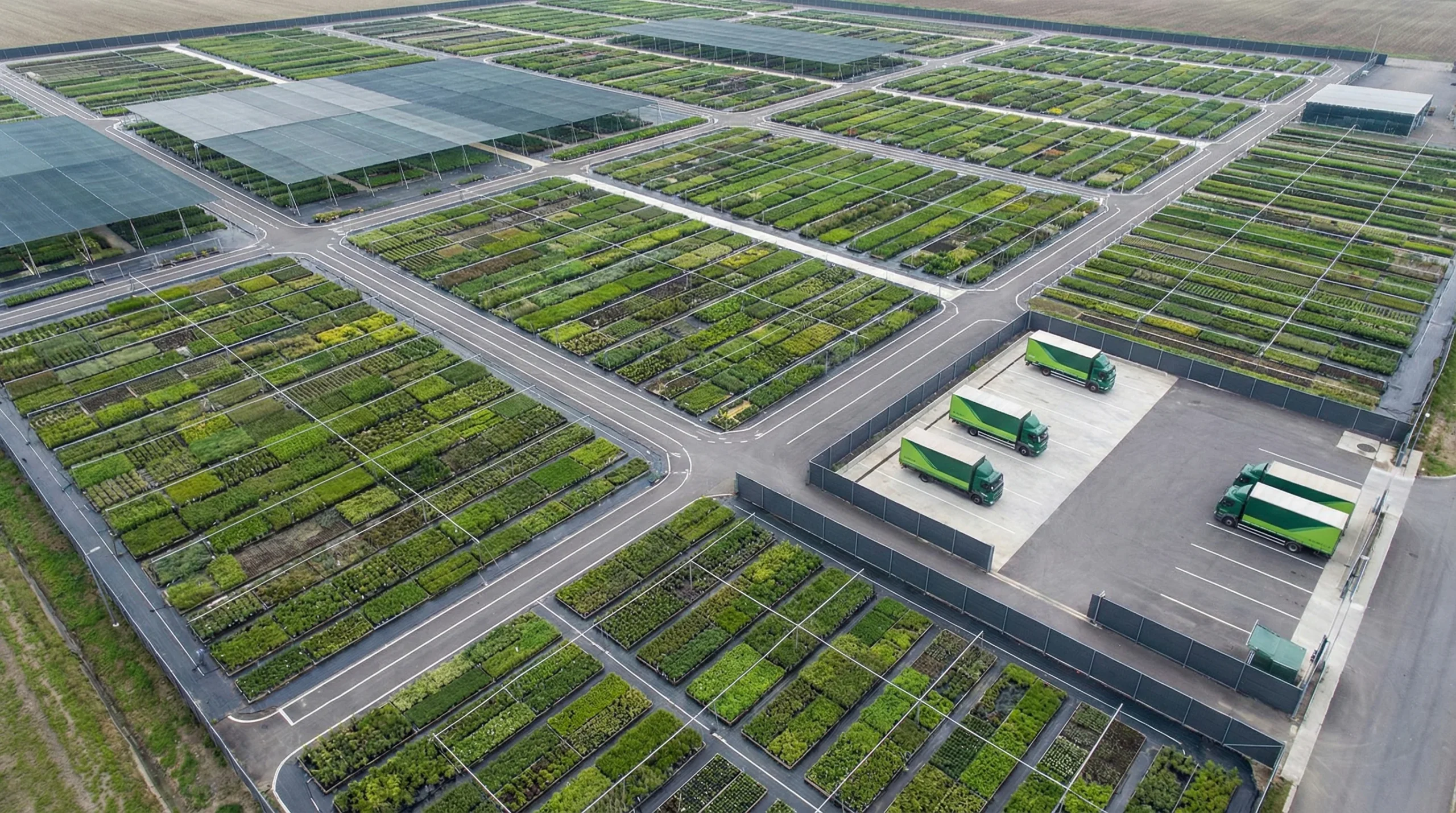
Greenhouse inventory management software, greenhouse control software, greenhouse crop scheduling software has become essential for modern businesses. You’re standing in your greenhouse at 6 AM, clipboard in hand, trying to reconcile yesterday’s inventory counts with what’s actually on the benches. The numbers don’t match. Again. Meanwhile, your phone buzzes with a text from your team – the temperature in Zone 3 spiked overnight, and nobody caught it until now. Sound familiar? If you’ve ever felt like you’re fighting fires instead of growing plants, you’re not alone. This is exactly why more greenhouse operations are turning to greenhouse inventory management software, greenhouse control software, and greenhouse crop scheduling software to regain control of their days.
We’ve all been there – buried in spreadsheets, making educated guesses about crop timing, and hoping the climate controls hold steady while we’re away. But here’s the reality: running a modern greenhouse without integrated software is like trying to navigate with a paper map while everyone else uses GPS. You might eventually get where you’re going, but you’ll waste time, fuel, and probably miss a few turns along the way.
This guide breaks down how different types of greenhouse management software work together to transform chaotic operations into predictable, profitable growing systems. Whether you’re managing a single facility or overseeing multiple locations, understanding these tools can mean the difference between surviving and thriving.
Why Greenhouse Management Software Has Become Essential
Think about how greenhouse operations have changed over the past decade. Customer expectations have increased. Margins have tightened. Labor has become harder to find and more expensive to keep. The greenhouses that are succeeding aren’t necessarily the ones with the biggest facilities or the most experienced growers – they’re the ones that have figured out how to do more with less through smarter systems.
Traditional greenhouse management relied heavily on institutional knowledge – that veteran grower who could tell the humidity was off just by walking through the door. But what happens when that person retires? Or calls in sick during a critical growth phase? Software captures and systematizes that knowledge, making it accessible to everyone on the team regardless of experience level.
The Real Cost of Manual Operations
Manual inventory tracking alone can consume hours of staff time every week. Consider what happens when a customer calls asking about availability on a specific variety. Without real-time inventory visibility, someone has to physically walk the greenhouse, count plants, assess quality, and report back. By then, the customer may have already called your competitor.
Beyond time waste, manual systems create costly errors:
- Overproduction leading to unsellable surplus
- Underproduction resulting in missed sales opportunities
- Climate control failures that damage entire crop sections
- Scheduling conflicts that create labor bottlenecks
- Inaccurate forecasting that throws off purchasing decisions
These aren’t minor inconveniences – they directly impact your bottom line and your reputation with buyers who depend on consistent supply.
From plant production to inventory tracking, manage your nursery or greenhouse operations with one integrated platform.
Request a Demo

How Greenhouse Inventory Management Software Transforms Daily Operations
Remember the last time you had to do a full physical inventory count? The disruption to normal operations, the staff overtime, the inevitable discrepancies that took days to resolve? Greenhouse inventory management software eliminates most of that pain by maintaining continuous, accurate counts as plants move through your facility.
The core function is simple: every plant or batch gets tracked from propagation through sale. When cuttings arrive, they’re logged into the system. As they move through different growing stages, their location and status update automatically. When orders ship, inventory decreases accordingly. No manual reconciliation required.
Real-Time Visibility Changes Everything
With inventory management capabilities, you can answer customer availability questions instantly. Your sales team can make commitments with confidence because they’re looking at the same real-time data as your production team. No more awkward callbacks to correct availability promises.
This visibility extends to quality tracking as well. When a batch shows signs of disease or pest pressure, the system helps you trace exactly where those plants are located and which other batches they may have contacted. Quick identification means faster response times and contained problems rather than facility-wide outbreaks.
Inventory software also integrates with purchasing to automate reorder points. When growing media, containers, or chemical supplies drop below threshold levels, the system generates purchase orders or alerts. This prevents both stockouts that halt production and overbuying that ties up cash in unused supplies.
Reducing Shrinkage and Waste
Every greenhouse deals with shrinkage – plants that die, get damaged, or simply disappear between counts. Manual systems often don’t catch these losses until month-end reconciliation, by which point you’ve lost both the plants and any chance to investigate what happened.
Greenhouse inventory management software flags discrepancies immediately. If a batch count drops unexpectedly, you know about it the same day. This early warning enables you to identify problems – whether that’s a pest issue, a microclimate problem, or unfortunately, theft – before they escalate.
Many operations report significant reductions in waste after implementing inventory tracking, simply because problems get caught and addressed faster. When you can see exactly what’s happening across your facility in real time, you make better decisions.
Environmental Control Through Greenhouse Control Software
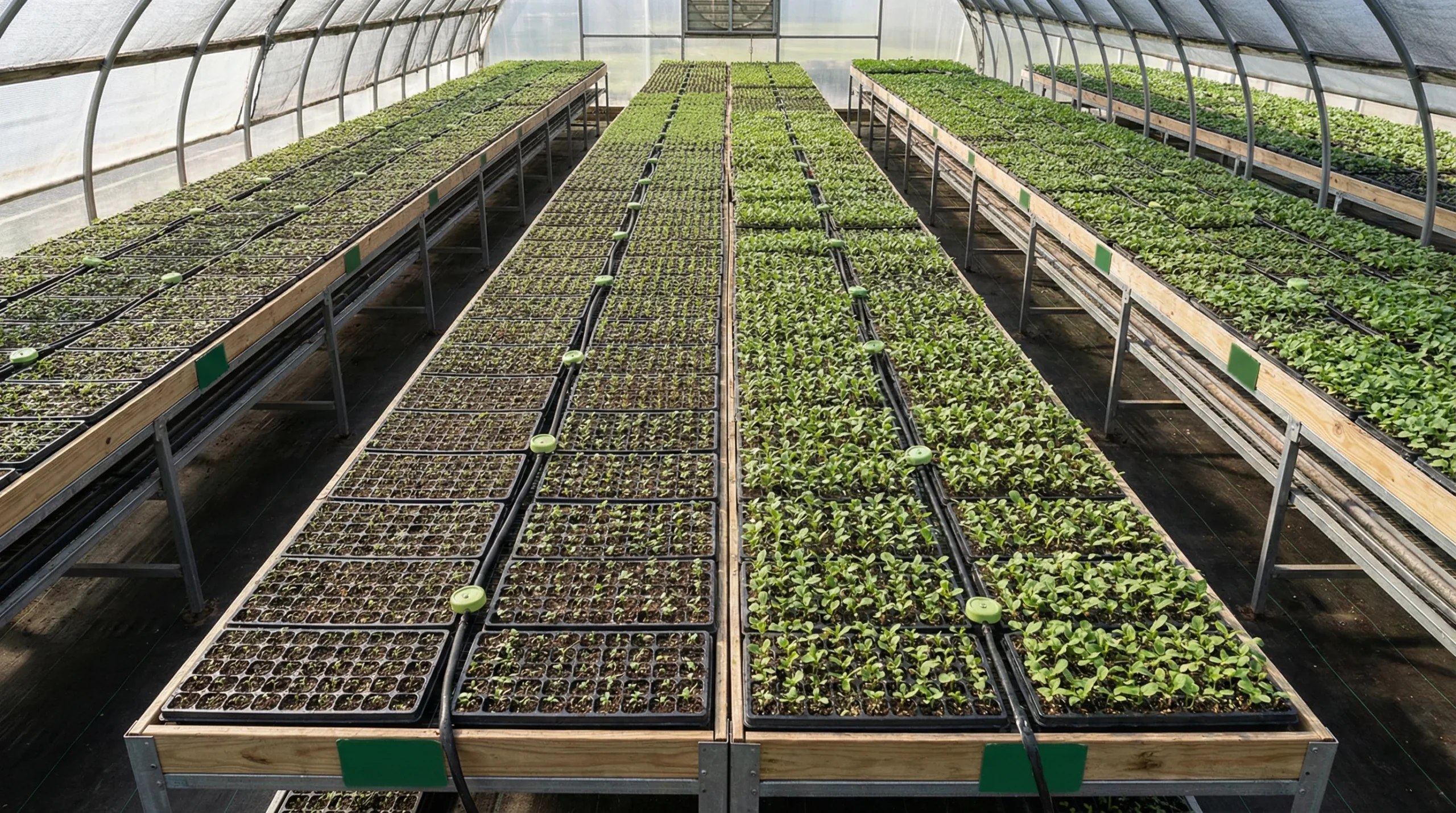
Plants don’t care about your schedule. They need consistent conditions around the clock, regardless of whether your team is on-site or not. Greenhouse control software monitors and adjusts environmental factors continuously, maintaining optimal growing conditions without constant human oversight.
Temperature, humidity, light levels, CO2 concentration, irrigation scheduling – these variables interact in complex ways that affect plant health and growth rates. Modern control systems manage these interactions automatically, making micro-adjustments throughout the day based on sensor readings and programmed parameters.
Automation That Actually Works
The best greenhouse control software goes beyond simple setpoint management. Instead of just turning on the heater when temperature drops below a threshold, smart systems consider multiple factors: current outdoor conditions, forecast weather, time of day, and the specific growth stage of crops in each zone.
This predictive approach prevents the reactive cycling that wastes energy and stresses plants. Rather than waiting for temperature to drop and then heating aggressively to recover, the system anticipates needs and makes gradual adjustments that maintain stability.
Alert systems provide peace of mind when you’re away from the facility. If a sensor detects conditions outside acceptable ranges, you receive immediate notification via text or email. Some systems can even initiate automatic responses – closing vents during a sudden temperature drop, for example – while simultaneously alerting staff.
Energy Management and Cost Control
Heating and cooling represent major operational expenses for most greenhouses. Control software optimizes energy usage by coordinating equipment operation, taking advantage of natural heating and cooling when possible, and avoiding the inefficiencies of manual control.
Consider a simple example: on a sunny winter morning, manual operation might keep heaters running according to the overnight schedule. Meanwhile, solar gain is already warming the greenhouse. An automated system recognizes this and reduces heating output, saving fuel while maintaining target temperatures.
These savings compound over time. Many greenhouse operators find that improved energy efficiency alone justifies the investment in control software, with additional benefits from reduced plant loss and labor savings being essentially free.
The reporting and analytics functions in these systems also help identify patterns and opportunities for further optimization. You might discover that a particular zone consistently runs warmer than others, indicating a maintenance issue or an opportunity to relocate heat-loving crops there.
Greenhouse Crop Scheduling Software for Predictable Production
We’ve probably all experienced the chaos of poor crop timing – too much product ready at once, followed by weeks of empty benches and nothing to sell. Greenhouse crop scheduling software brings order to this chaos by planning backwards from target sale dates and coordinating production across varieties and growing zones.
Effective scheduling starts with understanding your market. When do customers want product? What quantities do they typically order? Which varieties move fastest at different times of year? Scheduling software turns this demand intelligence into production plans that align supply with market needs.
Planning for Success Instead of Hoping for It
The fundamental principle is simple: work backwards from when you need finished plants. If a customer needs 10,000 finished geraniums for Easter, and your geraniums take 12 weeks from cutting to sale, you know exactly when propagation needs to start. The software handles these calculations across hundreds of varieties and thousands of batches.
But real scheduling gets complicated fast. Different varieties have different growth rates. Space in propagation houses is limited. Labor availability varies by season. A good greenhouse crop scheduling software considers all these constraints and creates realistic plans that account for the messy realities of actual greenhouse operations.
The scheduling system integrates with your order management processes to ensure production aligns with actual customer commitments rather than wishful forecasts. When a confirmed order comes in, scheduling updates automatically to ensure that production supports the commitment.
Improving Yield Through Better Timing
Crop scheduling isn’t just about having enough product – it’s about having the right product at the right time. Plants harvested too early look undersized and immature. Plants held too long become overgrown and harder to sell. The window for peak quality might be surprisingly narrow.
Scheduling software helps you hit that window consistently by tracking growth progress against projections. If a batch is running ahead of schedule, you know early enough to adjust growing conditions or find alternative buyers. If it’s running behind, you can accelerate growth or manage customer expectations proactively.
This precision reduces the percentage of production that gets sold at discount or scrapped entirely. Even small improvements in sell-through rates at full price significantly impact profitability.
Integrating Systems for Complete Greenhouse Management
Here’s something we don’t talk about enough: standalone software systems create their own problems. If your inventory system doesn’t communicate with your scheduling system, you’re constantly reconciling data between them. If your control software operates independently, you’re missing opportunities to connect environmental conditions with production outcomes.
The real power emerges when greenhouse inventory management software, greenhouse control software, and greenhouse crop scheduling software work together as integrated components of a unified system. Data flows automatically between functions, eliminating duplicate entry and enabling insights that isolated systems can’t provide.
The Value of Connected Data
Consider what becomes possible with integration. Your scheduling system knows that a batch of poinsettias needs to initiate color in three weeks to meet holiday delivery dates. It communicates with the control system, which automatically adjusts photoperiod in that zone. Inventory tracking confirms the plants are progressing on schedule. If not, alerts go out to production managers who can intervene.
This kind of coordination simply isn’t possible when systems operate in silos. Someone would need to manually check schedules, adjust controllers, verify inventory, and follow up on exceptions. That’s a lot of labor that could be spent on higher-value activities.
Integration also enables better historical analysis. When you can correlate environmental conditions with production outcomes across many crop cycles, patterns emerge. You might discover that a particular variety performs better at slightly higher humidity, or that growth rate correlates with specific temperature differentials between day and night.
Supporting Growth and Expansion
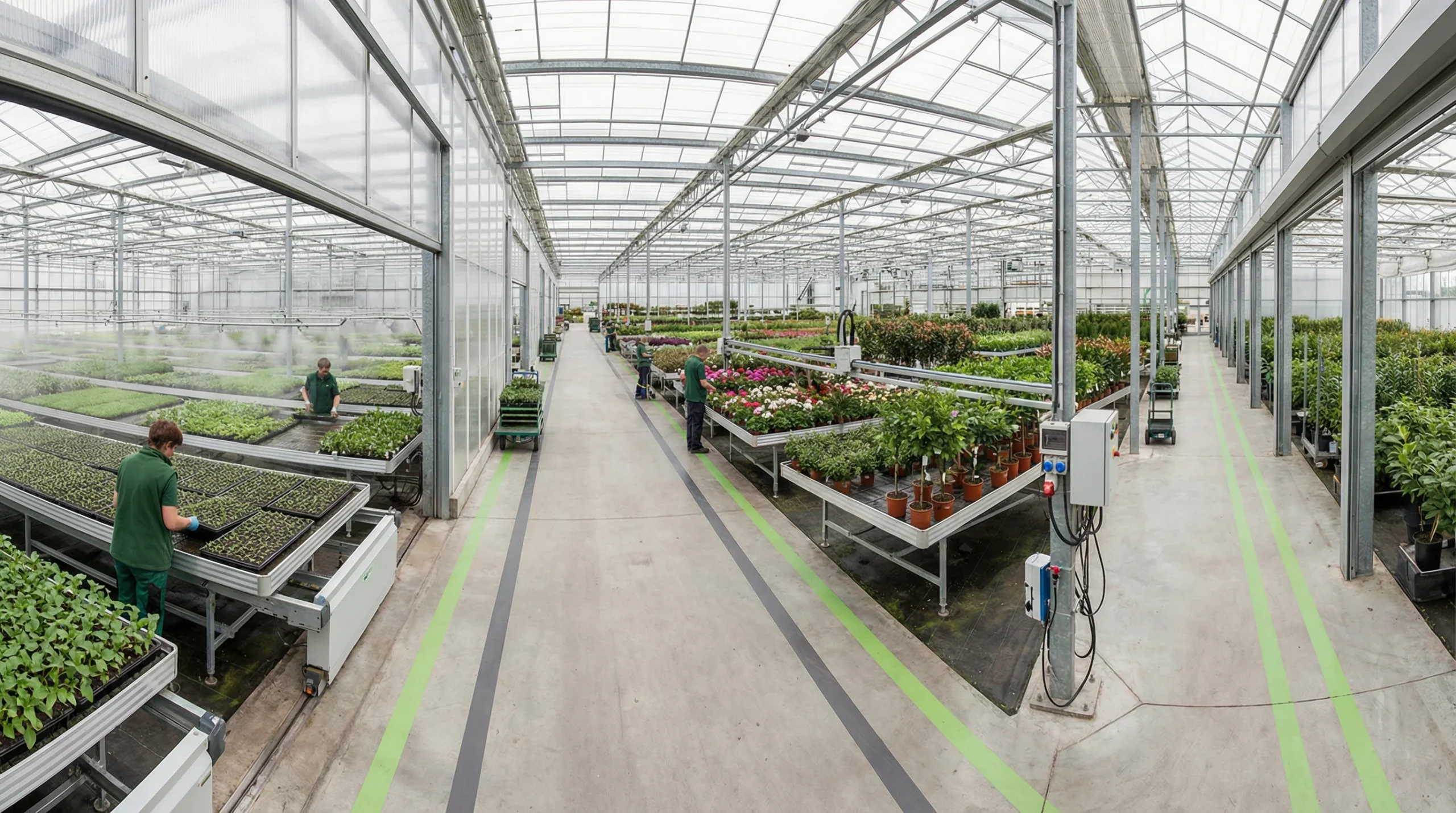
Greenhouse operations that grow successfully usually do so because their systems scale with them. Adding new facilities, expanding product lines, or entering new markets all become easier when you have software infrastructure that can accommodate change.
Think about what expansion looks like without proper systems. More benches mean more manual tracking. More varieties mean more complex scheduling. More customers mean more coordination. Eventually, the operational complexity outpaces your ability to manage it, and quality suffers.
With integrated software, expansion means extending existing systems rather than creating new workarounds. The same inventory logic that tracks one greenhouse tracks ten. Scheduling principles that work for one product line scale to dozens. This is how relatively small operations compete effectively with much larger competitors.
Preparing for What’s Coming in Greenhouse Technology
The greenhouse industry continues to evolve rapidly. Technologies that seemed futuristic just a few years ago are becoming practical and affordable. Understanding these trends helps you make investment decisions today that will remain relevant tomorrow.
Sensors and Data Collection
Sensor costs have dropped dramatically while capabilities have expanded. Modern greenhouses can affordably deploy dense networks of environmental monitors, capturing microclimate variations that were previously invisible. This granular data feeds into control and scheduling systems, enabling precision that was impossible with sparse sensor deployment.
Plant-level monitoring is emerging as well. Imaging systems can assess plant health, growth rate, and flowering status automatically. Instead of relying on periodic human inspection, these systems provide continuous assessment across entire facilities. Problems get caught earlier, and quality becomes more consistent.
Predictive Analytics and Machine Learning
As greenhouses accumulate more data over time, opportunities for predictive analysis expand. Machine learning algorithms can identify subtle patterns that human observers miss – correlations between seemingly unrelated variables that affect crop outcomes.
This isn’t science fiction. Practical applications are already in use at forward-thinking operations. Pest outbreaks get predicted before visible symptoms appear. Equipment failures get flagged before they cause downtime. Customer demand gets forecast more accurately based on market conditions and historical patterns.
The greenhouses that will benefit most from these advances are those building the data infrastructure today. Systems that capture detailed, accurate operational data provide the foundation for whatever analytical capabilities emerge in the future.
Industry Resources and Continued Learning
Staying current with greenhouse technology requires ongoing attention to industry developments. Publications like Greenhouse Management Magazine provide regular coverage of emerging technologies and best practices. Trade associations and university extension programs offer educational resources that help translate new technologies into practical applications.
Engaging with peers through industry events and online communities provides valuable perspective as well. Hearing how other operations have implemented new systems – what worked, what didn’t, what they’d do differently – helps avoid common pitfalls and accelerates successful adoption.
Making the Transition to Software-Managed Operations
If you’re currently running your greenhouse with spreadsheets, whiteboards, and manual processes, the transition to integrated software might feel overwhelming. The good news is that implementation doesn’t have to happen all at once. Most successful adoptions take a phased approach.
Start with your biggest pain point. If inventory accuracy is your primary frustration, begin there. If climate control failures keep causing crop losses, prioritize that system. Getting one function working well builds confidence and generates quick wins that fund and justify subsequent phases.
Change management matters as much as technology selection. Your team needs training and time to adapt to new workflows. Expect a learning curve, plan for it, and celebrate progress along the way. The operations that struggle with software adoption are usually those that underestimate the human side of the transition.
Consider working with the nursery and greenhouse software specialists who understand the unique requirements of growing operations. Generic business software often lacks the specific features that greenhouses need, leading to workarounds and frustrations that dedicated solutions avoid.
Taking the Next Step
Greenhouse management has always been demanding work. The difference today is that you don’t have to do it the hard way. Tools exist to simplify inventory tracking, automate environmental controls, and coordinate crop scheduling – freeing you to focus on the parts of the business that benefit most from human judgment and expertise.
The operations that thrive in coming years will be those that embrace these tools and learn to use them effectively. Whether you’re managing a compact retail greenhouse or a large commercial propagation facility, the principles remain the same: capture accurate data, automate routine decisions, and use technology to multiply the effectiveness of your team.
Ready to explore how integrated greenhouse management software could transform your operation? Contact our team to schedule a demonstration and see these systems in action. We can walk through your specific challenges and show you how software solutions address them.
Want to learn more about warehouse and inventory management best practices? Explore our comprehensive software solutions designed specifically for complex growing operations. When you’re ready to take control of your greenhouse operations, we’re here to help you make it happen.
Frequently Asked Questions
How does greenhouse inventory management software help businesses?
Greenhouse inventory management software streamlines inventory tracking and reduces manual errors. It offers real-time visibility into stock levels, helping prevent overproduction and underproduction. This software automates tasks that would otherwise require significant labor, saving time and reducing costs. For example, it can track plant availability instantly, ensuring quick responses to customer inquiries.
Why is greenhouse control software crucial for modern operations?
Greenhouse control software is crucial because it automates climate management, ensuring optimal growing conditions. It monitors and adjusts temperature, humidity, and light levels, reducing the risk of crop loss. This software captures data that can be analyzed for better decision-making. For instance, it can prevent temperature spikes that might otherwise go unnoticed until it’s too late.
What benefits does greenhouse crop scheduling software provide?
Greenhouse crop scheduling software optimizes planting and harvesting schedules, improving yield predictability. It helps plan crop cycles efficiently, reducing downtime and increasing productivity. This software integrates with other management tools to provide a comprehensive view of operations. For example, it can adjust schedules based on real-time inventory levels, ensuring resources are used efficiently.
How do greenhouse management software systems work together?
Greenhouse management software systems integrate to create a cohesive operational framework. Inventory, control, and scheduling software communicate to optimize resource use and plant health. This integration reduces manual intervention and aligns operations with business goals. For example, inventory data can inform crop schedules, while control systems maintain ideal growth conditions automatically.
What challenges do manual greenhouse operations face?
Manual greenhouse operations face challenges like time-consuming inventory tracking and error-prone processes. Without software, staff must physically count plants, leading to inefficiencies. Manual systems can result in overproduction or underproduction, impacting profitability. Additionally, they rely heavily on individual expertise, which can be lost if key staff are unavailable. Software mitigates these issues by providing consistent, accessible data.
Agribusiness Software: Essential ERP Insights
Discover the benefits of agribusiness ERP software and top agriculture software companies for enhanced efficiency.
The Benefits of Grower Management Software
Discover how grower management software optimizes operations and integrates with accounting systems for increased ROI.
Complete Guide to Greenhouse Management Software Benefits
Discover the benefits of greenhouse management software and how Argos can optimize your operations.