
Published: December 8, 2017 |
Updated: February 17, 2026 |
Reading Time: 7mins |
By: Sean Sullivan

The global economy forces partnerships among companies throughout the world. While the obvious benefits of such far-flung agreements are reduced labor and manufacturing costs, as well as speed of delivery, there are potential risks. Breakdowns in the supply chain, however minor, are particularly threatening to the overall process because they can affect all parties, both upstream and downstream. And no one wants a slowdown.
With so much at risk, how can companies minimize or mitigate disruptions in their supply chain? What areas are worth looking at for risk management? What habits can a company adopt to prepare for legal disruptions that might be disastrous? Here are a few ways to start:
1. Get to know your supply chain neighbor
No matter where you are along the supply chain, do what you can to get a full assessment of the company you rely upon the most to get products moving. For example, manufacturers need to have comprehensive knowledge of their suppliers, distributors, and retailers while all three should get to know the manufacturer. This should involve establishing key contacts, creating protocol for notifying upstream and downstream partners of potential problems, and other due diligence efforts that will keep supply moving.
From procurement to delivery, connect every step of your supply chain in one unified system.
Request a Demo

2. Make sure your contracts are comprehensive
The global nature of your partnerships can mean you are at the mercy of laws of other jurisdictions, which exposes you to a wide range of liability. Before you sign, make sure your contracts are comprehensive and protect you by giving you legal recourse against whichever responsible party in case of a supply chain disruption or product recall. Know your rights, but also know your obligations and the obligations of others so risk is shared.
3. Get insurance that is airtight
If you are involved in a liability claim or another kind of supply chain dispute you don’t want to be either uninsured or underinsured. You need to understand every kind of risk involved and have insurance that has you covered. For example, a class action lawsuit involving food product recalls can create liability exposure in the millions of dollars. You need to have insurance that forecasts scenarios like that to make sure you are protected.
4. Get the details right
Good record keeping may feel like a chore, but it will save you when disaster strikes. Besides making sure that all your contracts are executed correctly, make sure you properly archive paperwork related to every aspect of your business: contracts, insurance policies, and commercial documents related to equipment and facilities, etc. You don’t want to be stuck in the dark in case of a liability claim or an equipment breakdown.
5. Seek home court advantage
The challenges of foreign partnerships can include slow communication and the difficulty of obtaining access to information. But you may also be exposed to rules that may be outside the jurisdiction of the Canadian and U.S. court system. The way to reduce that risk is to secure home court advantage through arbitration clauses in your contracts or via your terms and conditions.
Want more tips? Check out this article in Inbound Logistics that gives you more ways to reduce risk when operating with global supply partners.
What do you do prepare for potential problems in your supply chain? Give us your tips in the comments below. Visit argosoftware.com or call us at (888) 253-5353 to set up a demo or learn more about our suite of products for Logistics Service Providers (3PLS and Transporters).
Diversify Your Supplier Network Beyond Single-Source Dependencies
Single-source supplier relationships create critical vulnerabilities that can paralyze your entire operation when disruptions occur. Building a diversified supplier network requires strategic planning and ongoing relationship management, but provides essential protection against regional disasters, political instability, and supplier-specific failures.
Geographic Distribution Strategies
Establish suppliers across multiple geographic regions to minimize exposure to localized disruptions. For example, if your primary electronics supplier operates in Southeast Asia, consider secondary suppliers in Eastern Europe or Latin America. This geographic spread protects against natural disasters, trade disputes, and regional labor shortages that could affect entire manufacturing zones.
- Primary-Secondary-Tertiary Model: Maintain one primary supplier for 60-70% of volume, a secondary supplier for 20-30%, and a tertiary supplier for 10% to ensure immediate scaling capability
- Regional Risk Assessment: Evaluate political stability, infrastructure quality, and regulatory environments in each supplier region
- Cost-Benefit Analysis: Factor diversification costs against potential disruption losses when selecting supplier mix ratios
Supplier Performance Monitoring
Implement systematic evaluation processes to assess supplier reliability, financial stability, and capacity. Regular audits should examine production capabilities, quality control systems, and business continuity plans. Companies using comprehensive supplier scorecards report 35% fewer supply chain disruptions compared to those relying on informal assessment methods.
Implement Real-Time Supply Chain Visibility Technology
Modern supply chain visibility platforms provide the real-time data and predictive analytics necessary to identify risks before they become disruptions. These systems integrate data from suppliers, logistics providers, and internal operations to create comprehensive situational awareness across your entire supply network.
End-to-End Tracking Systems
Deploy IoT sensors, RFID tags, and GPS tracking to monitor inventory movement from raw materials through final delivery. This technology enables immediate identification of delays, quality issues, or routing problems that could cascade into larger disruptions. Advanced systems can automatically trigger alternative sourcing or routing decisions when predetermined risk thresholds are exceeded.
- Inventory Visibility: Track stock levels across all locations to prevent stockouts and identify slow-moving inventory
- Transportation Monitoring: Monitor carrier performance, route optimization, and delivery scheduling in real-time
- Supplier Integration: Connect directly with supplier systems to receive production updates and capacity alerts
Predictive Risk Analytics
Leverage machine learning algorithms to analyze historical data patterns and external risk factors for early warning capabilities. These systems can predict potential disruptions 2-4 weeks in advance by analyzing weather patterns, political developments, economic indicators, and supplier performance trends. Companies using predictive analytics report 25% improvement in on-time deliveries and 40% reduction in emergency sourcing costs.
Frequently Asked Questions
What are the biggest risks in global supply chains?
Major risks include supplier disruptions from natural disasters, political instability, or financial failure. Transportation delays affect product availability and customer satisfaction. Quality issues from distant suppliers are harder to detect and correct. Currency fluctuations impact costs unpredictably. Regulatory changes in different countries add compliance complexity. Effective risk management addresses all these factors systematically.
How can companies reduce dependency on single suppliers?
Develop relationships with multiple qualified suppliers for critical materials and components. Consider regional diversification to avoid geographic concentration of risk. Qualify backup suppliers before you need them urgently. Maintain some flexibility in specifications to enable alternative sourcing. Balance the efficiency of single sourcing against the resilience of diversified supply.
What role does inventory strategy play in supply chain risk management?
Strategic safety stock buffers against supply disruptions, though it increases carrying costs. Position inventory strategically based on lead times and supply variability. Consider finished goods inventory for products with long or unreliable supply chains. Balance just-in-time efficiency against disruption vulnerability. Regular review ensures inventory strategy matches current risk levels.
How can visibility technology reduce supply chain risk?
Real-time visibility into inventory levels, shipment status, and supplier performance enables faster response to emerging problems. Track and trace technology identifies issues before they impact customers. Supplier portals and integration provide early warning of potential disruptions. Analytics identify patterns and predict risks before they materialize. Visibility is foundational to effective risk management.
What should a supply chain contingency plan include?
Contingency plans should identify potential disruption scenarios and predetermined responses. Include alternative supplier contacts, backup transportation options, and communication protocols. Define trigger points for activating contingency measures. Assign clear responsibilities for decision-making during disruptions. Test plans periodically through tabletop exercises. Update plans as supply chain configurations change.
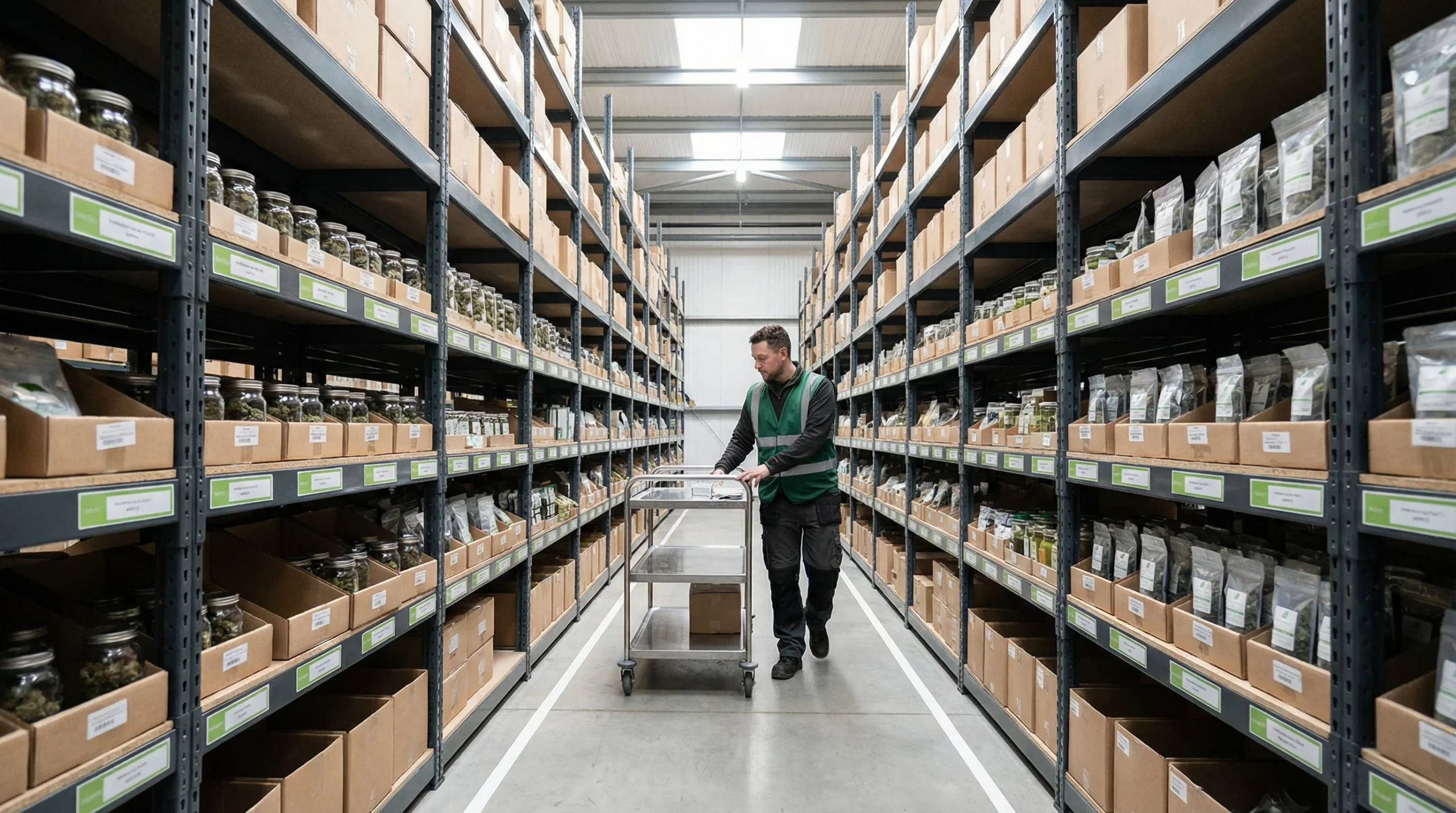
Essential Cannabis Warehouse Management Strategies
Discover effective cannabis warehouse management with key inventory strategies and software solutions. Optimize your operations today!
Third-Party Logistics Services: Your Complete Guide
Discover how 3PL services can transform your logistics strategy. Learn about warehouse and logistics services, top companies, and future trends.
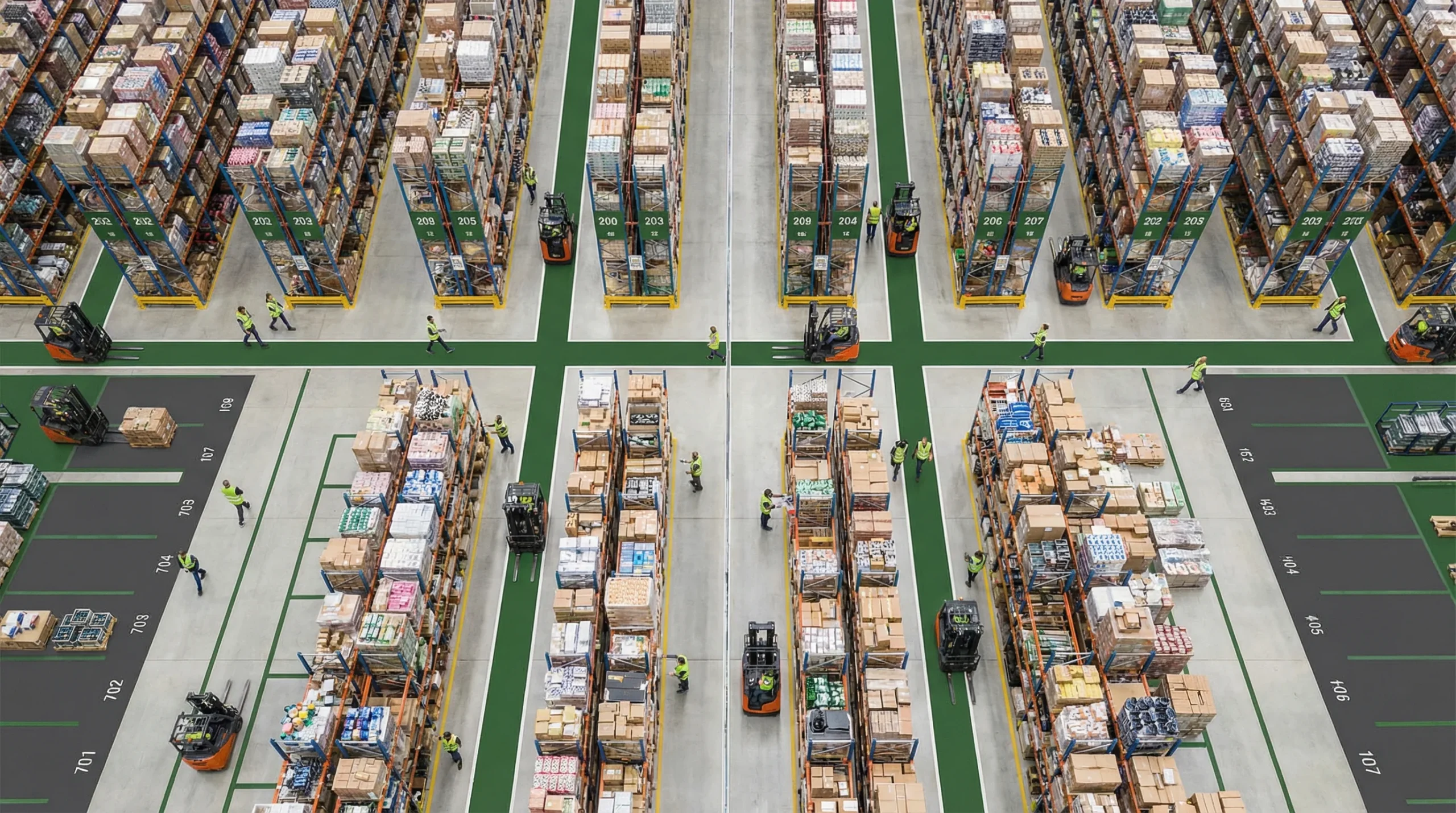
3PL Logistics Explained: Services, Models, and Benefits
Discover how 3PL logistics can transform your supply chain with our comprehensive guide.