
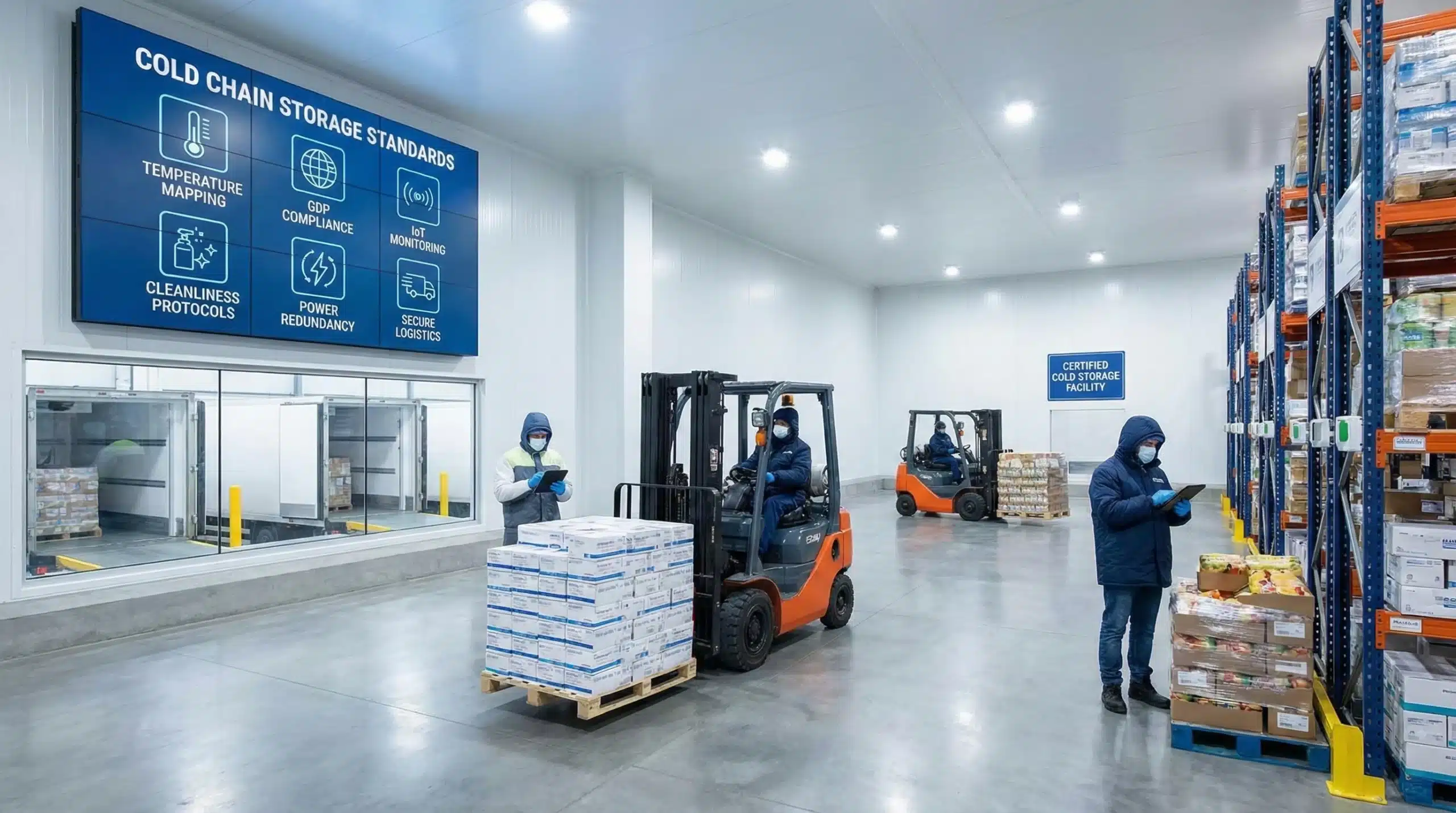
The purpose of cold chain production is to keep products in a cool, dry, and controlled environment throughout their life cycle. This is called cold chain storage – cutting the risk of spoilage and slowing product decay. The goal is to control ambient temperature, humidity, bugs (insects and rodents), airborne bacteria, lighting, mold, and fungus growth within predetermined ranges.
Proper cold storage is critical to the success of warehouses housing and distributing products that fall into the cold chain category as well as agricultural companies and more.
Cold Chain Definition
The cold chain involves the environmental management of perishable products. Specific storage requirements must be met in order to maintain the quality and safety of each product in the warehouse. Required conditions include regulation of temperature, lighting, and humidity, to name a few. Products typically included in the cold chain category are perishable commodities like:
- Live plants
- Seeds
- Perishable food and beverages
- Pharmaceuticals and vaccines
- Medical products
- Candles
- Cosmetics and Cologne
- Artwork
Receiving Cold Storage Products at the Warehouse
For 3PLs, cold chain responsibilities begin at the receiving dock. Upon arrival, goods must be checked in, inspected, weighed, labeled, and cached according to assigned storage specifications. A superior WMS (warehouse management system) software like Argos can provide real-time updates when products are scanned into the system upon receipt, eliminating manual input.
When being placed in storage, stock rotations must be considered for FIFO (First In First Out), LIFO (Last In First Out), FEFO (First Expiry First Out), or other lot order fulfillment as specified. Once these steps are taken, inventory is then available for distribution while still following overall cold chain requirements.
Growers and the Cold Chain
While greenhouses often aim to protect products from the cold, there are products that can be kept fresh and/or viable longer in a temperature-controlled environment. For example, Utah State University recommends seeds be stored at 35-40°F with a relative humidity of less than 40%. In the summer, high heat can damage seedlings, sod, and young plants, just as it can melt chocolate or candles in a non-air-conditioned warehouse.
Tips for Maintaining Cold Chain Compliance
Understanding your customers’ cold storage specifications upfront is very important. Are there specific environmental requirements for storing each product line? Will new merchandise be added seasonally that has different storage requirements? Are there regular compliance reporting protocols to be followed?
Once compliance regulations are defined and customer expectations are established, regular environmental monitoring begins. To maintain all health, safety, and quality standards, systems that offer real-time monitoring, alerts, and historical data (often required by governing or regulatory agencies) are vital. The best WMS or enterprise software can work with your control framework to provide current and historical environmental data reports.
Argos Software, for example, has the fields needed to record and report on data received from your monitoring systems. Our built-in alerts are very useful in proactively notifying you if system results approach either end of an acceptable range.
Maintaining equipment that provides environmental control of your cold storage areas is also important to eliminate any future problems with inventory quality. Cold storage design, supply, and installation company Stancold UK offers the following list of tips to improve cold chain storage efficiency:
- Keep condenser units clean
- Ensure doors are sealed
- Check evaporator coils regularly
- Keep an eye on walls and ceiling
- Use proper lighting for each type of product
- Continually monitor temperature
- Have an inspection and maintenance schedule
The cold chain is all about storage, packaging, and distribution. It’s about ensuring the safety of your products along their journey to the customer. We hope this post has given you a more in-depth look at cold storage operations. If you have questions on how your 3PL warehouse management software or your software for growers can help with your cold storage monitoring, contact Argos today.
3PL Temperature Monitoring: Technology and Best Practices
Modern 3pl temperature monitoring has evolved far beyond basic thermostats and manual checks. Today’s cold storage facilities rely on sophisticated IoT sensor networks that provide continuous monitoring of temperature, humidity, and air quality across multiple zones. These wireless sensors create a comprehensive monitoring mesh that captures environmental data every few minutes, ensuring no temperature excursion goes undetected.
Automated alerting systems represent a critical advancement in 3pl cold storage operations. Rather than waiting for scheduled checks to reveal problems, these systems immediately notify warehouse staff, management, and clients when temperatures drift outside specified ranges. The best systems use tiered alerts—sending initial warnings when temperatures approach limits and escalating to emergency notifications if conditions continue to deteriorate. This proactive approach prevents product loss by enabling rapid response before damage occurs.
Cloud-based monitoring dashboards have transformed visibility for both 3PL operators and their clients. These platforms provide 24/7 access to real-time temperature data, historical trends, and compliance reports through web portals and mobile apps. Clients can independently verify that their products remain within specification without requiring constant communication with the warehouse team. This transparency builds trust and reduces the administrative burden on 3PL staff.
Data logging requirements for cold chain compliance vary significantly across industries. FDA regulations for pharmaceuticals demand continuous temperature records with specific documentation protocols, while USDA requirements for food products focus on critical control points and HACCP compliance. Advanced 3pl temperature monitoring systems automatically generate the detailed logs required for regulatory audits, including time stamps, sensor locations, and any deviation incidents.
Integration between warehouse management systems (WMS) and temperature monitoring platforms creates powerful automated compliance reporting capabilities. When temperature data flows directly into the WMS, operators can generate lot-specific temperature histories, automatically flag at-risk inventory, and create compliance certificates for customer shipments. This integration eliminates manual data entry errors and ensures that temperature records remain linked to specific product lots throughout the supply chain.
The fundamental difference between traditional spot-checking and continuous monitoring cannot be overstated. While periodic manual checks might capture temperature at specific moments, they miss the thermal excursions that can occur between readings. Continuous monitoring ensures that even brief temperature spikes are documented, providing the complete environmental history that cold chain compliance demands.
What to Look for in a 3PL Cold Storage Provider
Selecting the right 3pl cold storage partner requires careful evaluation of both operational capabilities and technological sophistication. The most critical factor is temperature range capabilities—ensuring your provider can maintain the specific conditions your products require, whether that’s frozen storage at -10°F, refrigerated conditions at 35-38°F, or controlled ambient environments at 60-70°F with humidity controls.
Service Level Agreements (SLAs) should clearly define performance standards for temperature maintenance, response times for excursions, and reporting frequency. The best cold storage 3pl providers guarantee temperature ranges within ±1°F and commit to specific response times for addressing temperature deviations. They should also specify how frequently temperature reports will be provided and in what format, ensuring you receive the documentation needed for your own compliance requirements.
Technology requirements separate leading providers from basic cold storage operators. Look for real-time visibility portals that allow you to monitor your inventory conditions 24/7, comprehensive lot traceability systems that track products from receipt to shipment, and automated FIFO/FEFO rotation capabilities. The most advanced 3pl cold storage facilities offer API integrations that allow temperature and inventory data to flow directly into your own systems.
Insurance and liability considerations become particularly complex with temperature-sensitive inventory. Verify that your provider carries adequate insurance coverage for product loss due to temperature excursions and understand how liability is allocated between your company and the 3PL. Some providers offer guaranteed replacement value for products damaged due to facility failures, while others limit liability to storage fees.
Essential questions to ask potential providers include: What backup power systems are in place, and how long can they maintain temperatures during outages? What redundancy exists in refrigeration equipment? How do you prevent cross-contamination between different product types? These operational details often determine whether a facility can truly protect your products during unexpected events.
The best providers differentiate themselves through technology and transparency rather than competing solely on price. They invest in advanced 3pl temperature monitoring systems, provide detailed reporting, and offer proactive communication about any issues. They understand that maintaining cold chain compliance requires partnership, not just storage space, and they structure their operations to support your regulatory and quality requirements.
Frequently Asked Questions
What happens if cold chain temperature requirements are not met?
Breaking cold chain temperature requirements can lead to product spoilage, quality degradation, and potential safety hazards. Products may become unusable, resulting in financial losses and potential regulatory violations. For pharmaceuticals and vaccines, temperature breaks can render them ineffective or dangerous, while food products may develop harmful bacteria or mold growth.
How often should cold storage equipment be inspected and maintained?
Cold storage equipment should be inspected daily for basic functions like temperature readings and door seals, with more comprehensive maintenance performed monthly or quarterly. Critical components like condenser units, evaporator coils, and monitoring systems require regular professional servicing. Establishing a formal inspection and maintenance schedule helps prevent equipment failures that could compromise product integrity.
What certifications are required for operating cold chain warehouses?
Cold chain warehouse certifications vary by industry and location but commonly include FDA registration for food products, DEA licensing for pharmaceuticals, and compliance with HACCP or GMP standards. Many facilities also pursue third-party certifications like SQF or BRC for food safety. Specific requirements depend on the products stored and regulatory jurisdictions involved.
How do seasonal changes affect cold storage energy costs?
Seasonal temperature fluctuations significantly impact cold storage energy consumption and costs. Summer heat increases the workload on refrigeration systems, leading to higher electricity bills and greater equipment strain. Winter conditions may reduce cooling costs but can create challenges with humidity control and equipment efficiency. Proper insulation and energy-efficient systems help minimize seasonal cost variations.
What backup systems should cold storage facilities have in place?
Cold storage facilities should maintain backup power systems like generators or UPS units to prevent temperature fluctuations during outages. Redundant monitoring systems ensure continuous environmental tracking, while backup refrigeration equipment provides protection against primary system failures. Emergency response protocols and 24/7 alarm systems are also essential for immediate notification of any environmental deviations.